
How to Legally Challenge a False Positive Interlock Reading
Disclaimer
The information in this blog is for general informational purposes only. Information may be dated and may not reflect the most current developments. The materials contained herein are not intended to and should not be relied upon or construed as a legal opinion or legal advice or to address all circumstances that might arise. You should contact your attorney to obtain advice with respect to any particular legal matter. Only your individual attorney can provide assurances that the information contained herein – and your interpretation of it – is applicable or appropriate to your particular situation. Links to any third-party websites herein are provided for your reference and convenience only; RoadGuard Interlock does not recommend or endorse such third party sites or their accuracy or reliability. RoadGuard Interlock expressly disclaims all liability regarding all content, materials, and information, and with respect to actions taken or not taken in reliance on such. The content is provided “as is;” no representations are made that the content is error-free.
You blew into the device, expected a clean pass, and the screen
flagged you instead. You didn’t drink. Now you’re sitting in your car
wondering whether your license, your job, or your court compliance just
got harder.
That feeling is the worst part. The reading itself is usually a
fixable problem if you respond in the right order. This guide walks
through why a false positive interlock breathalyzer result happens, what
to do in the first few minutes, and how to build a documented challenge
that gives you a real chance at a hearing.
“False
Positive” vs. “False Reading” — The Distinction That Matters
Here’s something most articles get wrong. A so-called “false
positive” usually isn’t false at all.
The fuel-cell sensor inside an interlock device is doing exactly what
it was designed to do: detecting ethanol on your breath. The catch is
that the sensor cannot tell where the ethanol came from. A
swallow of cold-medicine, a swish of mouthwash, a slice of ripe banana —
any of these can put real alcohol molecules in your mouth, and the
device picks them up just like it would after a drink.
For that reason, the more accurate term is false
reading. The device detected alcohol correctly; the source just
wasn’t a beverage. We’ll use “false reading” for the rest of this guide.
The legal and documentation steps are the same either way, but the
distinction matters when you’re explaining the event to a hearing
officer or attorney — you’re not arguing the device malfunctioned,
you’re arguing the source of the alcohol was something other than
drinking.
What a False Reading
Actually Looks Like
An ignition interlock device measures breath alcohol concentration
(BrAC) every time you start the vehicle and at random intervals while
you drive. When the reading exceeds your state’s threshold (commonly
0.020 or 0.025 BrAC, though states vary), the device flags it.
A single failed sample is not automatically a violation. Most
programs let you retest within a short window, often a few minutes. If
the retest comes back clean, many states log the first sample as an
anomaly rather than a reportable event. The Dräger Interlock® 7000 used
by RoadGuard Interlock is built to distinguish between breath alcohol
and mouth alcohol, which helps reduce the chance that residual mouth
alcohol from food, hygiene products, or medication gets
misclassified.
The trouble starts when:
- You skip the retest.
- You retest too soon (before rinsing or waiting out the mouth-alcohol
window). - You fail the retest.
- You trigger a lockout
or violation event and the data is transmitted to your monitoring
authority.
Once that log reaches the court, DMV, or probation office, you’re
working backward — building a defense after the record exists, instead
of preventing the record in the first place.
Common Causes of a False
Reading
The categories below cover most documented triggers. Knowing them
helps both your prevention plan and any later challenge.
Food, Drink, and Hygiene
Products
Anything that puts ethanol or alcohol-like compounds in your mouth
can show up at the sensor:
- Alcohol-based mouthwash, breath sprays, and certain teeth-whitening
rinses - Hand sanitizer (especially residue on hands close to the
mouthpiece) - Kombucha and some non-alcoholic beers (which can contain up to 0.5%
ABV) - Ripe or overripe fruit — particularly bananas, grapes, and
pineapple - Bread, pizza dough, and yeast-heavy baked goods straight from the
oven - Fermented foods like kimchi, sauerkraut, and some hot sauces
- Sugar-fermented energy drinks
- Cold and cough medicines containing alcohol (NyQuil, some
elixirs)
The good news: most of these produce mouth alcohol that clears within
10 to 15 minutes after rinsing with water.
Medical Conditions and
Prescriptions
Some health conditions produce internal compounds that read like
alcohol on a breath test:
- GERD or acid reflux. Stomach contents can push
fermented gases into the upper airway, and those gases sometimes carry
detectable ethanol. - Diabetes. When blood sugar is poorly controlled,
the body produces acetone — and while modern fuel-cell sensors are
designed to ignore acetone, sensor drift or sensitivity can still cause
issues. - Ketogenic diet (“keto breath”). Ketosis produces
acetone breath similar to uncontrolled diabetes. - Asthma inhalers. Some metered-dose inhalers use
alcohol-based propellants. - Recent dental work. Antiseptic mouth rinses used at
the dentist often contain alcohol.
If any of these apply to you, keep a paper trail — prescriptions,
doctor’s notes, recent dental visits — because they become persuasive
supporting evidence later.
Device and Environmental
Factors
These don’t usually cause a reading on their own, but they can add
credibility to a challenge:
- A device past its scheduled calibration
window - Paint fumes, gasoline vapors, or fresh varnish in a closed
garage - Windshield washer fluid containing methanol
- Extreme cold or heat (the Dräger 7000 operates from -40 °F to 185
°F, but ambient conditions still influence breath chemistry)
Common
False-Reading Triggers and How to Avoid Them
| Trigger | What’s actually happening | How to avoid it |
|---|---|---|
| Alcohol-based mouthwash | Real ethanol coats the mouth for 10–15 min | Switch to an alcohol-free rinse |
| Hand sanitizer | Residual vapor on hands near the mouthpiece | Let hands dry fully; rinse mouth before blowing |
| Ripe fruit / yeasty bread | Natural fermentation produces trace ethanol | Wait 15 min + rinse with water before testing |
| Kombucha / non-alcoholic beer | Up to 0.5% ABV is still alcohol | Treat like any drink — wait and rinse |
| GERD / acid reflux | Fermented gases reach the airway | Document the diagnosis; manage flare-ups; rinse before testing |
| Keto diet | Acetone breath from ketosis | Inform your physician; mention diet on any challenge |
| Asthma inhaler | Alcohol-based propellant | Wait 10–15 min after use, then rinse |
| Cold/cough medicine | Alcohol as inactive ingredient | Read labels; switch to alcohol-free formulations |
| Recent dental visit | Antiseptic rinse with alcohol | Avoid testing for 30 min after dental work |
The pattern is the same in almost every case: wait, rinse,
retest. Mouth alcohol is short-lived. Beverage alcohol is
not.
What to Do in the First Few
Minutes
Your response in the first five to ten minutes often decides whether
this stays a near-miss or becomes a formal record. Follow this
sequence.
Step 1: Stay calm
and don’t restart repeatedly
Repeated start attempts after a fail can stack events in the device
log. Sit tight.
Step 2: Rinse with water and
wait
Plain water, no swishing of anything else. Wait the full retest
window your state allows — typically a few minutes — to let any mouth
alcohol dissipate. If you want to understand exactly how the periodic
checks during driving work, see this overview of the ignition
interlock rolling retest.
Step 3: Provide a clean
retest
A passing retest is the single most useful piece of evidence you can
produce. It directly supports the argument that the first reading came
from a short-lived, non-beverage source.
Step 4: Document
everything while it’s fresh
Within the first hour, write down:
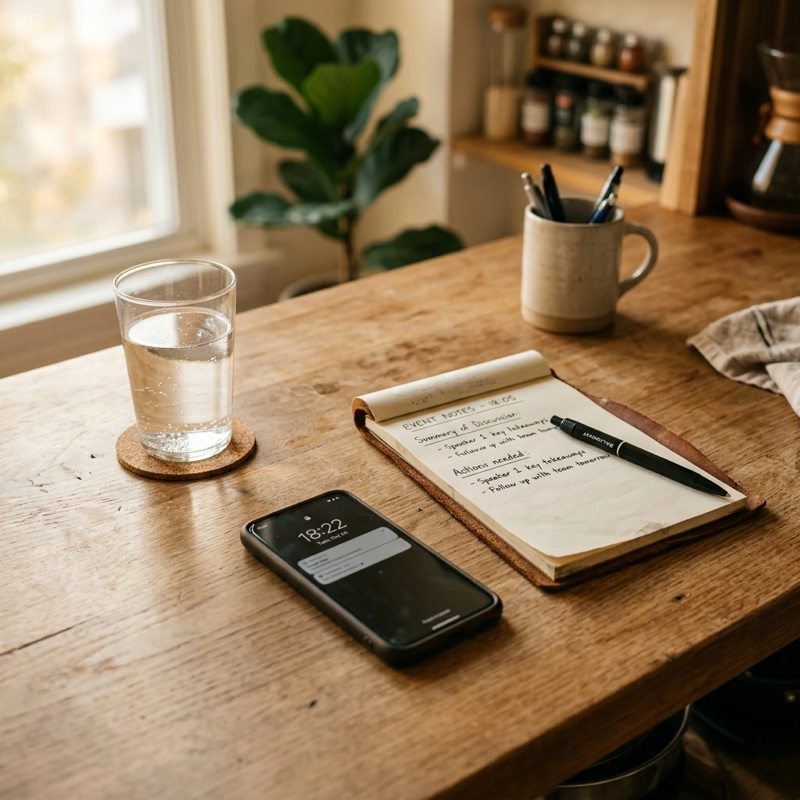
- Exact time of the failed sample and the retest
- What you ate, drank, used (mouthwash, sanitizer, inhaler,
medication) in the 30 minutes before - Whether the car was in a garage, near a paint can, or near any
chemical - The temperature outside
- A photo of the device screen if it shows the reading
- Any receipts from food or drink purchases that morning
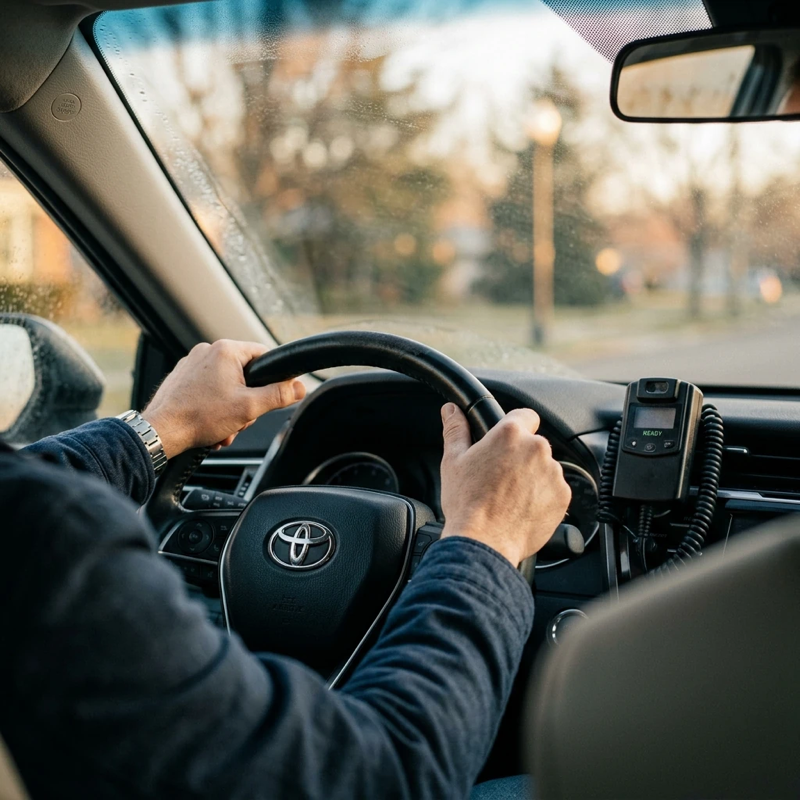
The ignition
interlock camera on your device also records who was in the driver’s
seat at the time of the sample, which can help establish that you were
the one testing.
Step 5: Call your
provider the same day
Request a copy of the device’s event log for that timestamp and the
most recent calibration report. Same-day contact creates a paper trail
showing you acted in good faith — which matters when a hearing officer
evaluates intent.
How to Legally
Challenge a False Reading
If the event is logged as a violation, you typically have a limited
window to contest it. The exact deadline and procedure vary state by
state, so verify with your state DMV or monitoring authority
immediately. Missing the window often means the violation stands by
default.
Where Challenges Are Heard
Most states route interlock violation challenges through one or more
of the following:
- A DMV administrative hearing (the most common
path) - A probation review in front of the judge who
handled your DUI case - A court hearing if the violation affects the terms
of a restricted license
The burden of proof in administrative hearings is generally lower
than in criminal court. You don’t need to prove beyond a reasonable
doubt that you didn’t drink. You need to show it’s more likely than not
that something other than a beverage caused the reading.
What to Bring to the Hearing
The strongest defense packages typically include:
- The device’s event log showing the failed sample followed by a clean
retest - Calibration records covering the date of the event
- Medical documentation (GERD, diabetes, asthma, recent dental
work) - Receipts and photos of food, mouthwash, or environmental
exposure - Witness statements from anyone who was with you
- A clean independent breath or blood test taken as soon as possible
after the event - A simple written timeline of your morning
Organize everything into one PDF or folder. A hearing officer who can
find your documentation quickly is more likely to weigh it
seriously.
When to Hire an Attorney
Outcomes vary, and no one can promise you’ll win. That said, a DUI
defense attorney who specifically understands interlock device data is
worth strong consideration — especially if your license, employment, or
probation status hangs on the outcome. They can subpoena device logs,
cross-examine the state’s evidence, and frame medical or environmental
factors persuasively.
A general-practice attorney unfamiliar with interlock technology may
miss technical defenses that a specialist would catch.
A Realistic Caveat
Not every challenge succeeds. If you have prior violations, thin
evidence, or you waited too long to document, the hearing officer may
side with the device data. Even so, a prompt, well-documented response
gives you materially better odds than silence — and it preserves your
credibility if a future event happens.
Understanding Violation
Codes
Interlock devices log events using standardized codes. A “high BrAC”
code is different from a “missed retest,” a “skipped retest,” a
“tampering” code, or a “power disconnect.” Each has different
implications and different defenses.
Ask your provider for plain-English explanations of every code on
your log. A “power disconnect,” for example, can have an innocent cause
like a dead car battery. A “missed retest” can sometimes be explained by
traffic conditions that made it unsafe to pull over and blow. Knowing
exactly what was logged keeps you from defending the wrong thing at a
hearing.
Reducing Your Risk
of Future False Readings
Prevention is cheaper than a legal challenge. A few habits that
help:
- Switch to alcohol-free mouthwash. Permanently.
- Wait at least 15 minutes after eating, drinking anything other than
water, or using a spray product before blowing. - Rinse your mouth with water before every start.
- Let your hands dry fully after hand sanitizer.
- Keep your calibration appointments on schedule.
- Read labels on cough syrups, cold medicines, and even some breath
mints. - If you’re on a keto diet or fasting, mention it during your next
calibration appointment.
For perspective on how surprising some of these triggers can be, this
breakdown of whether
peanut butter can fool a breathalyzer is a useful reminder that
breath chemistry is more complex than most people assume.
And if you’re trying to understand the timing between a drink and a
clean test, RGI’s guide on how
long to wait after drinking covers the underlying science.
The Science Behind
Breath-Alcohol Sensors
Modern fuel-cell sensors are accurate within tight tolerances.
Independent reviews by the National
Highway Traffic Safety Administration and peer-reviewed research
published through the National
Institute on Alcohol Abuse and Alcoholism and the Insurance Institute for Highway Safety
consistently show that interlock devices reduce repeat DUI offenses
while installed.
The point worth repeating: the sensor itself is generally doing its
job. False readings rarely come from a broken sensor. They come from a
real chemical in the mouth or breath that wasn’t from a drink. That
framing — explained clearly — is often the difference between a
successful challenge and a denied one.
Frequently Asked Questions
Should
I get an independent alcohol test after a failed interlock reading?
If it’s safe and feasible, yes. An independent breath test at a
clinic or a blood test at a lab gives you a time-stamped reference point
that supports a sobriety claim. The closer to the event, the more
persuasive. Ask your attorney first when possible, because local rules
can affect how the result is weighed at a hearing.
What
should I avoid doing that could look like tampering?
Don’t disconnect the battery, pull fuses, unplug cables, or attempt
any DIY fix on the device. If your car needs service or a battery
replacement, notify your provider before the work happens and follow
their approved procedure. Unannounced electrical changes are easy to log
as tampering events even when the cause is innocent.
How
do I document a false reading in a way that’s actually useful at a
hearing?
Use a consistent format: time stamps, location, what happened on the
device, what you did next, and supporting attachments (photos, receipts,
communications with the provider). Keep everything in one folder or PDF.
A hearing officer who can quickly see a clear timeline is more likely to
take it seriously than a stack of loose notes.
Can
ketogenic dieting or fasting affect my breath reading?
Yes. Ketosis produces acetone, and some drivers in deep ketosis
report unexpected readings. If you’re making major dietary changes,
mention it to your physician and inform your attorney before any hearing
so atypical readings can be explained in context.
What
happens if my car won’t start due to a lockout but I need to get to
work?
Call your provider’s support line immediately and follow their
lockout instructions. Document the call, the time, and any guidance
given. Don’t attempt workarounds — alternative starting methods can
create additional violations that complicate your defense later. RGI’s
lockout
and violation support page is a starting point.
How
can I prepare for a hearing without giving the wrong impression?
Be factual, brief, and consistent. Stick to objective documentation
rather than emotions or speculation. Practice walking through your
timeline in plain language. Bring organized records, and dress and speak
as you would for any formal meeting. The goal is to come across as
compliant and reliable.
Do
interlock violations affect insurance, employment, or background
checks?
They can, depending on your state, the terms of your probation, and
what gets recorded on your driving history. Some violations are
administrative-only; others get reported to courts and can affect a CDL
or professional license. Ask an attorney what can be contested, sealed,
or corrected through the proper administrative process.
How long do I have
to challenge a violation?
This varies significantly by state. Some states allow only 10 days
from notification, others give 30. Check your state DMV’s official
guidance immediately, because the clock often starts the day the
violation is mailed or sent to you — not the day you receive it.
Will my
interlock provider testify on my behalf?
Providers generally won’t take sides in a hearing, but they can
produce technical records — device logs, calibration history, code
definitions — that an attorney uses. RoadGuard Interlock supports
drivers by providing documented logs and calibration reports promptly
when requested.
Does the device know who
blew into it?
The Dräger 7000 includes a camera that records the driver’s seat
during each sample, which helps verify identity and establish that you —
and not someone else — were the one being tested. That can work for or
against you depending on the circumstances, but it’s another data point
in any review.
You Don’t Have to Sort
This Out Alone
A false reading is stressful, but it doesn’t have to define your
compliance record. The drivers who navigate these moments well do the
same things: respond fast, document thoroughly, request the device log,
and get qualified help before deadlines pass.
If you’re an RGI customer and want help pulling your device log,
understanding a violation code, or documenting an event before it
escalates, call RoadGuard Interlock at 1-833-545-0368.
The Dräger Interlock® 7000 is specifically designed to distinguish
between breath alcohol and mouth alcohol, and the RGI support hub keeps the
records, calibration history, and reporting tools you’ll need close at
hand.