
Ignition Interlock Device Rolling Retest: How It Works and What to Do
Disclaimer
The information in this blog is for general informational purposes only. Information may be dated and may not reflect the most current developments. The materials contained herein are not intended to and should not be relied upon or construed as a legal opinion or legal advice or to address all circumstances that might arise. You should contact your attorney to obtain advice with respect to any particular legal matter. Only your individual attorney can provide assurances that the information contained herein – and your interpretation of it – is applicable or appropriate to your particular situation. Links to any third-party websites herein are provided for your reference and convenience only; RoadGuard Interlock does not recommend or endorse such third party sites or their accuracy or reliability. RoadGuard Interlock expressly disclaims all liability regarding all content, materials, and information, and with respect to actions taken or not taken in reliance on such. The content is provided “as is;” no representations are made that the content is error-free.
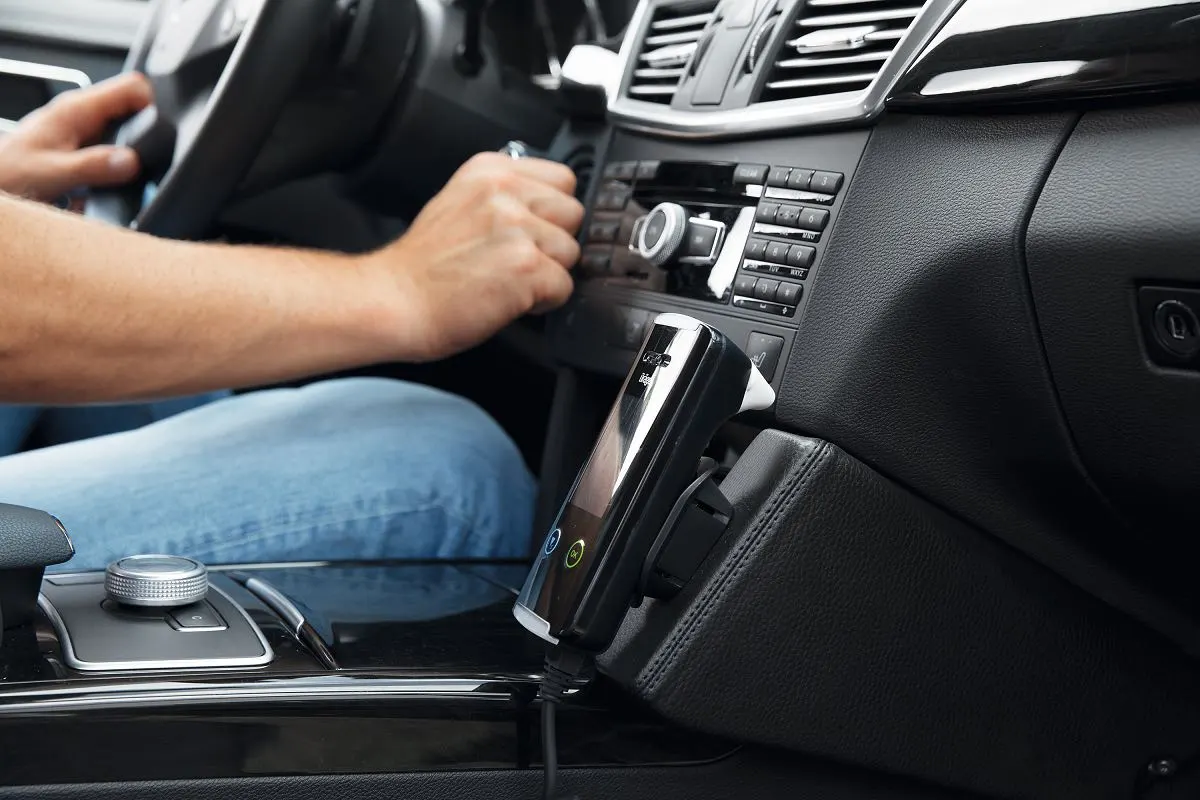
An ignition interlock device rolling retest is a breath test the device asks for after your engine is already running. It checks that the driver who passed the start-up test is still alcohol-free partway through the trip. The timing is random, and your state’s interlock program sets how the prompts work. You take the retest the same way you gave your first breath sample before you started the vehicle.
The first prompt can be startling if you’re new to driving with an interlock. Rolling retests are a routine part of most interlock programs, and knowing what the device expects makes each prompt easier to handle.
What Is a Rolling Retest on an Ignition Interlock Device?
A rolling retest is any breath test your interlock requires after the start-up test, while the engine is on. You’ll also hear it called a random retest or a running retest, and the federal interlock model specifications define it the same way: a breath test required after the initial start-up test while the engine is running.
A start-up test only shows that someone with no alcohol on their breath blew into the device before the car started. A rolling retest checks again once you’re on the road, so an ignition interlock device keeps confirming that the person driving is sober for the whole trip. State programs describe it in plain terms; one state’s ignition interlock program page tells drivers they’ll be periodically required to give breath samples while driving.
How Often Does an Ignition Interlock Device Ask for a Rolling Retest?
There’s no single schedule. Rolling retests come at random times, and your state program and the way your device is configured for that program set how often they happen. You may have to take a rolling retest more than once during a single ride, and a longer drive gives the device more chances to ask.
Because the prompts are random on purpose, you can’t predict when the next one will come. Plan every drive as if a retest could show up at any point, including early in a drive and close to where you’re going.
How the Rolling Retest Prompt Works
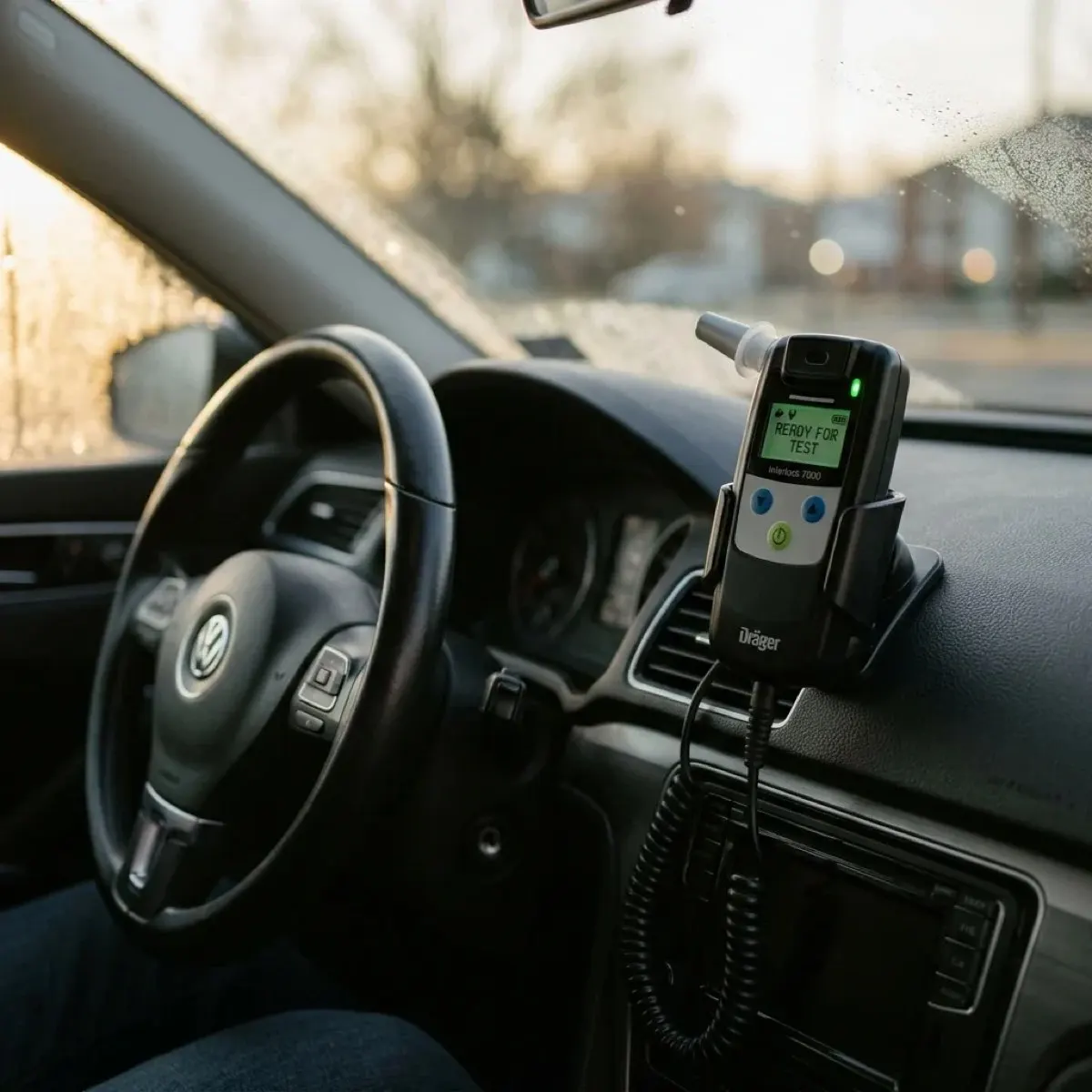
When a retest is due, the device alerts you with a tone and a message on its screen. RoadGuard devices walk you through each test with step-by-step messages on the display, so you don’t have to memorize a sequence. Our page on how an interlock device works shows the start-up steps the retest repeats.
Here’s what a typical prompt looks like from the driver’s seat:
- The alert. The device sounds a tone and shows that a retest is required.
- The response window. You have a set amount of time to give the sample. The length of that window is set by your state’s program, and the instructions you get at installation explain how your device handles it.
- The breath sample. You blow into the handset the same way you did at start-up. RoadGuard’s Interlock 7000 uses a simple blow-suck breath test with no humming required.
- The result. The screen shows whether the sample passed. If it did, you keep driving.
Depending on your program’s requirements, the device’s camera may also be used during the test to confirm who gave the sample. The Interlock 7000’s camera can detect a change in driver, which is one reason a retest has to come from you.
Pull Over Safely Before You Take a Rolling Retest
When a prompt sounds, keep driving safely first. Where and how you take a retest is a rule each state sets, and the same federal specifications urge drivers to take retests only when and where it’s safe to do so.
Before you take a retest, park your vehicle away from traffic when your program allows it. A few habits help:
- Finish any lane change or turn before you reach for the handset.
- Signal and move to a parking lot, a wide shoulder or the next exit.
- Put the vehicle in park before you give the sample.
- Don’t switch the engine off to get out of a prompt. Many programs record that as a missed retest, so ask support how your device handles it.
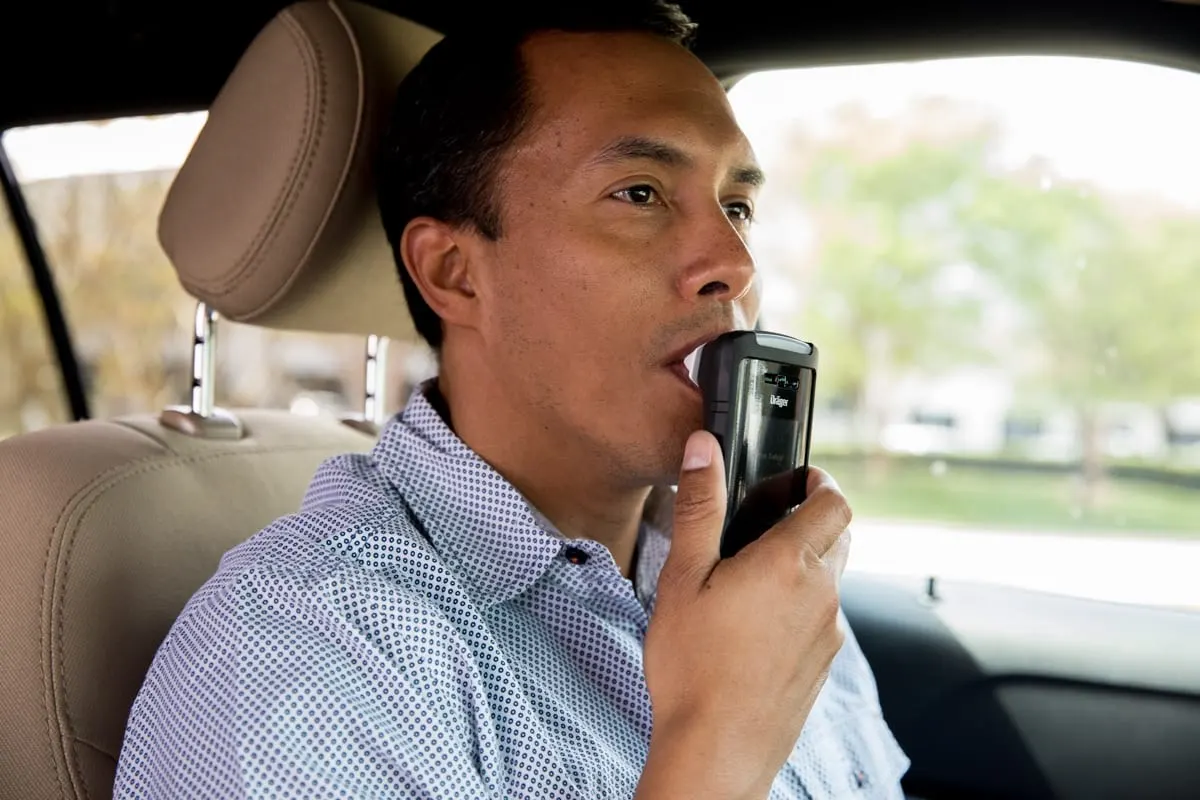
For how the prompt feels in real traffic, at night, in bad weather or with passengers in the car, see our guide to handling a rolling retest while driving.
What If a Retest Prompt Comes Up as You’re Parking?
Sometimes you may be about to leave your vehicle when you receive a retest prompt. Give the sample before you walk away. Whether the engine needs to be running for that test depends on how your device is set up, so check the instructions you got at installation (or call support if you aren’t sure).
What Happens If You Miss a Rolling Retest?
If you don’t give a sample before the response window closes, the device records a missed retest. Interlocks are built to flag a missed retest in the device’s interlock data log, and that record can be reported to your monitoring authority.
In many setups the device keeps sounding its tone until you take the test. Some state programs also have the device sound the horn or flash the vehicle’s lights after a missed retest, until the engine is turned off. Which alerts your device uses is a choice your state program makes, so yours may not do both.
An interlock isn’t designed to cut your engine while you’re driving. A missed or failed retest gets recorded and can trigger alerts, but the vehicle keeps running until you pull over and turn it off.
Is a Missed Retest a Violation?
Your state program and your monitoring authority determine that. Missing a retest is one of the events RoadGuard’s lockout and violation guide lists as a common example, and each program sets its own definition of what counts and what follows. Some states publish those definitions in detail, like this state interlock program FAQ.
If you miss a prompt, call RoadGuard support at 1-833-545-0368 as soon as you’re parked safely. Have the date, the time, roughly where you were and what the screen showed. Only your state program or monitoring authority can say how the event will be treated.
What Happens If You Fail a Rolling Retest?
A failed retest means the breath sample showed alcohol above the limit your program sets. The device records the result, and it can lead to a temporary lockout once the engine is off.
Make sure your mouth and your vehicle are free of any alcohol vapors and smoke before you provide a breath sample. Sometimes there may be alcohol still in your bloodstream from the night before, or your mouth may have alcohol residues from cough syrup or mouthwash if recently used. Our guide on whether mouthwash can cause a failed interlock test covers the everyday products to watch.
The device will go into Temporary Lockout Mode if it detects alcohol above the set limit, according to the requirements of your jurisdiction. The Interlock 7000 uses a sensor that distinguishes between breath alcohol and mouth alcohol.
What Do You Do If the Device Goes Into Temporary Lockout Mode?
Pull the vehicle over and turn off the engine. You’ll get a waiting period when the vehicle won’t start. A countdown will appear on the display, and you have to wait it out. When it’s over, you’ll receive a prompt to provide another breath sample.
If you haven’t had anything with alcohol and you’re still getting failed results, stop retrying and call support. RoadGuard’s page on interlock device lockouts explains the lockout types and what to note before you call.
When to Call RoadGuard Support About a Rolling Retest
Call RoadGuard support at 1-833-545-0368 before you do anything else if a retest doesn’t go the way you expected. That includes a prompt you missed, a failed result you don’t understand, a lockout, or an alert that won’t stop after you’ve parked.

Have this ready when you call:
- The date and time of the prompt
- What the screen showed, word for word if you can
- Where you were and whether you were moving
- Anything you ate, drank or used shortly before the test
A few things to avoid while you wait for help: don’t unplug or disconnect the device, don’t let anyone else blow into it, and don’t keep retrying through a lockout. If the device needs service, your RoadGuard team can also point you to a service center near you.
Frequently Asked Questions About Rolling Retests
What is a rolling retest interlock?
It’s a breath test your ignition interlock asks for after the engine is running, at random times during a drive. It confirms the driver is still alcohol-free after the start-up test. You give the sample the same way you did at start-up, and your state program sets how the prompts and the response window work.
How many times can I fail my interlock device?
There isn’t one national number. Each state program sets how many failed tests lead to a temporary lockout, how long a lockout lasts and which failures are reported to the monitoring authority. The instructions you get at installation cover your device, and your monitoring authority can explain your program’s rules. If you’re failing and haven’t been drinking, call support.
What is a retest violation?
A retest violation is an event your state program counts against its rules, such as a missed retest or a retest taken above the alcohol limit. The device records the event; your monitoring authority or state program determines whether it’s a violation and what follows. Definitions differ from state to state, so check your program’s rules or ask your monitoring authority.
What happens if you fail a rolling retest?
The device records the failed sample, and it may ask for another test. On many devices a failed retest leads to a temporary lockout once the engine is off, with a countdown on the screen before you can test again. The vehicle doesn’t shut off while you’re driving. How the failure is reported depends on your state program.
How do I know if I have a violation on my interlock device?
The device’s screen may show a message after certain events, but the device only records what happened. Your monitoring authority or state program determines whether an event is a violation, usually after reviewing the data from your service visits. If you’re unsure about a message, call RoadGuard support at 1-833-545-0368 and ask your monitoring authority about your record.
Can I drink one beer with interlock?
Any alcohol still in your system or your mouth can show up on a start-up test or a rolling retest, and the device can’t tell how many drinks you had. Your blood alcohol can keep rising after your last drink, so a retest can read higher than your start-up test did. Our guide on how long to wait after drinking explains why only time lowers it.
Questions About a Rolling Retest? Call RoadGuard Support
If a prompt, a reading or a lockout doesn’t make sense, call RoadGuard support at 1-833-545-0368. If your court or DMV has ordered an interlock and you haven’t had one installed yet, you can schedule your RoadGuard installation at a service center near you.
Disclaimer: This article is provided by RoadGuard Interlock for general informational purposes only and is not legal, financial, or medical advice. DUI and ignition interlock laws, penalties, fees, and program requirements differ from state to state and county to county, and they can change at any time. Any costs, timelines, or figures mentioned are general estimates rather than quotes or guarantees. Please do not rely on this article as a statement of the law where you live. Confirm current requirements with your state DMV, the court handling your case, a licensed attorney, or RoadGuard Interlock directly before making decisions. Device features, pricing, availability, same-day installation, and any promotions referenced are subject to change, vary by location, and may not be offered in every state RoadGuard Interlock serves.