
Ignition Interlock Devices and Insurance Claims: What Happens After an Accident
Disclaimer
The information in this blog is for general informational purposes only. Information may be dated and may not reflect the most current developments. The materials contained herein are not intended to and should not be relied upon or construed as a legal opinion or legal advice or to address all circumstances that might arise. You should contact your attorney to obtain advice with respect to any particular legal matter. Only your individual attorney can provide assurances that the information contained herein – and your interpretation of it – is applicable or appropriate to your particular situation. Links to any third-party websites herein are provided for your reference and convenience only; RoadGuard Interlock does not recommend or endorse such third party sites or their accuracy or reliability. RoadGuard Interlock expressly disclaims all liability regarding all content, materials, and information, and with respect to actions taken or not taken in reliance on such. The content is provided “as is;” no representations are made that the content is error-free.
Ignition Interlock Devices and Insurance Claims: What Happens After an Accident
Ignition interlock insurance claims quickly become confusing if you are in a crash while driving with a court-ordered device. You may worry whether the accident will violate your program, if your insurance can deny payment because of the interlock, or how the device itself is treated when your car is damaged or totaled.
Understanding how ignition interlock programs intersect with auto insurance claim rules can help you avoid costly mistakes. This guide explains what typically happens after an accident, how fault and coverage types affect your claim, when device data may be requested, and practical steps you can take to protect both your insurance benefits and your driving privileges.
Ground rules for ignition interlock insurance claims after a DUI
Before looking at accident scenarios, it helps to separate three related but different issues: your ignition interlock requirement, your auto insurance policy, and the claim process after a crash. The interlock requirement comes from criminal or administrative law, while your insurance obligations are governed by your contract with the insurer and state insurance regulations.
An ignition interlock device (IID) is a breath-testing unit wired into your vehicle that prevents the engine from starting if it detects alcohol at or above the program limit. If you need a deeper technical overview of how these systems are installed, calibrated, and monitored, reviewing a detailed guide to everything you need to know about ignition interlock devices can give helpful context before you deal with a claim.
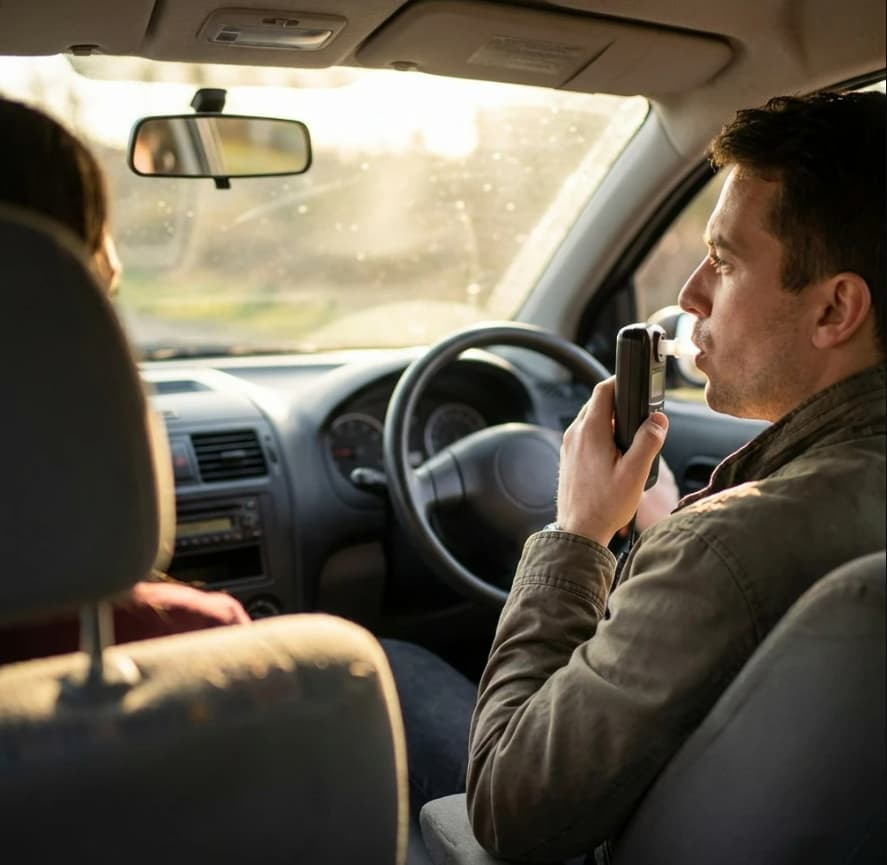
Insurance companies, on the other hand, mainly care about risk. A DUI conviction is one of the strongest risk signals they track, which is why a first offense can nearly double the average U.S. full-coverage premium, according to a Bankrate analysis of DUI insurance costs. The ignition interlock is often viewed as a consequence of that risk, but also as a tool to reduce the chance of another alcohol-related crash.
What insurers see when you have an interlock device
From an insurer’s perspective, having an interlock installed usually confirms that you are in a high-risk category because of a prior DUI, DWI, or OWI. That history typically drives your premium increase and any SR-22 or FR-44 filing requirements, not the device itself.
At the same time, an interlock can be viewed as risk mitigation. If the device is functioning properly, it significantly reduces the chance that you will be able to start your car while impaired, which can help you avoid additional alcohol-related crashes and claims while you are in the high-risk period.
When DUI history matters more than the device
When a crash happens, claim handlers primarily look at three things: whether the policy was active, what coverages apply, and who was at fault. Your prior DUI and interlock requirement explain why you were rated as a higher-risk driver, but they do not automatically cause a claim denial.
However, your DUI background can lead to more scrutiny. If there is any suggestion of alcohol involvement, adjusters may pay close attention to police reports, test results, and sometimes interlock data to determine whether the loss is covered or whether any exclusions might apply under your policy or state law.
How auto insurance claims work when you have an ignition interlock device
The basic claims process is similar whether or not you have an IID: you report the crash, cooperate with the investigation, and the insurer decides what is covered. The difference is that, because of your DUI history, there may be extra questions about impairment and compliance with court orders.
Fault and coverage types in crashes after a DUI
After any accident, fault and coverage type determine which insurer pays which bills. Your liability coverage pays for injuries and property damage you cause to others; collision and comprehensive pay for damage to your own car; and medical payments, PIP, or uninsured motorist coverage may also come into play depending on the situation and your state.
The table below gives a high-level view of how different coverage types intersect with an ignition interlock in a claim context.
| Coverage type | What it usually pays | Where the interlock may matter |
| Bodily injury liability | Injuries to people you hurt in an at-fault crash | Insurer may examine impairment evidence, including interlock data, when assessing negligence and exposure. |
| Property damage liability | Damage you cause to other vehicles or property | Similar to bodily injury; intoxication evidence can influence settlement negotiations and lawsuits. |
| Collision | Damage to your car from a crash, regardless of fault | May cover damage to the car around the interlock; coverage for the device hardware itself can vary. |
| Comprehensive | Non-crash damage (theft, fire, weather, vandalism) | Relevant if a non-crash event damages the car and the IID. |
| MedPay / PIP | Your own medical expenses (and sometimes lost wages) | Typically pays regardless of fault, but fraud investigations may look at impairment. |
| Uninsured / underinsured motorist | Losses caused by drivers with no or low coverage | Interlock data may help show you were sober, strengthening your position if fault is disputed. |
One reason to minimize further claims after a DUI is the financial impact. A recent ValuePenguin State of Auto Insurance 2026 report found that car insurance rates can jump by an average of 54% nationwide after high-risk events like tickets, at-fault accidents, or DUIs, which means additional crashes can be extremely costly over time.
When the crash physically damages the area of the dash or wiring where your device is installed, questions also arise about who pays to repair or replace the equipment. Understanding how an ignition interlock interacts with your vehicle and potential car damage concerns can help you discuss the hardware portion of the loss with both your adjuster and your interlock provider.
Ignition interlock insurance claims when you are not at fault
If another driver causes the crash, the liability claim usually goes against that driver’s insurer, while your own collision or MedPay/PIP may step in for faster payment. In these situations, the mere presence of an interlock rarely changes which insurer is responsible.
Where it can matter is in contested-fault situations. If the other driver alleges you were impaired, your history and interlock status may trigger closer review of police findings and, in some cases, requests for device logs to clarify whether alcohol contributed to the crash.

Step-by-step actions after an accident with an ignition interlock device
After a collision, you need to protect your safety, your legal rights, your insurance benefits, and your interlock program status—all at once. The usual accident checklist still applies, but there are a few extra steps that matter for drivers with IIDs.
Prioritizing safety and clear communication with police
Start by moving to a safe location if possible, calling emergency services, and checking for injuries. When law enforcement arrives, follow their instructions and answer questions honestly, including the fact that you have an ignition interlock installed as part of a court or agency requirement.
If the officer conducts roadside sobriety or chemical tests, cooperate as directed; the interlock alone is not a substitute for legally recognized testing. Your calm behavior and willingness to comply help create a record that you were taking the situation seriously and trying to follow the law.
Protecting evidence for your claim and interlock program
Once immediate safety issues are handled, start gathering evidence that will support both your insurance claim and any future questions about your sobriety or device use. Photograph vehicle damage, skid marks, weather conditions, and the position of all vehicles involved.
If it is safe to do so, take clear photos of the ignition interlock mounted in the vehicle, especially if the dash area is damaged. Make a note of the time of your last breath test and any messages displayed on the device; a realistic picture of life with an ignition interlock device can help you remember routine steps that might now be important evidence.
Later, you can ask your interlock provider about retrieving device logs covering the period before and after the crash. Your attorney—if you have one—can help decide when and how to share that data with insurers or opposing parties.
Coordinating repairs, your device provider, and insurance company
As you begin the claims process, notify both your auto insurer and your interlock service company about the accident. Body shops should not remove, disconnect, or attempt to rewire the device without instructions from the provider, because unauthorized changes can look like tampering.
This coordination is especially important if the car may be declared a total loss or needs extensive electrical work. An experienced interlock provider such as RoadGuard Interlock can help you arrange safe removal, transfer to another vehicle when permitted, and continued compliance reporting so you can stay on track to get back on the road legally.
To keep things organized, many drivers find it helpful to follow a short checklist:
- Document the scene, damage, and any visible impact to the interlock hardware.
- Ask for the claim number and the adjuster’s contact information before leaving.
- Call your interlock provider to report the accident and discuss next steps for the device.
- Keep copies of repair estimates and note any line items related to wiring or electronics.
- Share relevant information with your attorney or public defender if you are working with one.
How ignition interlock data can affect insurance claims
Modern ignition interlock devices record a detailed event log, including test attempts, breath alcohol concentration readings, lockouts, power interruptions, and sometimes GPS or camera images. In a disputed claim or lawsuit, those records can become part of the evidence.
Ignition interlock insurance claims and device data logs
In many programs, the primary recipients of IID data are courts, probation departments, or licensing agencies. However, in serious crashes, insurers or opposing attorneys may request access through subpoenas or releases if they believe the logs could clarify whether alcohol impairment was a factor.
A policy brief from the Scholars Strategy Network on unintended consequences of new regulation describes how continuous alcohol-monitoring data, including interlock “fail” logs, may increasingly influence liability determinations, with pilot cases showing that clearer rules for accessing event data helped reduce dispute times by an average of 12 days.
When device records help your side of the story
Device data can support your position if it shows repeated clean tests leading up to the crash, no recent lockouts, and normal usage patterns. When combined with police reports and witness statements, that information can help counter allegations that you were trying to drive drunk despite having an interlock.
In not-at-fault scenarios, this kind of evidence can strengthen your claim for damages, particularly if the other side tries to shift blame by pointing to your DUI history rather than the facts of the collision itself.
When device issues raise more questions
On the other hand, patterns of failed tests, missed rolling retests, or recorded tampering can raise red flags. Insurers may question whether policy exclusions related to illegal acts, fraud, or misrepresentation could apply, particularly in severe injury cases.
Regulators are also preparing for factory-installed impaired-driving-prevention technology that works similarly to interlocks. An Advanced Impaired Driving Prevention Technology notice in the Federal Register outlines technical and data standards for in-vehicle alcohol detection, and some carriers cited in related hearings have begun modeling potential reductions in DUI-related crashes and future premium-credit structures.
Complex real-world scenarios with interlock-equipped vehicles
Real life rarely fits neatly into textbook examples. Drivers with ignition interlocks often face complicated situations involving totaled vehicles, loaner cars, friends or family members behind the wheel, and questions about who pays for the hardware itself.
Totaled vehicles and responsibility for the interlock hardware
If your car is declared a total loss, your collision or the at-fault driver’s property damage coverage will usually pay you (or the lienholder) the vehicle’s actual cash value. The ignition interlock adds a layer of complexity because it is usually leased equipment with its own contract terms.
Your auto policy may treat the device as part of the vehicle’s installed equipment, or as separate personal property, depending on wording and state law. Reviewing a clear breakdown of ignition interlock device costs and typical fee structures can help you understand which expenses are lease-related obligations and which might be negotiable within the property damage settlement.
Most providers require that their device be professionally removed, even from a totaled vehicle. Coordinate among the body shop, your adjuster, and your interlock company before the car is released or sent to salvage, so the hardware can be retrieved and either returned or moved to another approved vehicle.
If someone else crashes your interlock-equipped car
In many states, your auto insurance follows the vehicle, not just the named insured. That means a permissive driver—someone you allowed to use your car—may be covered under your policy if they cause a crash, even when they are the one blowing into the interlock.
However, you remain responsible for compliance with the interlock program. Violations recorded while someone else is driving can still count against you. For that reason, many attorneys and program administrators discourage loaning out an interlock-equipped car except in emergencies and only to trusted, sober drivers.
Rental cars and temporary vehicles after a DUI
After an accident, you may receive a rental car or temporary substitute vehicle while yours is being repaired. Some rental companies refuse drivers with recent DUIs, and most will not permit installation of an ignition interlock on their fleet vehicles.
If your state requires you to drive only vehicles equipped with an IID, installing a device into a long-term loaner or replacement vehicle may be necessary instead. Guides that explain how to install an ignition interlock device in different vehicle types can be useful talking points when you and your provider are coordinating with the repair shop and insurer about your transportation options.
SR-22, FR-44, and long-term impacts on claims and costs
Many drivers with ignition interlocks are required to carry an SR-22 or, in some states, an FR-44 filing, which is proof to the state that you maintain at least the minimum required liability coverage. These filings do not change your policy coverages, but they do signal that you are in a monitored, high-risk period.

Filings, policy cancellations, and open claims
If your policy lapses for non-payment during an open claim, most states still require the insurer to handle that claim for covered losses that occurred while the policy was active. However, you may face hurdles reinstating coverage, and any new policy will almost certainly be priced as high risk, potentially with a new filing requirement.
Because of this, staying current on premiums during an interlock program is critical. Letting coverage lapse can complicate not only future claims but also your ability to meet licensing requirements tied to continuous financial responsibility proof.
Connection between safe driving, IID completion, and your rates
While every insurer’s rating system is different, time, clean driving, and completion of your ignition interlock program are three of the biggest factors in eventually lowering your premiums. A 2025 Auto Insurance Landscape report from The General estimates that a DUI conviction adds an average of $2,467 per year to a driver’s premium, which shows how much is at stake.
Some carriers may eventually view voluntary or successfully completed interlock use as a positive sign of risk reduction, especially when combined with several years of claim-free driving. While you cannot erase the past, avoiding new accidents, violations, and late payments gives you the best chance of returning to more typical rates once your state and insurer allow it.
Get back on the road after an ignition interlock insurance claim
Navigating ignition interlock insurance claims after an accident is stressful, but understanding the ground rules goes a long way. Your coverage obligations, fault in the crash, and the way device data is handled all shape the outcome, yet having an interlock does not automatically mean your claim will be denied or your license revoked.
As you move forward, focus on three priorities: protecting evidence (including interlock-related information), staying in close communication with your insurer and device provider, and keeping your program in good standing so you can continue driving legally. With careful documentation and informed decisions, ignition interlock insurance claims can be resolved while you stay on track toward completing your requirements.
When you are ready for support from specialists who work with interlock users every day, RoadGuard Interlock offers Dräger Interlock 7000 and Dräger Interlock XT devices with fast ten-second warm-up times, a simple blow-suck breath pattern, and reliable fuel cell technology that distinguishes mouth alcohol from true breath alcohol. Their nationwide installation, compliance reporting, and roadside assistance services are designed to help you get back on the road safely and legally.
If you have questions about choosing a device, transferring equipment after a crash, or coordinating with your insurer, you can Contact Us to discuss your situation and explore the quickest compliant path to driving independence again.
Frequently Asked Questions
Will my insurance company automatically be notified that I have an ignition interlock device?
Insurers are typically alerted to your DUI through motor vehicle records and filing requirements like SR-22 or FR-44, not directly through the interlock vendor. However, the presence of an IID may show up in police reports or repair invoices, so you should assume your insurer can become aware of it during underwriting or a claim.
What should I do if I think my ignition interlock malfunctioned before or after an accident?
Contact your interlock provider immediately, describe the issue, and request that they document the potential malfunction in their system. Ask for written confirmation of any service tickets or diagnostic findings, as those records can help distinguish user error from equipment problems if questions arise later.
Can I switch insurance companies while I’m still required to use an ignition interlock device?
You can usually change insurers during an interlock period, but you must ensure there is no lapse in coverage or required filings. When shopping quotes, disclose your DUI and any SR-22/FR-44 needs up front so the new carrier can file on time and your license status remains valid.
How does an ignition interlock requirement affect rideshare or delivery driving after a DUI?
Most rideshare and delivery platforms have strict rules about recent DUIs, and some will deactivate or deny drivers with alcohol-related offenses regardless of interlock use. Before signing up or returning to app-based work, review the platform’s eligibility policies and talk with your attorney about any restrictions in your court order or license conditions.
Can I refuse to share ignition interlock data with an insurance company after a crash?
You generally control whether to sign a release for your interlock records, but courts and opposing parties can sometimes obtain logs through legal processes if a lawsuit or serious injury is involved. Before agreeing to broad data requests, discuss the scope with your attorney so only information that is necessary and relevant is disclosed.
How can I choose an insurance carrier that’s more forgiving after a DUI and ignition interlock requirement?
Look for companies that explicitly market to high-risk or “non-standard” drivers, as they often have more flexible underwriting and payment options. Comparing multiple quotes, asking about future good-driver discounts, and checking whether the carrier re-evaluates rates after a set violation-free period can help you find a path back to more affordable coverage.
What extra documentation should I keep if I’m driving with an ignition interlock and worried about future claims?
In addition to standard insurance and registration documents, keep copies of interlock installation certificates, calibration/service receipts, and any written communications about device issues. Organizing these in one folder—physical or digital—can speed up claim investigations, support your compliance history, and give your lawyer concrete records to work with if disputes arise.