
How to Get an Ignition Interlock Device Installed: Who Installs It and What to Expect
Disclaimer
The information in this blog is for general informational purposes only. Information may be dated and may not reflect the most current developments. The materials contained herein are not intended to and should not be relied upon or construed as a legal opinion or legal advice or to address all circumstances that might arise. You should contact your attorney to obtain advice with respect to any particular legal matter. Only your individual attorney can provide assurances that the information contained herein – and your interpretation of it – is applicable or appropriate to your particular situation. Links to any third-party websites herein are provided for your reference and convenience only; RoadGuard Interlock does not recommend or endorse such third party sites or their accuracy or reliability. RoadGuard Interlock expressly disclaims all liability regarding all content, materials, and information, and with respect to actions taken or not taken in reliance on such. The content is provided “as is;” no representations are made that the content is error-free.

If a court or your state DMV requires an ignition interlock device (IID) in your vehicle, the installation happens at an appointment you book with an interlock provider. The short answer to who installs ignition interlock devices is a trained technician at a service center approved in your state.
In most jurisdictions, an IID installation must be carried out by a certified professional. You schedule the appointment, bring your documents and your vehicle, and leave with a working device and training on how to use it.
Who Installs Ignition Interlock Devices?
Ignition interlock devices are installed by technicians at service centers that work with an interlock provider your state has approved. Because the device has to meet a court or DMV requirement, a general repair shop or the driver can’t install one on their own in most states.
Each state sets its own rules for providers and installers. California, for example, holds shops that install interlocks to state installation standards covering how the vehicle is screened, how the device is installed and how it’s tested afterward. Arizona asks drivers to choose an authorized provider and schedule with a certified installer. State ignition interlock laws differ on who has to install a device and for how long. Your court order or DMV notice is the place to confirm the rules that apply to you.
RoadGuard Interlock installs through an extensive network of service centers with qualified personnel in the many states it serves.
How to Book Your Interlock Installation Appointment
You book an interlock installation by contacting the provider and picking a service center and time. Once your court order or DMV notice says an interlock is required, the steps usually look like this:
- Read your court order or DMV notice for your deadline and any state rules on approved providers.
- Call RoadGuard at 1-833-545-0368, or send a scheduling request through the installation page.
- Choose a service center and an appointment time. Same-day installs are available at some locations, depending on availability.
- Confirm what to bring and whether someone else needs to drive the car to the appointment.
At RoadGuard, we want to make the device installation process as easy as possible for you. Check out our Ignition Interlock installation service offering, and we’ll help you find a service center near you. Also, we’ll help you set an appointment for your device installation and answer your questions about how long it takes and what to expect.

What to Bring to Your Installation Appointment
Bring your ID, your vehicle’s registration and your case paperwork. These are the documents RoadGuard asks for at an installation:
- A valid photo ID, such as a driver’s license, military ID or passport
- The vehicle’s registration
- If you aren’t the registered owner, a notarized Owner’s Consent to Installation form, or the owner can come to the appointment with you
- Any documents about your case, such as the court order
- A form of payment, since installation costs are due at the time of service
If your driving privileges are revoked, have someone else drive the car to the appointment. The car should also be in good working order, including the battery, horn and electrical system, so finish any repairs before your install date. The ignition interlock vehicle requirements list the conditions a shop checks before it installs a device.

What Happens During an Ignition Interlock Installation
At the appointment, a technician checks your vehicle, installs and tests the device, completes the paperwork and trains you to use it. Please be aware that the installation process can differ based on the service provider, type of vehicle, and local regulations among other factors.
Vehicle Check
The technician starts with a mechanical and electrical check of the vehicle. A weak battery or an electrical fault can hold up the installation, which is why repairs come first.
Installation and Testing
The technician installs the device following the manufacturer’s instructions and sets it up for your state’s program. In some states, including California, customers aren’t allowed to watch the installation, so plan to wait in the service center. Next, they’ll conduct a test blow into the device to confirm it accurately registers and analyzes the breath sample.
Paperwork and Proof of Installation
Some states require proof that the device was installed. In those states, the service center can send the document to the DMV, the state transportation department or your monitoring authority, and give you a copy. Kansas, for example, has the installing technician complete a verification form that goes to the state. Ask at the appointment how your state receives proof of installation.
Device Training
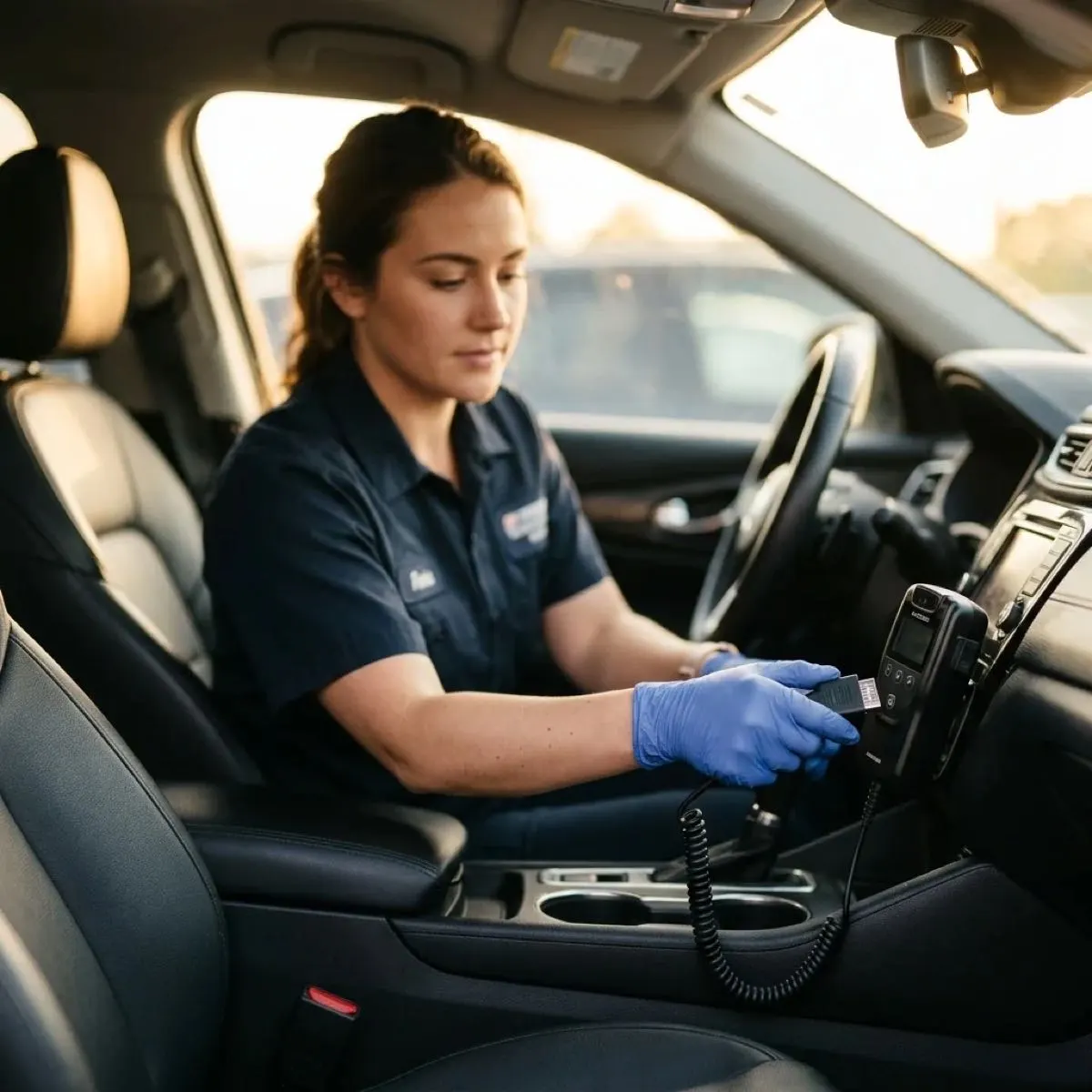
Before you leave, the technician shows you how to use the device and answers your questions. The RoadGuard device uses a simple blow-suck breath test, with no humming required, and an easy-to-use interface. You’ll practice a test, learn what the device asks for while you drive, and schedule your first monitoring and calibration visit. Plan to stay for the whole appointment, since the training and paperwork happen while you’re there.
What Happens After Installation
After installation, you drive with the device and return to the service center on the schedule your program sets. Regular reporting and calibration may be required for compliance with the requirements in the jurisdiction applicable to you. You can schedule appointments for calibration with the service center.
Keep every scheduled visit. A missed calibration appointment can lead to a lockout, so call support right away if you need to reschedule.
Program rules differ by state. The state DUI laws pages give general information for each state, but they may not reflect the latest changes, so confirm your requirements with your attorney, the court handling your case or your DMV.
When the requirement ends, the service center also handles removal. When you can get your interlock removed depends on finishing your required period and completing any removal forms required by the agency that ordered the device.
Tips for Device Maintenance
Here are some quick tips to keep your device functioning properly.
- Wipe down your IID regularly with a damp cloth. (Avoid using harsh chemicals)
- Keep your device out of direct sunlight.
- Avoid damaging the cables. (Keep it in your passenger seat)
- Avoid getting your device wet.
- Keep the mouthpiece clear of debris. (Food, trash, tobacco, etc.)
Your device user manual explains the messages on the screen. If the device shows an error or won’t let the car start, call RoadGuard support at 1-833-545-0368 first, and don’t unplug, move or open the device yourself.
Frequently Asked Questions
How to get an ignition interlock device installed?
Start with your court order or DMV notice, which tells you whether an interlock is required and by when. Then contact an approved provider, pick a service center and book a time. Bring your photo ID, registration, case documents and payment, and plan to stay while the technician installs the device, tests it and trains you. At RoadGuard Interlock, you can book by calling 1-833-545-0368.
Can I install an interlock device myself?
No. In most states, the device has to be installed by a technician at a service center approved for your interlock provider, and a driver-installed device won’t meet a court or DMV requirement. California’s rules go further and keep customers from watching the installation. If anything about the device looks wrong after your appointment, call RoadGuard support at 1-833-545-0368 instead of adjusting it yourself.
Do I have to own the vehicle I’m putting my interlock system in or does my name just have to be listed as a driver?
You don’t always have to own it. RoadGuard can install a device in a vehicle registered to someone else when the owner signs a notarized Owner’s Consent to Installation form or comes to the appointment. Whether the device has to go in a car you own, or in every car you drive, depends on your state and your order. The guide to getting an interlock when you don’t own a car covers shared and borrowed vehicles.
How much does it cost to have an ignition interlock device installed?
Installation cost varies by vehicle type and location, because each state has its own pricing rules and device requirements. After installation, most programs add a monthly lease plus monitoring and calibration costs, and removal is billed separately. Some states offer financial help for drivers who qualify. For current pricing, see interlock device cost or call 1-833-545-0368 for your area.
Can I buy my own interlock device?
In most programs, no. Drivers usually lease the device from a state-approved provider for the length of the requirement and pay a monthly fee, and the provider installs, services and removes it. The device usually has to be a model your state approves, and its test results are reported to your monitoring authority. Ask your DMV or monitoring authority if you’re unsure which providers your state accepts.
Schedule Your Installation With RoadGuard
Once a court or DMV requires an interlock, RoadGuard Interlock can schedule your installation with a trained technician near you. Call 1-833-545-0368 or find a RoadGuard service center to book your appointment, and ask about same-day availability and any promotion offered at your location.
Disclaimer: This article is provided by RoadGuard Interlock for general informational purposes only and is not legal, financial, or medical advice. DUI and ignition interlock laws, penalties, fees, and program requirements differ from state to state and county to county, and they can change at any time. Any costs, timelines, or figures mentioned are general estimates rather than quotes or guarantees. Please do not rely on this article as a statement of the law where you live. Confirm current requirements with your state DMV, the court handling your case, a licensed attorney, or RoadGuard Interlock directly before making decisions. Device features, pricing, availability, same-day installation, and any promotions referenced are subject to change, vary by location, and may not be offered in every state RoadGuard Interlock serves.