
Living With an Ignition Interlock Device: What Daily Life Really Looks Like
Disclaimer
The information in this blog is for general informational purposes only. Information may be dated and may not reflect the most current developments. The materials contained herein are not intended to and should not be relied upon or construed as a legal opinion or legal advice or to address all circumstances that might arise. You should contact your attorney to obtain advice with respect to any particular legal matter. Only your individual attorney can provide assurances that the information contained herein – and your interpretation of it – is applicable or appropriate to your particular situation. Links to any third-party websites herein are provided for your reference and convenience only; RoadGuard Interlock does not recommend or endorse such third party sites or their accuracy or reliability. RoadGuard Interlock expressly disclaims all liability regarding all content, materials, and information, and with respect to actions taken or not taken in reliance on such. The content is provided “as is;” no representations are made that the content is error-free.
What will my family and friends think? How long does using an in-car breathalyzer take? Will it prevent me from doing the things I love?
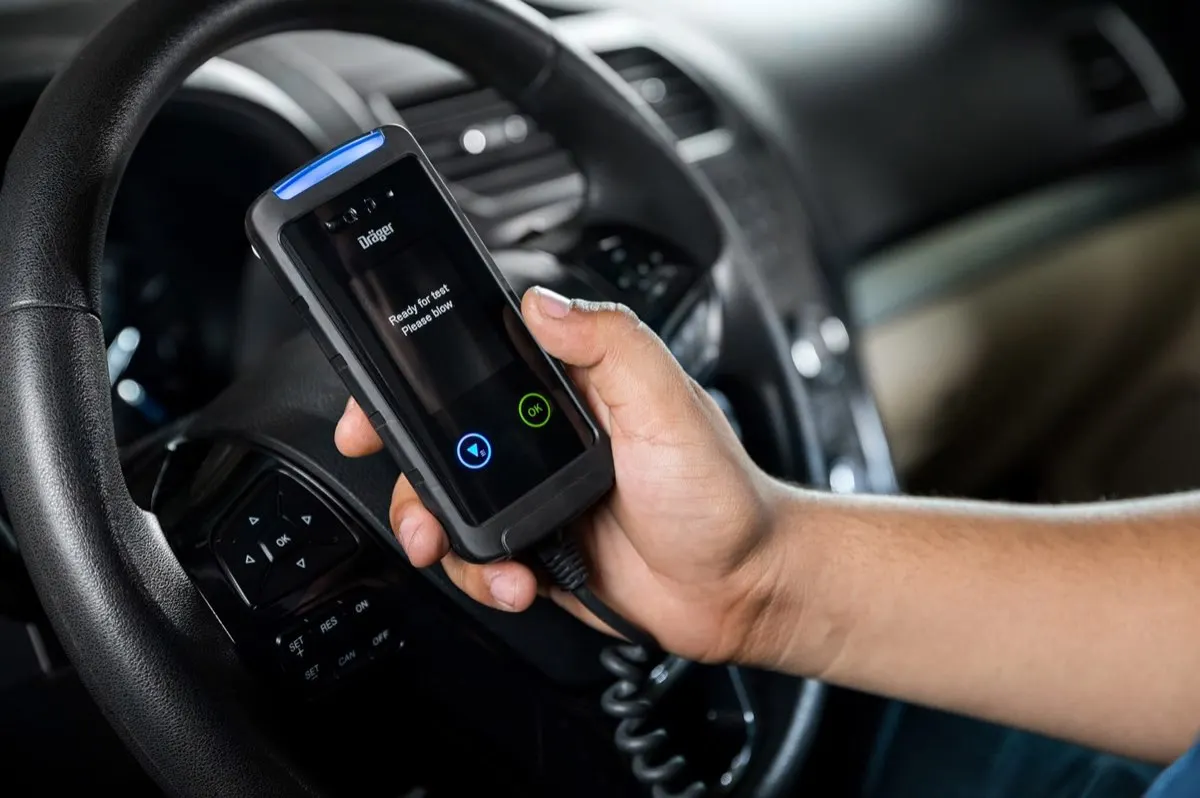
If you’re about to have a device installed, those are usually the first three questions. Here is the honest answer: living with an ignition interlock device settles into an ordinary routine faster than most drivers expect. The test takes seconds, the handset sits low near the driver’s seat, and most people around you will never give it a second thought.
This guide covers what the device actually looks like in your car, what a normal day of driving feels like, what passengers notice (and what they don’t), how to handle valets and mechanics without an awkward moment, and the small habits that keep your record clean until the device comes off.
What Does an Ignition Interlock Device Look Like in Your Car?
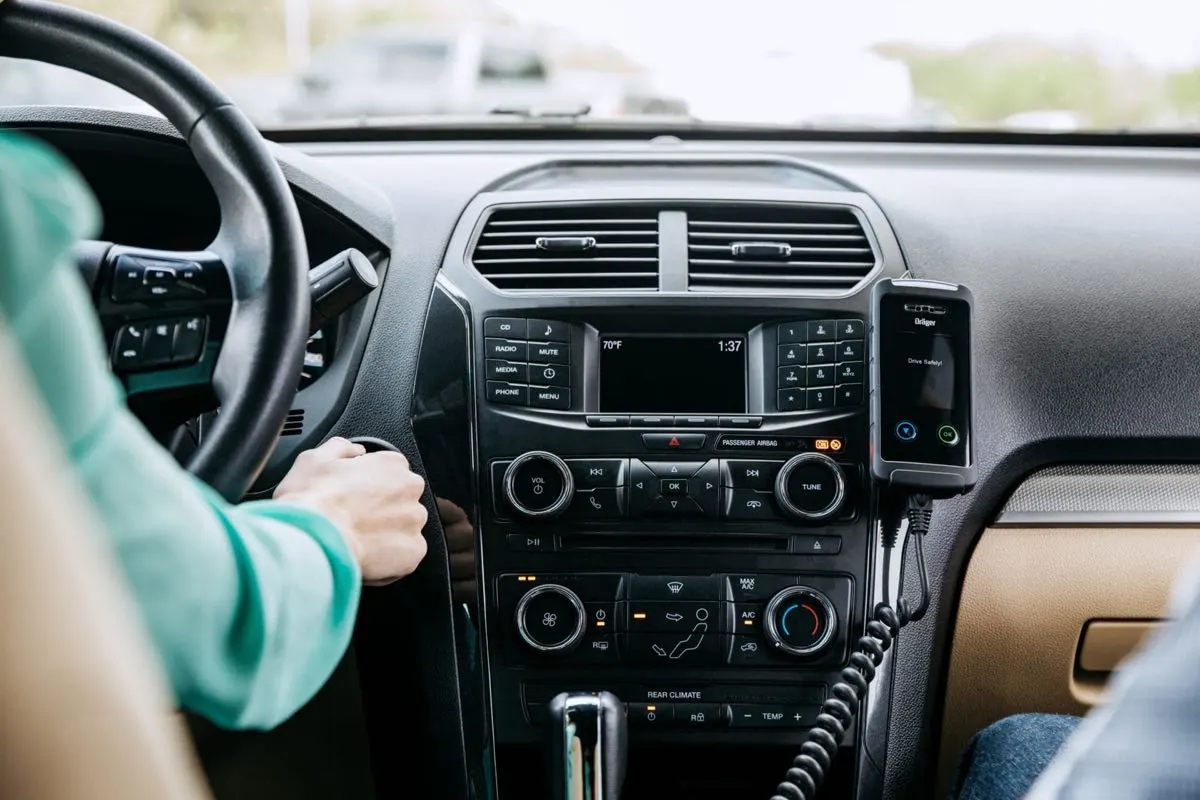
An ignition interlock device is a small handheld unit, roughly the size of a large phone or a TV remote, resting on a coiled cord near the driver’s seat. It has a mouthpiece you blow into, a small display, and a control unit wired out of sight behind the dashboard. From the passenger seat, it reads as one more piece of car tech.
Here is what each part looks like:
- The handset. The part you actually use: a compact unit with a mouthpiece and a display that walks you through each test. Between tests it sits in a cradle or console, not suction-cupped to your windshield.
- The coiled cord. A flexible cable, similar to an old phone cord, connecting the handset to the control unit. It lets you hold the handset comfortably while you test.
- The control unit. The electronics that connect to your ignition. This piece is installed behind the dash, so nobody sees it at all.
- The camera. Most modern devices include a small camera that documents who takes each test. It faces the driver’s seat and activates around tests rather than recording your whole drive.
RoadGuard’s ignition interlock device keeps that footprint deliberately small. It uses a rear-mounted mouthpiece and a sleek, discreet design, it is compact and easily hidden from casual view when your car is parked, and it installs in any type of vehicle, including motorcycles. Discretion is not an accessory here; it is the design brief.
How Does Living With an Ignition Interlock Device Work Day to Day?
Daily life follows one simple pattern: a short breath test before the engine starts, and occasional retests while you drive. That is the entire system. Everything else about driving stays exactly the same.
The morning startup test
Get in, get settled, and the device will prompt you to test. You pick up the handset, give a steady blow-suck breath (no humming or rhythm tricks to learn), and the device clears you to start the car. As one of the fastest devices on the market, RoadGuard’s test takes about 10 seconds. When you think about it like that, living with an ignition interlock device can take less time than buckling up or adjusting your mirrors. Just like putting on your seat belt, using an ignition interlock device will become second nature in no time.
The realistic adjustment period is a week or two. The first few mornings you will think about it. By the second week, it is just the step between sitting down and pulling out of the driveway.
Rolling retests while you drive
Once you’re on the road, the device will occasionally ask for another sample. These rolling retests confirm the driver who started the car is still the one who should be driving it. The device beeps to get your attention and gives you a window of time to respond, so there is no need to test the instant it sounds.
Handled calmly, a rolling retest is a non-event: keep your eyes on the road, and when it is safe, provide the sample. If traffic is heavy, you can pull over first; the engine keeps running while you test. In practice, it is about as disruptive as answering a hands-free phone call.
What Passengers and Coworkers Actually Notice

Far less than you fear. A passenger sees a small handset near the console, and unless you explain it, most people assume it is a dash cam accessory, a radar detector, or some piece of fleet equipment. The device does not announce itself, and you do not have to either.
A few common scenarios, handled with a little dignity:
- The carpool. Test before your passengers get in, or simply test in front of them without commentary. A 10-second pause before starting the car rarely draws a question.
- A date. If it comes up, a single calm sentence works: “I have a breath test on my ignition for a while. Takes 10 seconds.” Confidence closes the topic faster than any explanation.
- Coworkers. If you drive colleagues occasionally, the same one-liner applies. You are not obligated to share the backstory, and most people will not ask.
With the people closest to you, honesty tends to work better than managing the secret. The thought of other people judging you for having an ignition interlock device is anxiety-inducing for anyone. But, chances are, the people closest to you will be the most supportive. Put yourself in their shoes: would you ever judge your loved ones for taking responsibility for a mistake? If you’re already talking with your loved ones about your DUI, they most likely want to help you see it through. The only way to ease anxiety and embarrassment is to know how others feel. The only way to know is to have an open, sincere conversation with your loved ones. You may have made a mistake with the initial DUI, but now you’re taking steps to move forward and make it right.
Valets, Mechanics, and Lending Your Car
Anyone can drive your car while it has an interlock installed, as long as they take and pass the same breath tests you do. Every test is recorded to your account regardless of who is behind the wheel, so hand your keys only to people you trust to test clean. We cover the details in our guide to other people driving a vehicle with an ignition interlock device.
For professional handoffs, a little preparation removes all the awkwardness:
- Mechanics and service shops. Mention the device when you book the appointment and show the startup test at drop-off. Mechanics see these devices all of the time. For longer repairs, contact RoadGuard support first; the team can explain what the shop needs to know so nothing in your test log looks like a violation.
- Valets and car washes. A quick “there’s a breath test on the ignition, here’s how it works” is usually all it takes. You’d be surprised how often technicians and even car wash employees come across ignition interlock devices.
- Family borrowing the car. Walk them through one full startup test before they drive, including what the rolling retest beep sounds like, and make sure they know their results land on your record.
Habits That Keep Your Record Clean

Most interlock violations are not about drinking. They come from mouth alcohol, missed appointments, and rushed tests. A handful of habits prevents nearly all of them:
- Mind the mouthwash. Many mouthwashes, breath sprays, and even some cold medicines contain alcohol that lingers in your mouth. Keep products containing alcohol like hand sanitizer, mouthwash, hairspray, perfume, etc., away from the device. Switch to alcohol-free mouthwash, or use it at night rather than right before you drive.
- Watch food triggers. Some foods and drinks can leave trace mouth alcohol as they ferment or coat your mouth, including certain pastries, energy drinks, and very ripe fruit. Wait about 15 minutes after eating or drinking anything other than water, then rinse with water before testing.
- Rinse and wait, every time. Water is the reset button. A quick rinse and a short wait before any test is the single most protective habit you can build. RoadGuard’s device uses a sensor that distinguishes breath alcohol from mouth alcohol, which helps prevent false positives from hygiene products, but the water-and-wait habit is still the safest routine with any device.
- Keep every service appointment. The device needs periodic calibration and data downloads. Intervals vary by state and program, and the device displays a reminder as your appointment approaches. Missing the window can put the device into lockout, which means an extra service visit you did not need.
- Leave a small buffer. Build a few spare minutes into your schedule, especially early on. A calm test is an accurate test, and rushing is how mistakes happen.
- Keep the mouthpiece clean. Wipe it down regularly and keep it free of food debris, which helps the device read your sample cleanly.
Cameras, GPS, and What Actually Gets Reported
The device documents your tests; it is not a general surveillance tool. The camera photographs whoever provides each sample, and RoadGuard’s camera is smart enough to detect a change in driver. That protects you: it proves your clean tests are yours. Our guide to the ignition interlock camera covers exactly when it activates and what it captures.
GPS is optional on RoadGuard’s device and is only active where a state or monitoring authority requires it. At your service appointments, the device’s records (test results, engine starts and stops, any tampering attempts) are downloaded and made available to the authority overseeing your program.
The interlock device rules you follow, such as test thresholds, reporting requirements, and how long the device stays on your car, are set by your state and your monitoring authority rather than by the provider. Requirements vary significantly by state, so treat your program paperwork and your state DMV as the final word on what applies to you.
The Stigma Is Smaller Than You Think
An interlock is temporary, it is common, and it works. Interlock programs operate across the country, and installers, mechanics, and monitoring agencies handle these devices every day. You are one of many drivers quietly completing a program and moving on.
The evidence backs up the “it works” part. The CDC lists ignition interlocks among the effective strategies for preventing repeat impaired driving, and IIHS research has found that interlocks reduce reoffending while the device is installed. Living with an ignition interlock device means taking your future into your own hands. It’s also the first step to getting your license back.
Using an ignition interlock device is responsible. It’s a way to accept the consequences of your actions and move on toward a better you. Friends and family members should be proud to see you take control and succeed as a safer driver. The device is there, but it is not there forever. Everyone makes mistakes. It’s how you make up for them that makes the difference.
Frequently Asked Questions
What does an ignition interlock device look like?
It looks like a small handheld unit, roughly the size of a large phone or TV remote, with a mouthpiece and a small display, connected by a coiled cord to a control unit hidden behind the dashboard. RoadGuard’s device has a rear-mounted mouthpiece and a sleek, discreet design, so it blends into the car’s interior rather than standing out.
What does an interlock device look like in a car?
In the car, you see only the handset and its coiled cord near the driver’s seat, usually resting in the console area. The wiring and control unit are installed out of sight behind the dash. Parked, the handset can sit low enough that it is not visible through the window at a glance.
Can passengers tell I have an interlock device?
Usually not, unless you test while they watch or tell them what it is. Most passengers assume the handset is a dash cam, radar detector, or fleet gadget. If you prefer privacy, take your startup test before picking anyone up; rolling retests during the drive take seconds and rarely invite questions.
Does an interlock device beep?
Yes, briefly. The device beeps to prompt you when a rolling retest is due, and it may signal during startup testing. It is a notification chime, not an alarm, and passengers hear a short tone rather than anything dramatic. Once you know the sound, it becomes as unremarkable as a seat belt reminder.
How does an ignition interlock device work?
The device measures the alcohol in your breath before allowing the engine to start. Blow into the mouthpiece, and if your sample is below the preset limit, the car starts normally. While you drive, the device periodically requests rolling retests. Results, engine events, and any tampering attempts are logged and shared with your monitoring authority.
Can someone else drive my car with an interlock?
Yes. Friends, family, and mechanics can drive your car as long as they take and pass the same breath tests you do. Keep in mind that every test on the device is recorded to your account, whoever is driving. Show any borrower how a startup test and rolling retest work before handing over the keys.
What happens if you fail an interlock test?
It depends on your device settings and your state’s program. In general, a failed startup test blocks the engine from starting and the device sets a short wait before you can retest. Failed or missed tests are logged and may be reported to your monitoring authority. If a reading surprises you, rinse with water, wait, and retest, then contact support if it persists.
Do interlock devices track your location?
Not by default. GPS is an optional feature on RoadGuard’s device, used where a state or monitoring authority requires location data as part of the program. Otherwise, the device records tests and engine events rather than your movements. Your program paperwork will state whether GPS applies to you.
Can I hide or cover my interlock device?
Do not cover or conceal the device in a way that interferes with testing; tampering can damage it, log a violation, and cost you money. The better news is you rarely need to hide it. The handset is compact, sits low in the cabin, and can rest out of casual sight when you are parked.
Will mouthwash or food make me fail my interlock test?
It can, temporarily. Mouthwash, breath spray, and some foods leave alcohol in your mouth that a device may read even though you have not been drinking. Wait about 15 minutes after eating or using hygiene products, rinse with water, and test again. RoadGuard’s sensor distinguishes mouth alcohol from breath alcohol, which reduces these false positives.
How often does an interlock device need service?
Service and calibration intervals vary by state and program, so check your program paperwork for your schedule. Your device will display a reminder as an appointment approaches. Appointments are quick: the technician checks the device, downloads your data for the monitoring authority, and calibrates the unit so your readings stay accurate.
Living with an ignition interlock device is a chapter, not the whole story. Once the routine clicks, most drivers stop thinking about it, and every clean test brings the removal date closer. If you’re getting started, RoadGuard makes the setup easy too: same-day installation is available in many locations. Find a RoadGuard location near you or call 1-833-545-0368 to get scheduled.
Disclaimer: This article is provided by RoadGuard Interlock for general informational purposes only and is not legal, financial, or medical advice. DUI and ignition interlock laws, penalties, fees, and program requirements differ from state to state and county to county, and they can change at any time. Any costs, timelines, or figures mentioned are general estimates rather than quotes or guarantees. Please do not rely on this article as a statement of the law where you live. Confirm current requirements with your state DMV, the court handling your case, a licensed attorney, or RoadGuard Interlock directly before making decisions. Device features, pricing, availability, same-day installation, and any promotions referenced are subject to change, vary by location, and may not be offered in every state RoadGuard Interlock serves.