
What Causes Interlock Device False Readings
Disclaimer
The information in this blog is for general informational purposes only. Information may be dated and may not reflect the most current developments. The materials contained herein are not intended to and should not be relied upon or construed as a legal opinion or legal advice or to address all circumstances that might arise. You should contact your attorney to obtain advice with respect to any particular legal matter. Only your individual attorney can provide assurances that the information contained herein – and your interpretation of it – is applicable or appropriate to your particular situation. Links to any third-party websites herein are provided for your reference and convenience only; RoadGuard Interlock does not recommend or endorse such third party sites or their accuracy or reliability. RoadGuard Interlock expressly disclaims all liability regarding all content, materials, and information, and with respect to actions taken or not taken in reliance on such. The content is provided “as is;” no representations are made that the content is error-free.
You blow into the device on the way to work, the screen flashes a
number you know shouldn’t be there, and the car won’t start. You haven’t
had a drink in months. Now you’re late, your stomach is in knots, and
you’re trying to remember if you used the wrong mouthwash this
morning.
If that’s the moment you’re in, take a breath. What you’re
experiencing is almost certainly real, and almost certainly explainable.
Most drivers call it a false positive. The more accurate term is a
false reading — and that distinction is the key to
understanding what just happened and what to do next.
This guide walks through what’s actually happening inside the device,
the common non-beverage sources that cause unexpected readings, how to
respond in the moment, and how to keep it from happening again.
“False
Positive” Is a Misnomer — Here’s What’s Actually Happening
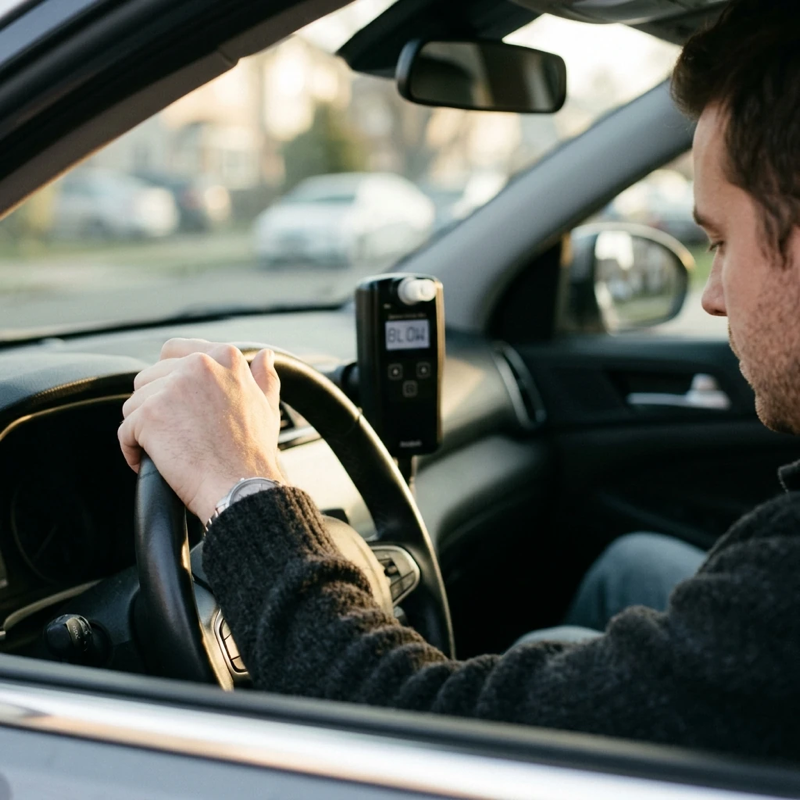
A true false positive would mean the device detected alcohol when no
alcohol was present. That’s almost never what’s going on. Modern
ignition interlock devices, including the Dräger Interlock
7000 used by RoadGuard, use a fuel-cell sensor that reacts
specifically to alcohol molecules. When that sensor returns a reading,
alcohol was there.
The catch is that the sensor measures concentration, not origin. It
can’t tell whether the ethanol came from a glass of wine an hour ago or
from a swig of cinnamon mouthwash 30 seconds ago. Both are alcohol. Both
produce a reading.
That’s why the more accurate term is false reading,
or sometimes “unexpected positive reading.” The device did its job. The
alcohol is real. The source just wasn’t a drink — and you’ll use that
framing for the rest of this guide.
One note on language: most people search for “interlock false
positive” because that’s the phrase that comes to mind in the moment. So
you’ll see both terms in the wild. But when you’re talking to your
monitoring authority or your provider, “false reading from a
non-beverage source” is the phrase that will land.
How the Fuel-Cell
Sensor Actually Works
Understanding the sensor helps explain why false readings happen and
why most of them clear up on their own.
Inside the device is an electrochemical fuel cell calibrated to react
to alcohol. When you provide a breath sample over the roughly
ten-second test, alcohol molecules in that sample interact with a
platinum electrode and generate a small electrical current. The stronger
the current, the higher the reading. The Dräger 7000 is built on more
than 60 years of breath-alcohol-testing experience, and that lineage is
part of why fuel-cell technology has become the standard for both
court-ordered interlocks and law-enforcement breathalyzers.
Fuel-cell sensors are highly selective for ethanol. The U.S.
Department of Transportation’s Volpe Center work on
breath-alcohol testing and peer-reviewed sensor studies on PubMed both confirm that
fuel-cell sensors are dramatically less reactive to acetone, methanol,
and other volatile compounds than older semiconductor sensors. That
matters for anyone on a keto diet or living with diabetes, because both
conditions can raise breath acetone, and a fuel-cell device handles
acetone far better than the cheap consumer breathalyzers people
sometimes compare it to.
Mouth Alcohol vs. Deep-Lung
Alcohol
This is the distinction that trips up almost every driver who gets a
surprise reading.
Deep-lung alcohol is what your blood alcohol
concentration actually is. Alcohol absorbs into your bloodstream,
exchanges through the air sacs in your lungs, and shows up in the breath
you exhale from deep in your chest. That’s the reading the law cares
about.
Mouth alcohol is residual ethanol sitting in your
mouth, throat, or upper airway from something you recently used, ate,
drank, or even inhaled. It produces a sharp spike that fades fast —
usually within 10 to 20 minutes.
The Dräger 7000 is built to distinguish between the two. It looks at
the shape of the breath curve, not just the peak number, and the
rear-mounted mouthpiece plus the blow-and-suck breath pattern are
designed to pull a deep-lung sample rather than just whatever’s pooled
in the front of your mouth. That’s a real engineering advantage, and
it’s one of the reasons RGI’s reliability story is worth knowing. But no
sensor can fully cancel out a fresh swig of alcohol-based mouthwash, so
prevention still matters.
Common
Non-Beverage Sources of a False Reading
Most false readings trace back to a short list of everyday products
and conditions. Here’s the practical reference, with typical clearance
times and how to prevent each one.
| Trigger | Typical clearance time | Prevention |
|---|---|---|
| Alcohol-based mouthwash | 15–20 min after rinsing with water | Switch to alcohol-free mouthwash |
| Breath sprays and mints | 10–15 min | Skip them within 20 min of testing |
| Hand sanitizer (recent application near face) | 5–10 min after drying | Let it dry; don’t cup hands near mouth |
| Cough syrup and alcohol-based cold meds | 20–30 min | Check labels; use alcohol-free options |
| Asthma inhalers | Usually doesn’t trigger; rinse if it does | Rinse mouth and wait 5 min after a puff |
| Hot sauce and spicy foods | 10–15 min | Wait, rinse with water |
| Ripe fruit (especially bananas) | 10–15 min | Avoid right before a test |
| Fermented foods (kombucha, kimchi, sauerkraut) | 15–20 min | Wait and rinse |
| Fresh bread and yeast products | 10–15 min | Wait and rinse |
| Keto breath (ketosis acetone) | Not a true cause on fuel-cell devices; document if recurring | Tell your provider you’re on keto |
| GERD / acid reflux | Variable; reflux event-dependent | Talk to your doctor; document |
| Recent dental work with alcohol rinse | 20–30 min | Ask the dentist for alcohol-free rinse |
A few items on this list deserve a closer look.
Mouthwash and breath sprays are the single most
common cause of an unexpected reading. Many popular brands run 20 to 27
percent alcohol by volume — stronger than wine. One swish less than five
minutes before a test is more than enough to flag you.
Hand sanitizer is sneakier. The alcohol evaporates
quickly, but if you sanitize your hands and then immediately cup them
around the mouthpiece, you can pull vapor straight into the sample. Let
it dry, give it a minute, then test.
Keto breath is the one people worry about the most
and the one most likely to be a non-issue. Ketosis produces acetone, not
ethanol, and fuel-cell sensors discriminate sharply between the two —
far better than cheaper sensor types. If you’re on keto and seeing
recurring readings, talk to your provider. The fix is usually
documentation, not a diet change.
GERD and acid reflux can push trace stomach contents
— including any residual alcohol from earlier in the day — back into the
mouth. That’s a real medical interaction. The National Institute on Alcohol Abuse
and Alcoholism and NHTSA both
note that medical conditions affecting the upper GI tract can complicate
breath testing. If you have a documented GERD diagnosis, share it with
your monitoring authority early.
What to Do Right
After an Unexpected Reading
The first few minutes matter. How you respond shapes whether this
becomes a paperwork story or a real compliance problem.
- Don’t panic-blow. Repeated failed attempts in quick
succession can stack violations and trigger a temporary lockout. Slow
down. - Rinse your mouth with plain water. Not flavored,
not medicated, not coffee. Water. - Wait at least 15 minutes. This gives mouth alcohol
time to dissipate and lets the sensor reset between tests. - Retest carefully. Follow the exact breath pattern
the device requires — the simple blow-and-suck on the 7000 doesn’t
require humming or rhythm tricks. - Document what happened. Note the time, what you ate
or used in the previous hour, and the reading you got. A few sentences
in your notes app is plenty.
If the retest comes back clean, the initial reading is usually
treated very differently from a persistent positive. The event is still
recorded, but a clean retest plus a clear explanation is what monitoring
authorities are looking for. For a deeper walk-through of the next steps
when you get repeated readings, see troubleshooting
an ignition interlock.
For drivers facing a reading that’s already been flagged as a
violation and needs to be contested formally, there’s a companion piece
on how
to legally challenge a false positive interlock reading that covers
documentation, hearings, and what to bring to court.
A Simple
Pre-Test Routine to Avoid False Readings
Prevention is easier than troubleshooting. A short routine in the
morning eliminates most false readings before they happen.
Switch to alcohol-free mouthwash. That one change removes the most
common trigger entirely. While you’re at it, check the labels on your
cough syrup, breath spray, and any over-the-counter liquid medication.
Alcohol-free versions exist for almost all of them.
Build a 15-minute buffer between eating, drinking, or using anything
in your mouth and providing a breath sample. If you’ve used hand
sanitizer, let it dry fully before touching the mouthpiece, and don’t
cup your hands near your face when you blow. A small bottle of plain
water in the car, used for a quick rinse, covers most of the rest.
None of this is about gaming the system. It’s about giving the device
a clean sample that reflects your actual blood alcohol level. That’s a
better outcome for you and a faster path to getting through your
compliance period.
If you’ve been told the ignition
interlock camera on your device is recording every test, that’s true
on the 7000. The camera works in your favor here: it documents that you
were the one testing and that you were following the right procedure,
which strengthens any later explanation for a flagged reading.
While we’re on myths: peanut butter does not beat a breathalyzer, no
matter what TikTok says. Fuel-cell sensors don’t get fooled by
household tricks. That cuts both ways — it means the device is reliable
when you’re clean, and it means there’s no shortcut when you’re not.
When to Call Your Provider
Not every unexpected reading needs a phone call. But a few situations
do.
Reach out promptly if you have repeated false readings that don’t
resolve with the prevention steps above, if your device enters a lockout
you can’t clear, or if you’re seeing readings during normal rolling
retests that don’t match anything you ate or drank. Your provider can
review the device logs, check calibration history, and identify whether
a pattern points to a specific cause.
A Governors Highway Safety
Association review of state interlock programs found that
compliance-based removal rules — where the clock to get the device off
only runs while you’re test-clean — significantly reduce repeat DUI
offenses. That same research is why monitoring authorities take recorded
events seriously: most flagged readings in these programs do reflect
alcohol use. The flip side is that when you bring a real false reading
to your provider with clean documentation and a consistent pattern of
compliance, it’s much easier to get the event reviewed in context.
The Dräger 7000’s ability to distinguish mouth alcohol from deep-lung
alcohol is one of the quieter advantages of the device. Most drivers
don’t think about sensor design until something goes wrong. When it
does, that engineering is the difference between a reading that gets
cleared on retest and one that follows you into a hearing.
If you ever want a human to walk you through what your device is
showing, RoadGuard’s
support team and your nearest service center can pull the data and
explain what the logs actually say.
Frequently Asked Questions
Q:
How long should I wait after brushing my teeth before using the
interlock?
A: Wait about 15 to 20 minutes after brushing, then rinse your mouth
with plain water before you test. Most toothpaste is alcohol-free, but
whitening rinses, fluoride rinses, and some mouthwashes contain enough
alcohol to trigger a reading. If you’ve used anything other than plain
toothpaste, give it the full 20 minutes and rinse once with water before
blowing.
Q:
Can certain diets or supplements affect my interlock breath test?
A: Low-carb and ketogenic diets raise breath acetone, but fuel-cell
sensors like the one in the Dräger 7000 are calibrated to react to
ethanol, not acetone, so true keto-related readings are rare. If you’re
on keto and seeing recurring positive readings, let your provider and
monitoring authority know early. Documentation is usually enough to
resolve the pattern, and you should not have to change your diet to stay
compliant.
Q:
What should I keep in my car to handle an unexpected reading
safely?
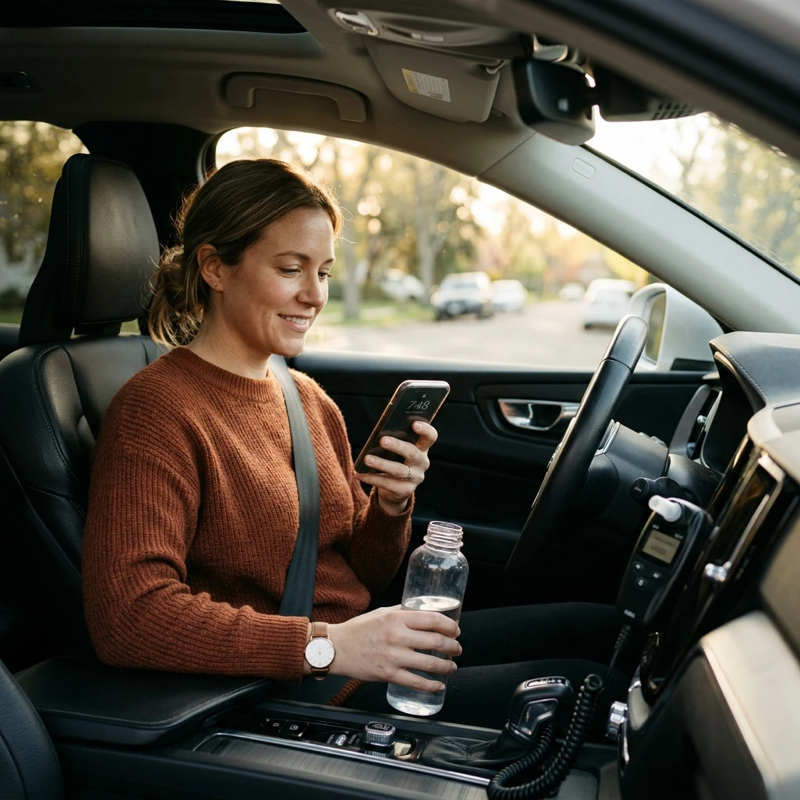
A: A sealed bottle of plain water for rinsing, a notes app or small
notebook for timestamps, and an alcohol-free backup mouthwash or breath
spray. That’s it. Having these on hand means you can rinse, wait,
retest, and write down exactly what happened in the right order.
Documentation in the moment is far more credible than reconstructing the
story days later.
Q:
If my device records a positive reading, does it automatically count as
a violation if I pass on the retest?
A: Not always. Program rules vary by state and by monitoring
authority. Some programs weigh the retest heavily and treat a clean
follow-up as resolving the event. Others record every positive reading
regardless of what happens next. Check your specific program’s rules,
and when in doubt, contact your monitoring authority directly. Don’t
assume a clean retest cancels out the first reading.
Q:
Does weather or cabin temperature affect interlock accuracy?
A: The Dräger 7000 operates between -40°F and 185°F, which covers
almost any real-world driving condition. Extreme cold or heat can
briefly affect the cabin air and your breath, especially right after a
vehicle has been sitting outside overnight. Let the cabin stabilize for
a minute or two and follow any warm-up prompts on the screen. The device
handles temperature swings well, but a fresh sample of stable cabin air
gives the cleanest reading.
Q:
How do I prove I wasn’t drinking if I get repeated false readings?
A: Build a paper trail. Save your service and calibration records,
keep notes on what you used or ate before each flagged reading, and ask
your provider for a copy of the device logs. If your program allows it,
an independent alcohol test from a hospital lab or urgent care taken
shortly after the event can corroborate that you were clean. Bring the
documentation to your monitoring authority and ask for the readings to
be reviewed in context.
Q:
How do rolling retests change what I should do while driving?
A: Plan ahead. Avoid eating, drinking flavored beverages, or using
scented or alcohol-based products while you’re driving, because a
rolling retest can happen at any time. If you need to rinse with water
or use a hand wipe, pull over safely first. Consistent routines reduce
the chance of a surprise reading during a retest you can’t
reschedule.
Q:
Are RoadGuard’s devices more reliable than older breathalyzer
technology?
A: The Dräger 7000 uses a fuel-cell sensor with more than 60 years of
breath-alcohol-testing technology behind it. Fuel cells are
significantly more selective for ethanol than older semiconductor
sensors, which is why both court-ordered interlocks and law enforcement
breathalyzers have moved to them. The 7000 also distinguishes between
mouth alcohol and deep-lung alcohol, which reduces false readings from
residual mouth alcohol that older devices might have flagged.
Q:
Can hot weather inside a parked car cause a false reading?
A: Cabin heat alone doesn’t trigger the sensor, but heat plus a
chemical source can. If you’ve left an alcohol-based hand sanitizer, an
open bottle of cleaner, or a windshield washer fluid leak in a hot car,
vapor can build up and affect the next breath sample. Crack a window,
let the cabin air out for a few minutes, and retest. If readings keep
showing up in the heat, ask your provider to inspect the device and the
cabin.
Q: What if I think
the device itself is wrong?
A: Devices do occasionally need service or recalibration, and your
provider can verify that on demand. Call your service center, describe
the pattern, and request a calibration check or device inspection. The
Dräger 7000 has a documented service network and qualified technicians,
so a hardware issue can usually be ruled in or out quickly. If the
device is genuinely malfunctioning, the documentation from the
inspection becomes your record for any compliance review.
Getting
Through the Compliance Period With Confidence
A false reading is rarely the end of the story. It’s a moment, and
most of those moments come down to a familiar everyday product or a
small habit that’s easy to adjust. The device is doing what it’s
designed to do. Your job is to give it a clean sample, document what
happens, and stay in steady contact with your provider.
The fuel-cell sensor in the Dräger 7000 distinguishes between mouth
alcohol and deep-lung alcohol — a level of reliability most drivers
don’t think about until they need it. If you want to talk through a
reading you’re not sure about, or you’re shopping for a device and you
want to ask real questions about how it handles false readings, call
1-833-545-0368 and a real person on the RoadGuard team
will walk you through it.