
How Fuel Cell Sensors Detect Alcohol: The Science Behind Your Ignition Interlock
Disclaimer
The information in this blog is for general informational purposes only. Information may be dated and may not reflect the most current developments. The materials contained herein are not intended to and should not be relied upon or construed as a legal opinion or legal advice or to address all circumstances that might arise. You should contact your attorney to obtain advice with respect to any particular legal matter. Only your individual attorney can provide assurances that the information contained herein – and your interpretation of it – is applicable or appropriate to your particular situation. Links to any third-party websites herein are provided for your reference and convenience only; RoadGuard Interlock does not recommend or endorse such third party sites or their accuracy or reliability. RoadGuard Interlock expressly disclaims all liability regarding all content, materials, and information, and with respect to actions taken or not taken in reliance on such. The content is provided “as is;” no representations are made that the content is error-free.
A fuel cell breathalyzer doesn't guess. It relies on a specific electrochemical reaction that alcohol triggers, a design that's a big reason modern interlock devices are as dependable as they are. If you're living with an interlock, understanding how that sensor works can make the whole experience feel less like a mystery and more like something you can trust.
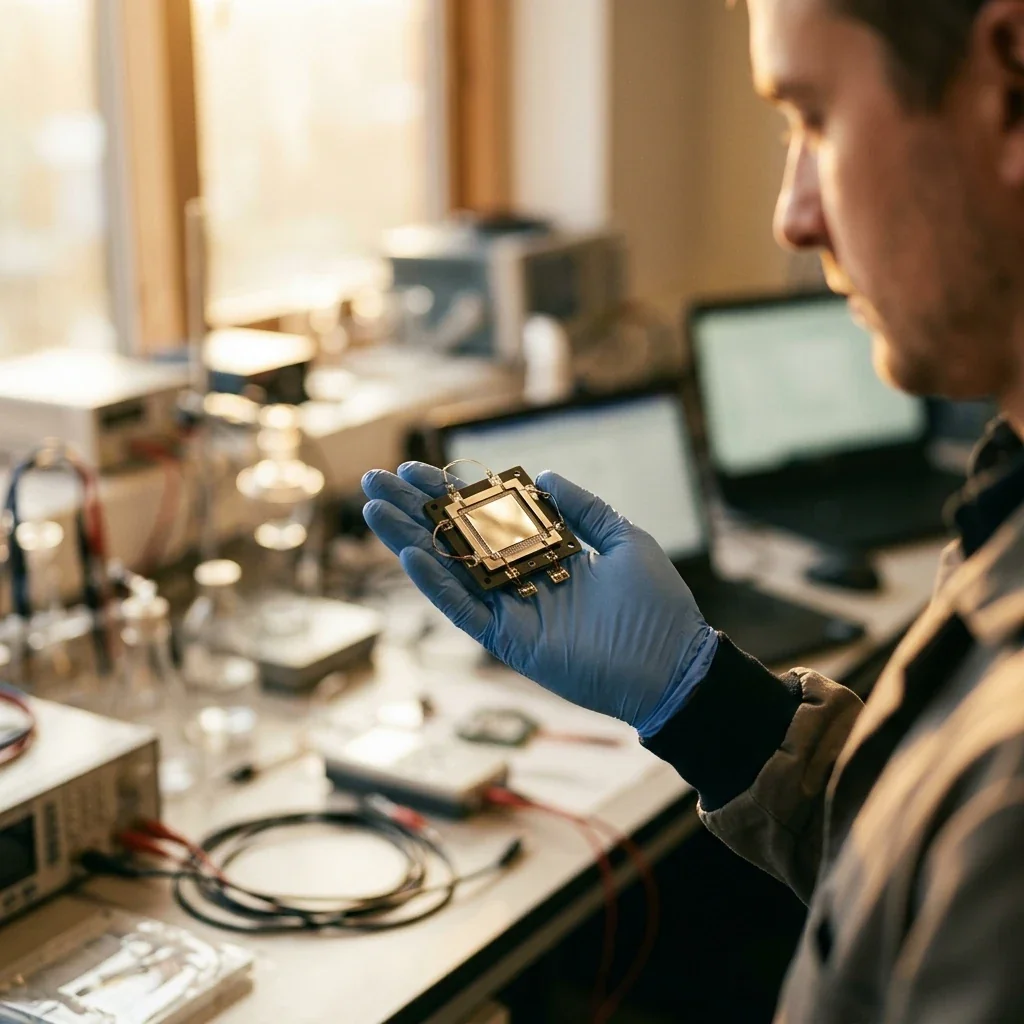
Knowing what's happening inside the device makes your readings easier to interpret, helps you avoid the kinds of everyday mistakes that lead to an unexpected result, and takes some of the anxiety out of each test. Below, we'll walk through how a fuel cell sensor detects alcohol, how it compares to cheaper sensor types, and what keeps it accurate over months of daily use.
What Is a Fuel Cell Breathalyzer Sensor?
A fuel cell breathalyzer sensor is an electrochemical device built to detect ethanol, the type of alcohol in beverages, in a breath sample. Inside sits a small fuel cell made of two platinum electrodes separated by an electrolyte membrane. When you blow into the device, ethanol in your breath triggers a reaction at the electrode surface, generating a small electrical current.
That current is the heart of the measurement. Generally, the more alcohol present in the breath, the larger the current. A microprocessor translates that current into a breath alcohol concentration (BrAC) reading, which is then used to estimate blood alcohol concentration (BAC).
Why Platinum Electrodes Matter
Platinum acts as a catalyst that speeds up the reaction with ethanol without being used up in the process, which is part of why these sensors hold up over a long service life. Just as importantly, platinum surfaces tend to respond to ethanol while largely ignoring many other compounds. That selectivity is a major reason fuel cell technology is the standard choice for compliance and law-enforcement testing, rather than the cheaper sensors found in many consumer gadgets.
How a Fuel Cell Sensor Measures Alcohol, Step by Step
The whole thing takes only seconds, but a few distinct stages happen between the moment you exhale and the moment a number appears.
- Breath sample intake. You blow into the mouthpiece, and the device captures a sample of deep-lung air, which reflects blood alcohol more reliably than a shallow puff from the mouth.
- Ethanol oxidation. The sample passes over the platinum electrode, where ethanol reacts and, in simplified terms, breaks down into acetic acid along with charged particles (protons and electrons).
- Current generation. Those freed electrons flow through a circuit, creating a measurable current, while the protons move through the electrolyte membrane.
- Reading calculation. The microprocessor measures the electrical charge produced and calculates a BrAC, which is then used to estimate BAC.
The full cycle usually completes in well under a minute. Understanding this also explains why mouthwash and other alcohol-containing products can temporarily affect your reading: residual alcohol in the mouth can reach the sensor before your deep-lung breath does, producing a reading that doesn't reflect your actual BAC. Rinsing with water and waiting a few minutes before testing usually clears it up.
Fuel Cell vs. Semiconductor Sensor: The Practical Difference
Many inexpensive consumer breathalyzers use a semiconductor sensor, which changes electrical resistance when it contacts alcohol vapor. They're cheaper to make, which is why you'll find them in low-cost personal devices, but cheaper doesn't mean equivalent for anything with legal or safety consequences.
The most important difference is specificity. Semiconductor sensors tend to react to a wider range of substances, so things like cigarette smoke or certain foods are more likely to influence a reading. Fuel cell sensors respond much more selectively to ethanol, which helps reduce false readings. That's also why a bargain personal breathalyzer can give a surprising result after something as harmless as a ripe banana.
|
Consideration |
Fuel Cell Sensor |
Semiconductor Sensor |
|
Alcohol specificity |
High, responds mainly to ethanol |
Lower, can react to other compounds |
|
Consistency over many tests |
Designed to stay stable across heavy repeated use |
More prone to drift with frequent use |
|
Typical use |
Professional, legal, and compliance testing |
Casual personal estimation |
|
Relative cost |
Higher |
Lower |
Semiconductor devices aren't useless, for a rough, non-official check, an inexpensive unit can give you a ballpark. But for anything tied to compliance or safety, fuel cell technology is the sensible standard. If you're weighing the two, this look at the difference between a car breathalyzer and an ignition interlock adds helpful context.
Why Ignition Interlock Devices Rely on Fuel Cell Sensors
An ignition interlock device (IID) tests your breath more than once per trip, an initial startup test plus rolling retests while you drive. That repetition demands a sensor that stays consistent from the first test of the day to the last, which is exactly where fuel cell sensors are strongest.
Industry best-practice guidance for interlock programs emphasizes accuracy, alcohol specificity, and long-term stability, the very qualities fuel cell sensors are known for. The American Association of Motor Vehicle Administrators (AAMVA) publishes a widely referenced Ignition Interlock Program Best Practices Guide that many programs look to when setting standards.
How RoadGuard's Device Uses Fuel Cell Technology
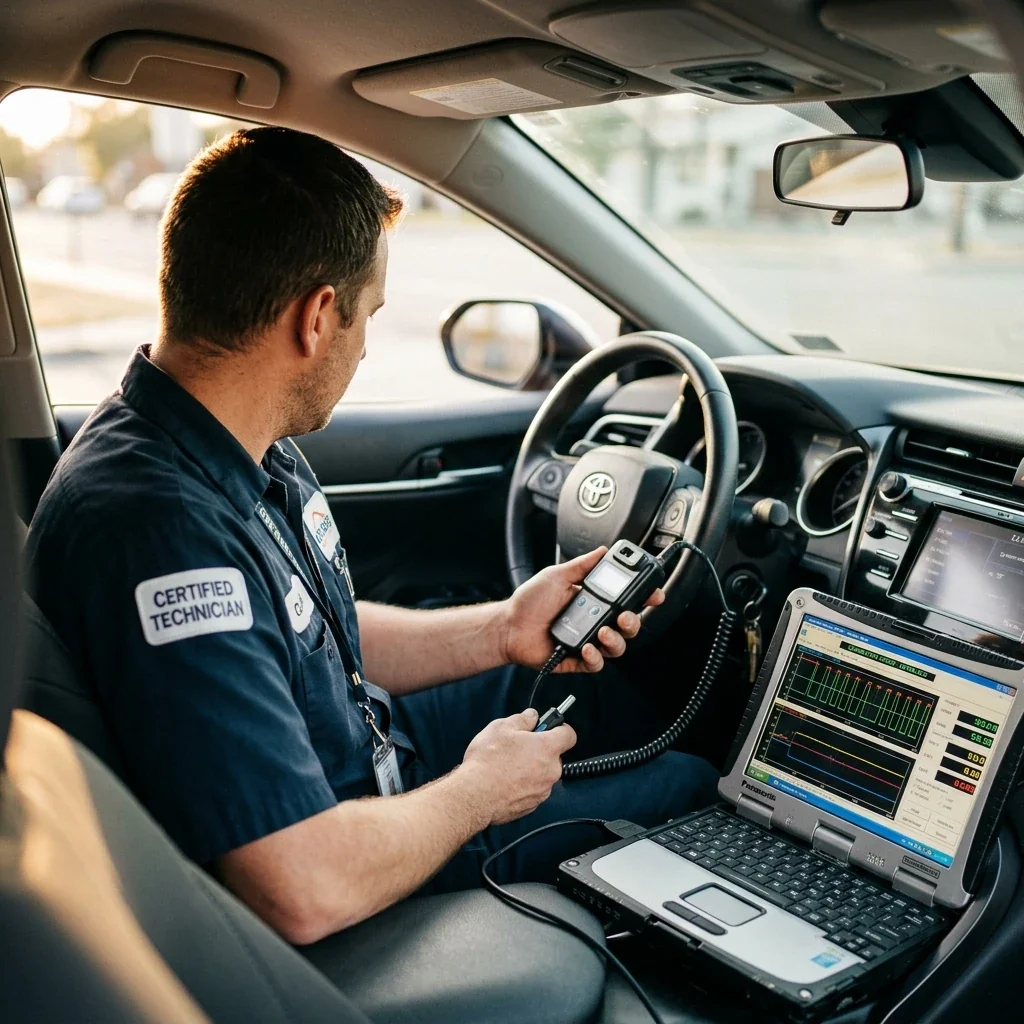
RoadGuard Interlock uses the Dräger Interlock 7000, which is built around a fuel cell sensor. Two things drivers tend to appreciate most: it's one of the faster devices to warm up, often ready in around ten seconds, and it uses a simple blow-and-suck breath pattern, so there's no humming or awkward technique to master. It's also designed to operate reliably across a wide range of temperatures and to distinguish residual mouth alcohol from genuine deep-lung breath, which helps cut down on the frustrating readings that don't reflect what you've actually had to drink.
Fuel cell sensors have become the technology of choice for modern interlocks precisely because compliance leaves little room for error. When the result affects your driving privileges, a sensor built for accuracy and consistency matters.
Calibration, Maintenance, and Real-World Reliability
No sensor stays perfectly calibrated forever. Over time, fuel cell sensors experience gradual drift, which is normal. Regular calibration resets the sensor toward an accurate baseline, and interlock programs generally require calibration visits on a set schedule, the exact timing depends on your state and program, so follow the schedule your provider or monitoring authority gives you.
Factors That Can Affect Your Readings
A few everyday variables can influence a result:
- Residual mouth alcohol from recent food, drinks, or alcohol-based oral products.
- Very extreme temperatures, which professional-grade sensors handle far better than cheap ones.
- A weak or interrupted breath sample, which the device may simply reject and ask you to repeat.
If you get an unexpected result, waiting a few minutes and retesting usually resolves it. For anything persistent, troubleshooting common interlock malfunctions can help you tell whether it's something simple or a reason to book a service visit.
If you've ever wondered whether the device can be tricked, the short version is that the electrochemistry makes it difficult. The reaction requires actual ethanol to produce a current, and modern devices include features meant to confirm the right person is providing the sample. This overview of whether an ignition interlock can be faked explains more.
Frequently Asked Questions
How should I prepare before a breath test to avoid an invalid sample?
Aim for a steady, continuous breath that matches the device's prompt, and don't rush it. If you've recently eaten, had a drink, or used an oral product, give yourself a short buffer of a few minutes first, and follow your program's guidance for retesting if you're prompted. A little water beforehand can help clear residual mouth alcohol.
What should I do if I fail a startup test but believe the result is wrong?
Stay calm and follow the device's instructions, which usually allow a retest after a brief wait. Note the time and circumstances, then contact your service provider promptly to confirm next steps and protect your compliance record. A single unexpected reading is not the end of the world, and it's often resolved with a clean retest.
Can medications or medical conditions interfere with an interlock test?
Some medications and health conditions can create confusing situations, particularly if they affect breathing or your mouth and saliva. If you have a documented medical concern, talk with your monitoring authority or provider about best practices and what documentation may help. They can tell you how your specific program handles it.
How do I keep the device hygienic without causing test issues?
Use only the cleaning methods your provider approves, and keep alcohol-based cleaners away from the mouthpiece, since they can affect a reading. If you share the vehicle, ask about spare mouthpieces and recommended cleaning intervals so everyone stays comfortable.
What if the device beeps for a rolling retest at a bad moment, like heavy traffic?
Safety comes first. Keep driving responsibly and provide the sample as soon as conditions safely allow within the window the device gives you. If you have to wait for safety reasons, contact your provider afterward to understand how the event is recorded and whether any follow-up is needed.
How can I plan for compliance costs beyond installation?
Budget for scheduled service and calibration visits and any monitoring fees that may apply in your state. Asking your provider for a written schedule of fees upfront is the best way to avoid surprises and compare options accurately, since costs vary by provider and location.
Why does my reading sometimes vary a little between tests?
Small variation can come from timing, breath strength, residual mouth alcohol, or temperature, not necessarily from anything you did wrong. Consistent technique and following your provider's guidance help keep readings steady. If you ever see a large or unexplained change, contact your provider.
Trust the Science Behind Every Breath Test
A fuel cell breathalyzer sensor does one thing exceptionally well: it responds to ethanol in your breath with a level of specificity and consistency that cheaper sensors can't match. The chemistry is well understood, and it's a big part of why this technology has become the standard for compliance testing.
When your device asks for a sample, you're relying on well-established sensor engineering. That's part of why RoadGuard Interlock uses the Dräger Interlock 7000, backed by years of industry experience, to make compliance as straightforward as possible in the many states we serve. If you're getting started or considering a switch, get in touch with RoadGuard Interlock to find out what's available in your area, and ask about any current promotions, since offers and pricing vary by location.
Disclaimer: This article is provided by RoadGuard Interlock for general informational purposes only and is not legal, financial, or medical advice. DUI and ignition interlock laws, penalties, fees, and program requirements differ from state to state and county to county, and they can change at any time. Any costs, timelines, or figures mentioned are general estimates rather than quotes or guarantees. Please do not rely on this article as a statement of the law where you live, confirm current requirements with your state DMV, the court handling your case, a licensed attorney, or RoadGuard Interlock directly before making decisions. Device features, pricing, availability, same-day installation, and any promotions referenced are subject to change, vary by location, and may not be offered in every state RoadGuard Interlock serves.