
Can You Drive for DoorDash or Amazon Flex with an Interlock?
Disclaimer
The information in this blog is for general informational purposes only. Information may be dated and may not reflect the most current developments. The materials contained herein are not intended to and should not be relied upon or construed as a legal opinion or legal advice or to address all circumstances that might arise. You should contact your attorney to obtain advice with respect to any particular legal matter. Only your individual attorney can provide assurances that the information contained herein – and your interpretation of it – is applicable or appropriate to your particular situation. Links to any third-party websites herein are provided for your reference and convenience only; RoadGuard Interlock does not recommend or endorse such third party sites or their accuracy or reliability. RoadGuard Interlock expressly disclaims all liability regarding all content, materials, and information, and with respect to actions taken or not taken in reliance on such. The content is provided “as is;” no representations are made that the content is error-free.
You have an ignition interlock device installed, the rent is due, and
gig delivery looks like the fastest way to start earning again.
Reasonable plan. The question is whether DoorDash or Amazon Flex will
actually let you sign up while you’re blowing into a device every time
you start the car.
The short answer: in many cases, yes, but three different gatekeepers
have to agree. Your state DMV decides whether you can legally drive.
Your interlock program decides what kinds of driving count as allowed.
And the platform itself runs a background check that has nothing to do
with the device on your dash and everything to do with the DUI that put
it there.
This guide walks through how each platform handles applicants with a
DoorDash Amazon Flex interlock device situation, what their background
checks actually flag, and the practical realities of running deliveries
with rolling retests interrupting your route.
Can You Drive for
DoorDash With an Interlock?
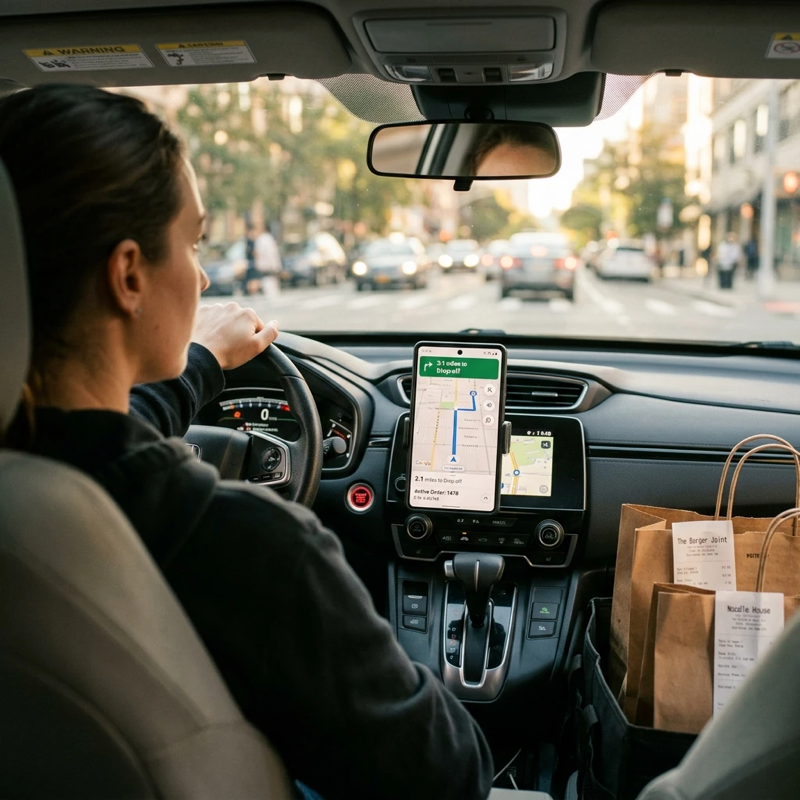
In most cases, yes. DoorDash does not specifically ban drivers who
have an ignition interlock device installed. According to the DoorDash
Dasher signup requirements, the platform asks for a valid driver’s
license, current auto insurance, and a passing background check. The
device on your dashboard is not a listed disqualifier.
The friction point is the background check, which DoorDash runs
through Checkr. Checkr pulls your
motor vehicle record and criminal history, typically going back seven
years. A DUI conviction shows up on that report, and the platform
evaluates how recent it is, whether it was a misdemeanor or a felony,
and whether it involved injury, property damage, or repeat offenses.
A single misdemeanor DUI from four years ago is not the same case as
a felony DUI from last year. DoorDash treats them differently. Many
drivers with older DUIs pass screening. Drivers with very recent DUIs,
especially within the last 12 to 24 months, may be denied or asked to
wait.
What DoorDash
Background Checks Actually Flag
DoorDash does not publish a strict disqualification list, which can
make the process feel opaque. In practice, the platform tends to look
unfavorably at:
- DUI convictions within the past seven years, especially with injury
or property damage - Multiple DUI offenses or pattern offenses on the MVR
- License suspensions still in active status
- Felony charges within the lookback window
The interlock device itself does not appear on your background check
report. DoorDash will not see “IID installed” anywhere in your file.
What it can see, depending on your state, is a restriction code on your
license indicating the device is required. That code alone is rarely a
deal-breaker if your restriction permits work or employment-related
driving. The DUI behind the device is what Checkr actually weighs.
Amazon
Flex Interlock Rules: What Drivers Need to Know
Amazon Flex tends to apply tighter screening than DoorDash. The Amazon Flex driver requirements
include a valid driver’s license, auto insurance, a qualifying vehicle
(most blocks require a midsize sedan, SUV, or truck), and a passing
background check run through Accurate Background.
Amazon’s motor vehicle record review is generally more conservative
than DoorDash’s. Drivers report stricter sensitivity around DUI history,
more conservative readings of license restrictions, and less flexibility
on recent offenses. A DUI within the past seven years can result in
denial, though approvals do happen depending on recency and the
specifics of the record.
How Amazon
Flex Reviews DUI and Interlock History
Amazon Flex involves delivering packages on a structured schedule of
blocks. Because routes are denser and tighter than typical DoorDash
orders, the platform may apply tougher standards around driving
reliability and screening outcomes.
If your restricted license limits you to specific purposes, such as
work, school, or medical appointments, you’ll need to confirm that
independent contractor delivery work qualifies as “employment driving”
under your state’s definition. Some states define this broadly enough to
include gig work. Others do not. Before applying, read the exact terms
of your restricted license, or contact your state DMV directly to
clarify. RGI’s guide on how
to get a restricted license with an ignition interlock covers the
state-by-state differences in restriction scope.
Interlock
Requirements vs. Delivery App Policies: Three Gatekeepers You Have to
Clear
Being legally allowed to drive and being approved by a delivery app
are two completely different things. You need to satisfy three separate
layers, and a green light from one doesn’t guarantee approval from the
others.
1. State DMV and license status. This determines
whether you can legally operate a vehicle at all. If your state issued
an interlock-restricted license that permits employment-related driving,
you’ve cleared the legal floor. Violations at this level, like failed
breath tests or skipped calibration appointments, can revoke your
driving privileges entirely.
2. Your interlock program rules. Some programs
restrict the hours you can drive, the purposes you can drive for, or the
vehicles you can drive. A few states limit interlock-restricted drivers
to a single registered vehicle. Violating these terms can extend your
interlock period or trigger fresh legal consequences. Read your court
order and DMV agreement carefully before assuming gig work
qualifies.
3. Platform background check policies. DoorDash and
Amazon Flex set their own standards, often stricter than what the law
requires. The platform doesn’t care that your state approved you. It
cares what Checkr or Accurate Background returns on its report.
Compliance at the interlock level is the foundation of all three.
Drivers who miss calibration appointments or rack up violations risk
losing their restricted license, which collapses everything else. The Centers
for Disease Control cites ignition interlocks as one of the most
effective tools for reducing repeat DUI offenses, and consistent
compliance is what keeps the door open for jobs like delivery work.
Real-World
Interlock Delivery Challenges on the Job
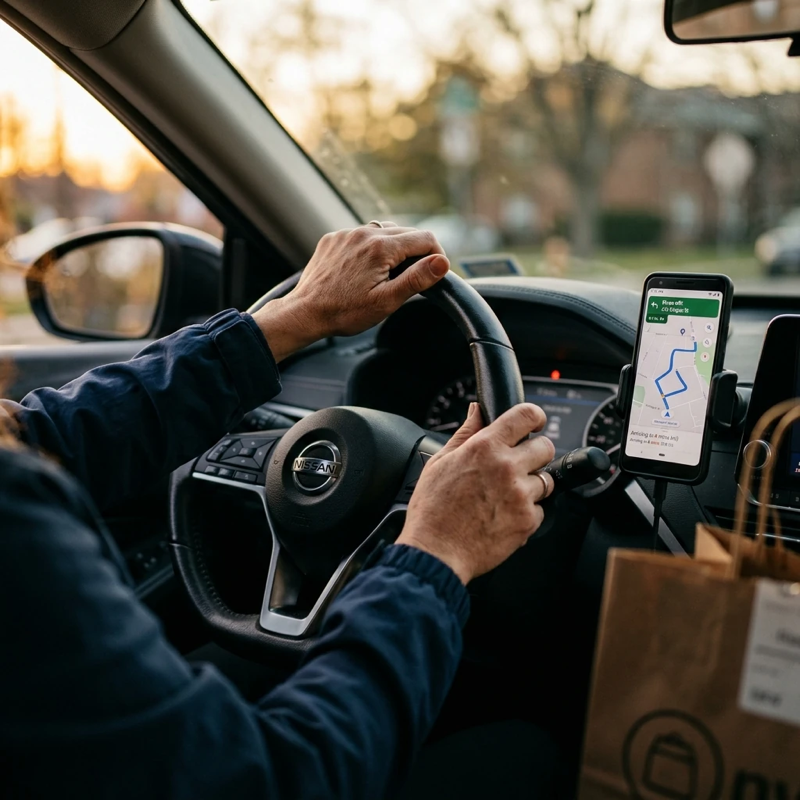
Even after approval, driving for DoorDash or Amazon Flex with an
interlock device creates practical complications that desk-based guides
rarely mention.
Rolling Retests and
Missed Deliveries
Your interlock device prompts rolling retests while you’re driving.
They happen at random intervals and require you to provide a breath
sample within a few minutes. During an active delivery, that means
pulling over safely, completing the test, and getting back on route.
Most retests take well under a minute. They can still throw off tight
delivery windows.
For Amazon Flex drivers working scheduled blocks, a rolling retest
during a dense route through apartment complexes adds real stress.
DoorDash drivers have slightly more flexibility since individual orders
carry less rigid timing. Either way, build a few extra minutes into each
delivery mentally. Drivers who pace themselves through the first few
weeks get used to it, and most find the routine settles into the
background of the job.
Customer Stops and Device
Visibility
When you park to drop off an order and return to your car, you’ll
need to provide a breath sample before driving again. This adds about 10
to 15 seconds per stop on a typical interlock. The device sits near the
steering column, and customers who walk up to your window might notice
it.
In practice, most customers grabbing a food bag at the door won’t see
or care about your dashboard. Amazon Flex drop-offs at doorsteps involve
almost no face-to-face interaction. The device itself carries no legal
stigma during deliveries. You’re complying with your program
requirements, and that compliance is what keeps you working. Drivers who
build a
steady daily rhythm with their ignition interlock device often find
the retests become second nature within a few weeks.
DoorDash
vs. Amazon Flex vs. Uber/Lyft: Platform Policy Comparison
Delivery platforms generally show more flexibility than rideshare
companies on DUI history. Uber and Lyft carry passengers, which creates
higher liability exposure and stricter screening. For the rideshare
side, our piece on rideshare
interlock requirements for Uber and Lyft walks through how those
platforms handle DUI history specifically.
| Factor | DoorDash | Amazon Flex | Uber / Lyft |
|---|---|---|---|
| Background check vendor | Checkr | Accurate Background | Checkr / HireRight |
| DUI lookback period | ~7 years | ~7 years | 7–10 years |
| Restricted license accepted | Often, if work-related driving is allowed | Case-by-case, more conservative | Rarely |
| IID itself disqualifying | No | No | No |
| Approval likelihood after DUI | Moderate | Lower | Low |
| Customer / passenger interaction | Minimal | Minimal | High |
| Vehicle options | Car, scooter, or bike in many markets | Midsize sedan or larger | Car only, model-year limits |
DoorDash is the most realistic starting point for most interlock
delivery drivers. Amazon Flex is possible but less predictable.
Rideshare is a longer shot until the interlock program ends and enough
time passes for the DUI to age toward the edge of the lookback
window.
State laws can also shape what’s possible. Some states define
“employment driving” broadly enough to cover any gig work; others
require the work to be tied to a single employer. Always check your
specific restricted license terms before applying.
Your Pre-Application
Checklist
Before submitting an application, walk through these steps to avoid
rejection or deactivation surprises.
- Verify your license status. Contact your state DMV
(or check its restricted-license page) and confirm that your restriction
permits work-related or independent contractor driving. - Review your interlock program terms. Check whether
your court order or DMV agreement limits driving hours or purposes. Ask
your interlock provider if anything is unclear. - Pull your own MVR. Order it directly from the
state. Know exactly what the background check will find before the
platform does. Dispute any errors in advance. - Check the timing. If your DUI is close to the
seven-year mark, waiting a few months can be the difference between
approval and denial. The age of the conviction matters. - Prepare your documentation. Have your license,
proof of insurance, and vehicle registration ready. Some states require
an SR-22 filing, which platforms may verify. - Stay current on calibration. A missed appointment
can cascade into a violation that costs you the restricted license
entirely. Keep your interlock service appointments on the calendar.
Frequently Asked Questions
Will
DoorDash or Amazon Flex ask me directly if I have an ignition interlock
device?
In most cases, no. Applications do not typically include a question
about whether you have an interlock device installed. The platforms
verify what they can pull from your motor vehicle record and your
background check. If your license carries a restriction code that
signals an interlock requirement, that code can appear on the MVR pulled
during screening, but the device itself is not part of the question
set.
If I get
denied, can I reapply or appeal the decision?
Yes, in many cases. Most denials come through the background check
vendor (Checkr or Accurate Background), and federal law gives you the
right to dispute information on the report. Start by requesting a copy
of the report, then file a formal dispute with the vendor if anything is
inaccurate. After a clean correction, you can reapply through the
platform. Some platforms also allow direct appeals of borderline
cases.
What
should I do if my background check report contains an error about my DUI
or license?
Request the full report from the screening provider, then file a
written dispute with documentation from the court or DMV showing the
correct disposition. Keep copies of every submission. Wait until the
corrected report is issued before reapplying. Errors are surprisingly
common, especially on older cases that were reduced, expunged, or
restored, and a clean correction often clears the path to approval.
Does
having an SR-22 affect approval, insurance verification, or
payouts?
An SR-22 is an insurance filing, not a separate type of coverage. It
signals to your state that your policy meets minimum liability
requirements after a DUI or major violation. Most platforms care that
you carry active coverage meeting state minimums plus any
platform-specific requirements. A policy lapse, not the SR-22 itself, is
what typically causes deactivation. Keep the policy current and the
SR-22 on file.
Can
I deliver using a rental car or a different vehicle if my interlock is
in my primary car?
It depends on your interlock order and the platform’s vehicle rules.
Some states require all vehicles you drive to be equipped with an
interlock. Others permit driving employer-owned vehicles without the
device under a specific exemption. Confirm with your monitoring
authority before driving any vehicle that does not have your device
installed. The platform also has to approve the vehicle on your
account.
Are
there privacy or stigma concerns if customers see the device?
Customers rarely ask. If one does, a brief, neutral response works
best, for example: “It’s a compliance device for my license.” There’s no
obligation to share legal details, and most interactions at the door are
too quick for anyone to look closely at your dashboard. Stay focused on
completing the delivery professionally.
What
driving habits can reduce interlock-related issues during delivery
work?
Plan routes with safe pull-over options for rolling retests, avoid
rushing between stops, and keep your vehicle in good working order so
start-up problems don’t trigger extra checks. Avoid mouthwash, energy
drinks containing trace alcohol, and breath sprays before you drive,
since these can cause false positives. If you do get a false positive,
wait a few minutes, rinse with water, and retest.
Will the
platform see my restricted license code?
The motor vehicle record pulled during your background check can
include restriction codes assigned by your state DMV. Most platforms
focus on whether the license is currently valid and whether the
restrictions permit the work. A restriction permitting employment or
work-related driving is generally compatible with gig delivery. A more
limiting restriction (medical appointments only, for example) likely is
not.
How long
after a DUI should I wait before applying?
There’s no fixed answer. Many drivers find approval rates improve
substantially once a DUI is three to five years old. If you can wait
until the conviction is past the platform’s lookback window (commonly
seven years), your odds improve again. That said, plenty of drivers with
more recent DUIs do get approved, especially for DoorDash. The
combination of recency, severity, and your overall driving record
matters more than any single timeline.
Does
the interlock device itself slow down my delivery times?
A typical start-up test takes about 10 to 15 seconds. Add a similar
amount at any stop where you turn the engine off. Over a full shift,
that may add five to fifteen minutes total. Rolling retests during
driving are usually quick, but they do require pulling over safely. Plan
for a small time cushion per delivery. Most drivers find the impact on
earnings is modest once the routine becomes second nature.
Your Next Step
Driving for DoorDash or Amazon Flex with an ignition interlock is
legally possible in most states and practically manageable once you
understand the rules. The device doesn’t disqualify you. Your DUI
history, your license restrictions, and each platform’s screening
policies decide whether you get approved.
Start by confirming your license allows gig work, then apply to
DoorDash first since approval odds are typically higher there. Keep your
interlock device calibrated, your record clean, and your compliance
reports current. Every violation-free month strengthens your
position.
If you’re still in the install stage, RGI offers same-day
installation in many markets and a service center network across the
country. Call 1-833-545-0368 or find your nearest RGI
service center to schedule. The faster you’re installed and
compliant, the faster you can be back on the road and back to earning.
Our support hub
also walks through what to bring to your appointment and what to expect
after install.