
Best Ignition Interlock for CDL Holders and Commercial Drivers
Disclaimer
The information in this blog is for general informational purposes only. Information may be dated and may not reflect the most current developments. The materials contained herein are not intended to and should not be relied upon or construed as a legal opinion or legal advice or to address all circumstances that might arise. You should contact your attorney to obtain advice with respect to any particular legal matter. Only your individual attorney can provide assurances that the information contained herein – and your interpretation of it – is applicable or appropriate to your particular situation. Links to any third-party websites herein are provided for your reference and convenience only; RoadGuard Interlock does not recommend or endorse such third party sites or their accuracy or reliability. RoadGuard Interlock expressly disclaims all liability regarding all content, materials, and information, and with respect to actions taken or not taken in reliance on such. The content is provided “as is;” no representations are made that the content is error-free.
A CDL ignition interlock requirement hits differently than a standard license restriction. Your livelihood depends on that commercial license, and a single DUI conviction triggers a web of overlapping federal and state rules that most general interlock guides never untangle. The stakes go beyond fines or points. For many commercial drivers, the real question is whether you can keep earning a paycheck while staying compliant.

This guide breaks down when CDL holders actually need an interlock, how federal disqualification rules interact with state interlock programs, and what to weigh when choosing a device and provider. One note first: the specifics vary by state and change over time, so confirm your own situation with your DMV, court, employer, and an attorney rather than relying on general guidance.
When Does a CDL Driver Need an Ignition Interlock?
The trigger depends on where the offense happened, what you were driving, and whether the state treats you as a first or repeat offender. CDL holders are held to a lower alcohol threshold than non-commercial drivers under federal rules, and operating a commercial motor vehicle (CMV) over that limit generally results in an out-of-service order and likely disqualification. But even a DUI in your personal vehicle at the standard limit creates consequences for your CDL.
Personal Vehicle DUI vs. CMV DUI
Many CDL holders don't realize that a DUI in a personal car still triggers a CDL disqualification under federal rules, generally about a year for a first major offense (longer if hazmat was involved), and typically a lifetime disqualification for a second major offense, though reinstatement may be possible after a set number of years in some cases. Meanwhile, state interlock orders usually apply to your personal driving privileges, not your CDL specifically. So you might be ordered to install an interlock on your personal vehicle while separately losing your authority to drive commercially. These are two separate tracks, and confusing them is one of the most common and costly mistakes drivers make.
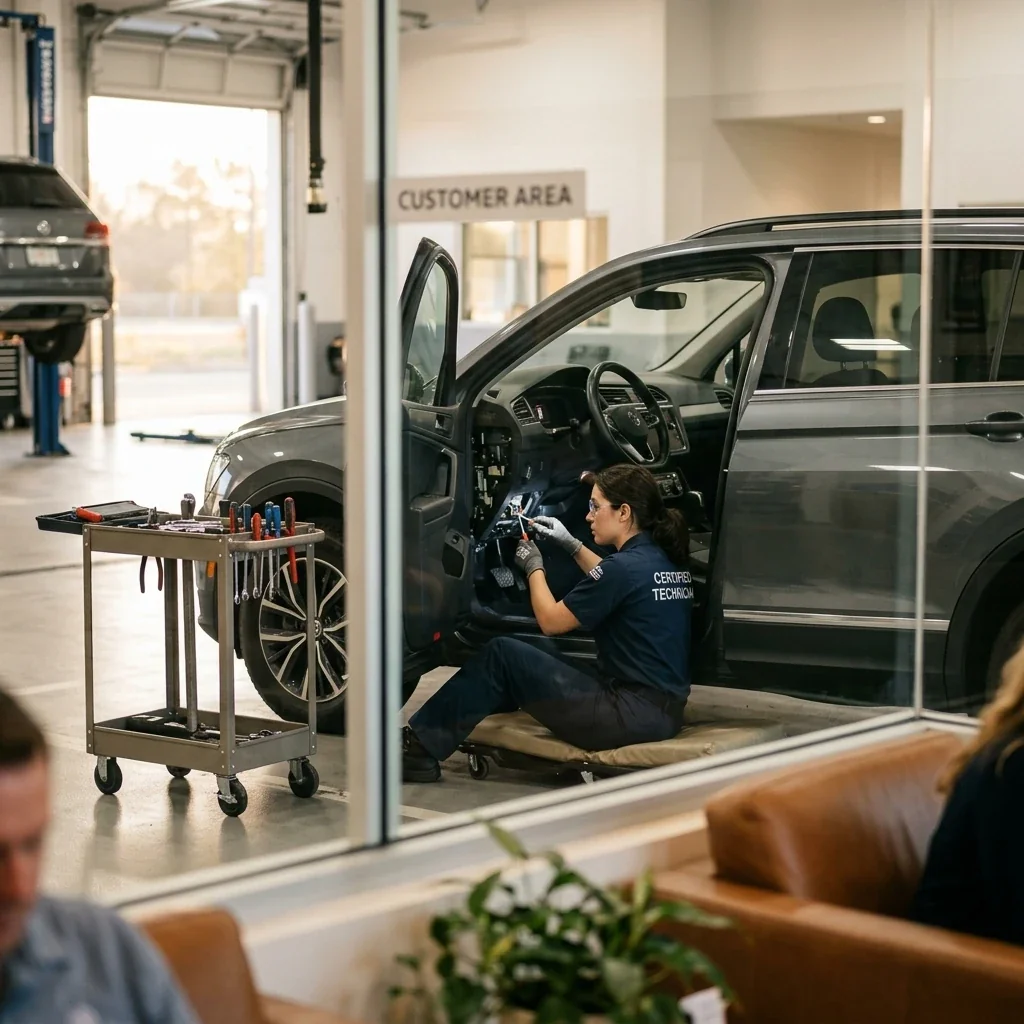
How Disqualification and Interlock Rules Overlap
Federal Motor Carrier Safety Administration (FMCSA) regulations under 49 CFR Part 383 govern CDL holders regardless of which state issued the license. These rules don't include an interlock provision for commercial vehicles. Instead, they impose disqualification periods that run alongside whatever your state requires for your personal driving privileges. Federal rules also require ongoing random drug and alcohol testing that doesn't pause during a disqualification, and once you're reinstated, you step back into a compliance framework that includes return-to-duty and follow-up testing supervised by a Substance Abuse Professional.
State Interlock Orders Don't Restore CDL Privileges
This is where the confusion gets expensive. Many states offer restricted or hardship licenses with an interlock that let convicted drivers get back on the road sooner, but federal rules prohibit operating a CMV with an interlock-restricted license. A state-issued restricted license with an interlock covers your personal vehicle only. Many states now require or strongly encourage interlocks for DUI offenders, so for CDL holders in those states, the interlock requirement applies to personal vehicles while the federal CDL disqualification runs its separate course. Understanding this dual-track system is foundational, and our overview of ignition interlock device laws adds helpful context.
Can You Drive a Commercial Vehicle With an Interlock?
The short answer is no. Federal law does not permit CDL holders to operate a CMV while under an interlock-restricted license, even if your state lets you drive personally with a device. This catches some owner-operators off guard: your semi or delivery vehicle cannot legally have an interlock installed as a workaround to keep working during a disqualification. The federal disqualification has to expire, and you must complete all reinstatement requirements, before you can legally operate a CMV again.
Fleet Vehicles and Multi-Vehicle Households
If you drive a personal vehicle, many states require the interlock on every vehicle registered to or regularly operated by you. Business owners running their own fleet face an even more complicated situation, since installing a device on fleet vehicles raises questions about employer liability and how devices work in a fleet context. Requirements for multiple vehicles vary, so confirm what applies to you.
Employer Exemptions
Some states offer employer exemptions that let an interlock-restricted driver operate an employer's vehicle without a device during work hours, but these almost never apply to CDL-required positions, because the federal disqualification already prevents you from driving a CMV. Where employer exemptions can matter is non-CDL work: if you hold a CDL but your employer also has you driving a non-commercial company vehicle, some states may allow it with written employer consent and documentation you carry at all times. The rules vary and violating them can extend your disqualification, so knowing your rights around workplace policies is worth the time.
What to Compare Before You Choose a Provider
Choosing a provider matters more for CDL holders than for standard license holders, because your compliance record directly affects reinstatement, and any device failure, missed calibration, or reporting gap can delay your timeline.
- Service coverage. CDL holders often live in one state and are licensed in another, so you want a provider with convenient service locations. RoadGuard Interlock operates service centers in the many states it serves, which helps when your schedule or location shifts.
- Device reliability and speed. A device that's slow to warm up on a cold morning opens the door to missed tests. The Dräger Interlock 7000 is one of the faster devices to warm up and is built to operate reliably in extreme temperatures, which quietly protects your compliance record if you start before sunrise or work in harsh climates.
- Compliance reporting. Reinstatement requires clean documentation, so your provider should transmit compliance data reliably and generate reports that satisfy both your DMV and any court requirements. Gaps create questions you don't want to answer at a reinstatement hearing.
Costs and Installation Logistics
Expect a monthly lease fee, installation cost, and calibration charges, all of which vary by state and provider, so get current, itemized pricing rather than relying on a figure you saw online. Installation is usually quick, often around an hour or two at a certified service center. For CDL holders, the hidden cost is downtime, since every missed calibration risks a violation flag, so choose a provider with flexible scheduling. In select states, RoadGuard Interlock offers promotions for new customers along with a price-match guarantee; because these vary by location, check the current offer for your area.
State Rules to Check Before You Drive
Every state handles the intersection of CDL disqualification and interlock requirements differently. Some impose a hard suspension period before you can install a device on your personal vehicle, while others allow immediate installation, and a few have specific provisions affecting commercial-driver reinstatement timelines. In every case, the federal CDL disqualification runs independently: your state interlock program gets you back in your personal vehicle, and federal reinstatement gets you back in a CMV, on separate timelines. Confirm your specific requirements with your DMV, your court order, and (if applicable) your employer's compliance team before making decisions, because the consequences of misunderstanding which rules apply are too severe to rely on general guidance alone.
Frequently Asked Questions
What documents should I bring to an installation appointment?
Bring a government-issued photo ID, your court order or DMV interlock authorization, and your vehicle registration and insurance. If you're using a restricted license, also carry any restriction paperwork so the service center can confirm program details.
How do interlock requirements work if I move to another state while enrolled?
You typically must coordinate an interstate transfer so your compliance data is accepted by the state overseeing your case. Start with your DMV or monitoring authority, then confirm your provider can service the new location and submit reports in the correct format.
What if my vehicle is in the shop or I need to switch cars during my interlock period?
Contact your monitoring authority and provider before you drive, since temporary vehicle changes often require written approval and a reinstallation. Driving a vehicle without the required device can create violations even if the situation feels unavoidable.
Can other people drive my car if it has an interlock installed?
In many states yes, but the device still records all activity and any violation can affect your case. If someone else must drive it, set clear rules so they don't do anything that could be read as tampering or noncompliance.
How do I avoid false positives from foods, mouthwash, or medications?
Use alcohol-free hygiene products, avoid eating or drinking right before a test, and rinse with water and wait a few minutes if you've recently had anything sugary or fermented. If you use medically necessary products that might interfere, ask your attorney or monitoring authority how to document that in advance.
What if the device records a violation I believe is incorrect?
Request a copy of the event log and ask your provider what supporting documentation they can supply, such as service notes or diagnostics. Then follow your state's dispute or hearing process promptly, since waiting can limit your options.
What should owner-operators consider if their truck is leased or financed?
Review your lease or finance agreement for clauses about compliance-related license restrictions, insurance requirements, and reporting obligations. It also helps to notify your insurer and confirm how a DUI-related restriction affects premiums and coverage for both your personal vehicle and your business operations.
Get Back on the Road With the Right Plan
A CDL interlock requirement means managing two regulatory tracks at once: your state program governs the device on your personal vehicle, and federal rules control when you can return to commercial driving. Neither process waits for the other, so starting your interlock program promptly protects your reinstatement timeline.
The right provider makes this significantly less stressful. With a service network in the many states it serves, RoadGuard Interlock helps CDL holders meet every compliance requirement without gaps in documentation or coverage. Schedule your install and take the first concrete step toward getting back behind the wheel.
Disclaimer: This article is provided by RoadGuard Interlock for general informational purposes only and is not legal, financial, or medical advice. DUI and ignition interlock laws, penalties, fees, and program requirements differ from state to state and county to county, and they can change at any time. Any costs, timelines, or figures mentioned are general estimates rather than quotes or guarantees. Please do not rely on this article as a statement of the law where you live. Confirm current requirements with your state DMV, the court handling your case, a licensed attorney, or RoadGuard Interlock directly before making decisions. Device features, pricing, availability, same-day installation, and any promotions referenced are subject to change, vary by location, and may not be offered in every state RoadGuard Interlock serves.