
Can You Put an Interlock Device on a Motorcycle?
Disclaimer
The information in this blog is for general informational purposes only. Information may be dated and may not reflect the most current developments. The materials contained herein are not intended to and should not be relied upon or construed as a legal opinion or legal advice or to address all circumstances that might arise. You should contact your attorney to obtain advice with respect to any particular legal matter. Only your individual attorney can provide assurances that the information contained herein – and your interpretation of it – is applicable or appropriate to your particular situation. Links to any third-party websites herein are provided for your reference and convenience only; RoadGuard Interlock does not recommend or endorse such third party sites or their accuracy or reliability. RoadGuard Interlock expressly disclaims all liability regarding all content, materials, and information, and with respect to actions taken or not taken in reliance on such. The content is provided “as is;” no representations are made that the content is error-free.
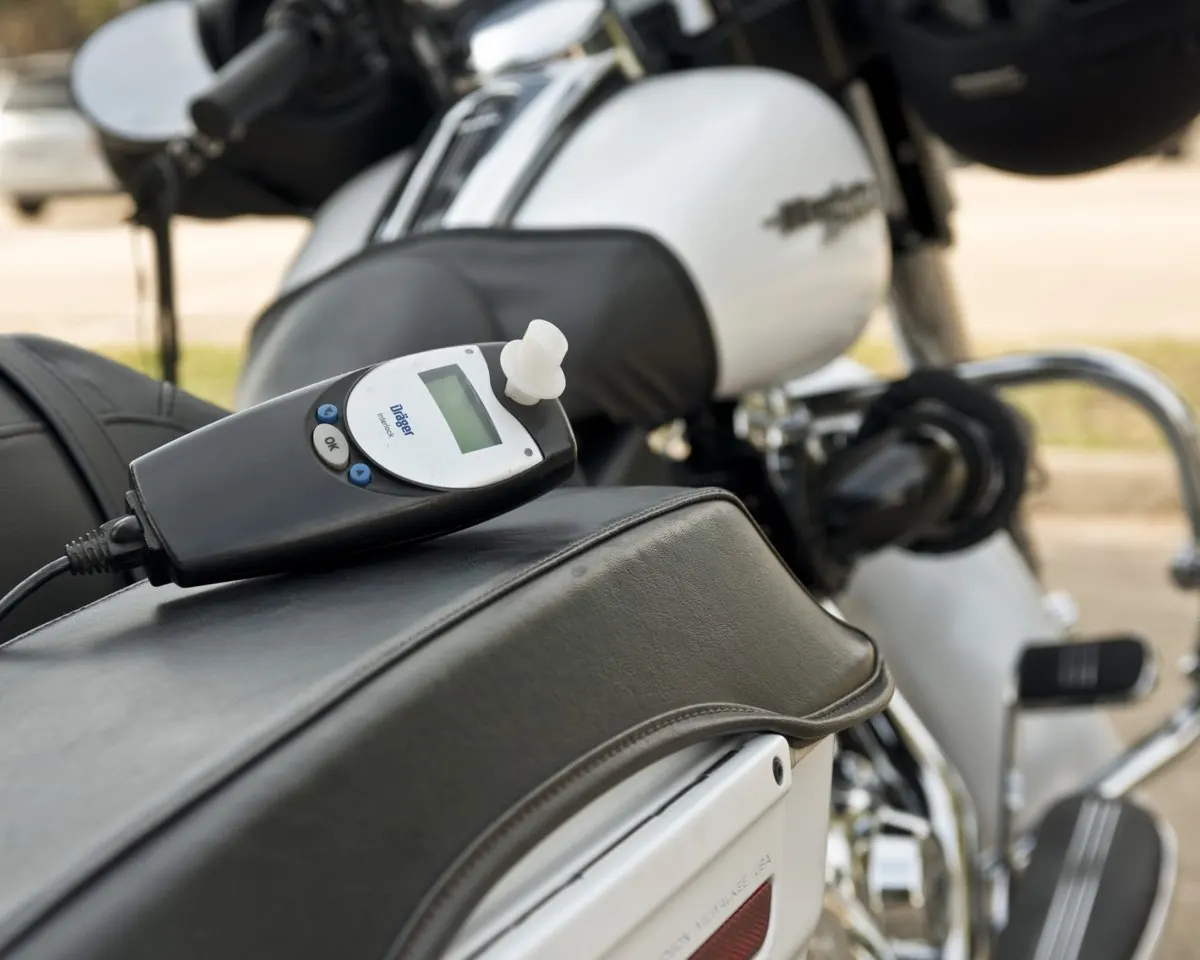
If a DUI has kept you off your bike, you’re probably asking whether an interlock device on a motorcycle is possible. In many cases it is.
The device itself isn’t usually the obstacle. Your state, the court handling your case or your monitoring authority sets whether your motorcycle can satisfy your interlock requirement, and a service center confirms whether your bike can take the device.
Can You Put an Interlock on a Motorcycle?
Yes, you can put an interlock on a motorcycle when your state’s program accepts one. The hardware isn’t the barrier: the Dräger Interlock 7000 that RoadGuard installs is built for easy installation in any type of vehicle, including motorcycles. The device page adds a condition in its own footnote, “depending on state regulations,” and that condition is why the answer changes from state to state.
So the question has two parts. First, does your state let a motorcycle count toward an interlock requirement? Second, can your particular bike take the device? Your DMV, court or monitoring authority answers the first. The service center answers the second, during the appointment described below.
Are Motorcycle Ignition Interlocks Required or Permitted?
The answer to this varies by state. Some states allow them but don’t require them, others require them, and some don’t permit them at all. Two official sources show how different the rules can be:
- Virginia’s interlock program regulations address motorcycle installs directly and let service providers ask for a saddlebag or similar waterproof container for the device components as a condition of optional insurance coverage.
- Wisconsin’s DMV states that an IID isn’t required on motorcycles, mopeds or autocycles, and that a driver under an order can operate only IID-equipped vehicles while it lasts.
Those are two examples as of September 2026, not a rule for anywhere else, and rules change. Take a look at your state’s ignition interlock laws to see if a motorcycle ignition interlock will work for you. Then confirm it with your DMV, the court handling your case or your monitoring authority, because they set which vehicles count toward your requirement.
If your state doesn’t accept a motorcycle, you may still have to meet the requirement on another vehicle, or go without driving until it’s met. How that works when you don’t have a car is covered in whether you need an interlock if you don’t own a car, and your attorney can tell you what applies in your case.
RoadGuard Interlock can install a device on any motor vehicle approved by your state, and it has service centers in many states. Check whether RoadGuard serves your state before you plan around your bike.
How Installing an Interlock Device on a Motorcycle Works
Installing an interlock device on a motorcycle follows the same professional appointment as a car install, with a few extra questions up front. A trained technician at a service center does the work. Don’t try to wire or mount any part of it yourself.

Before You Book the Appointment
Your court order or DMV notice starts the process. Once one requires an interlock, confirm with the authority that issued it that a motorcycle can count toward it. Then call RoadGuard at 1-833-545-0368 and tell the scheduler you’d like the device on a motorcycle. Have the make, model and year ready so the service center can say whether it installs on your bike.
Getting Your Motorcycle Ready
Your bike should be in good working order before the appointment, including the battery and every electrical system. Finish any repairs first. If your license is suspended or revoked, don’t ride the motorcycle to the appointment; ask the service center how to get it there.
What to Bring
Bring a valid photo ID, the motorcycle’s registration and any documents about your case, such as the court order. If you aren’t the registered owner, you’ll need the owner’s written consent or the owner at the appointment with you. The full list is in the installation appointment checklist.
What Happens at the Appointment
At the appointment, the technician inspects the vehicle’s mechanical and electrical systems, installs the device, completes the paperwork and trains you on the breath test. You’ll also schedule your first calibration and monitoring visit before you leave. The service center handles every step, and you leave knowing how to use the device on your bike.
Are Motorcycle Ignition Interlocks Weatherproof?
A motorcycle leaves the device more exposed than a car’s cabin does, so ask how it will be protected before it’s installed. Some programs address this directly, as Virginia’s does. At the appointment, ask the technician where the components will sit on your bike and how they’re kept dry, and follow the care instructions you’re given.
Are Motorcycle Ignition Interlocks Safe?
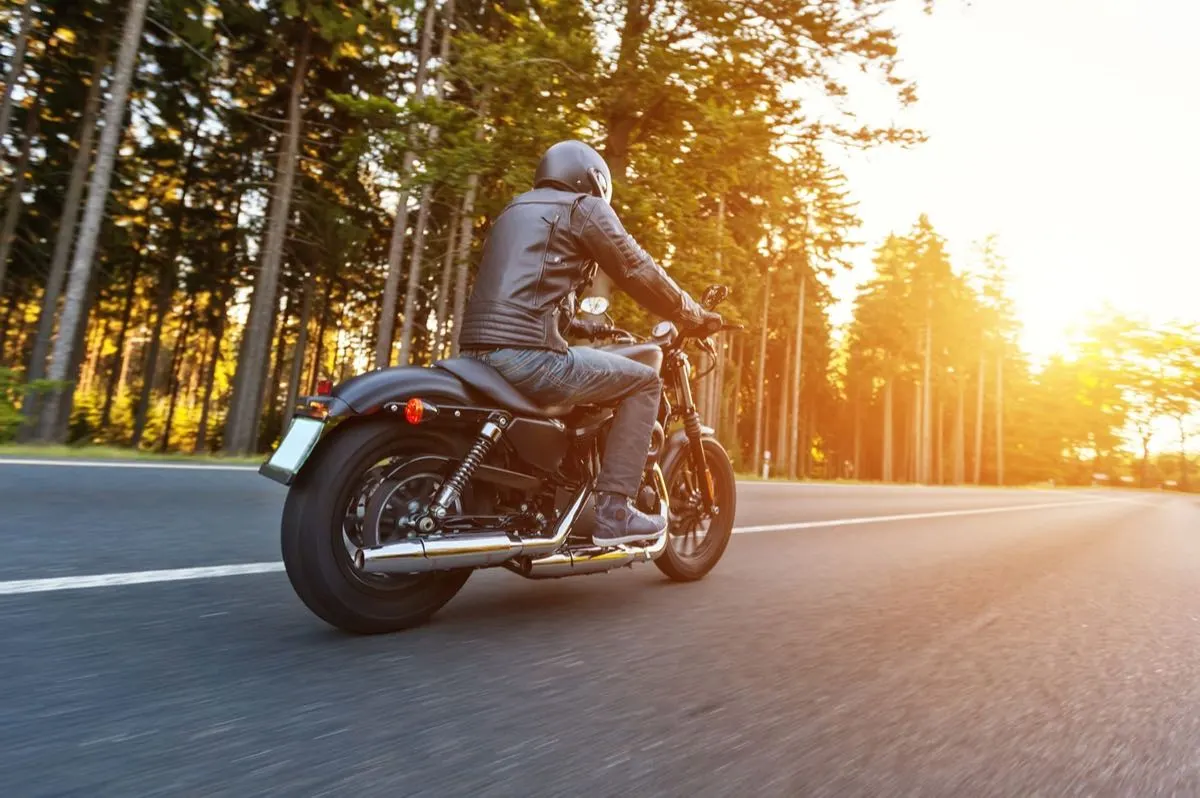
In everyday use, an ignition interlock on a motorcycle works the same way it does in a car: you give a breath sample before you start, and the engine starts only when the sample passes.
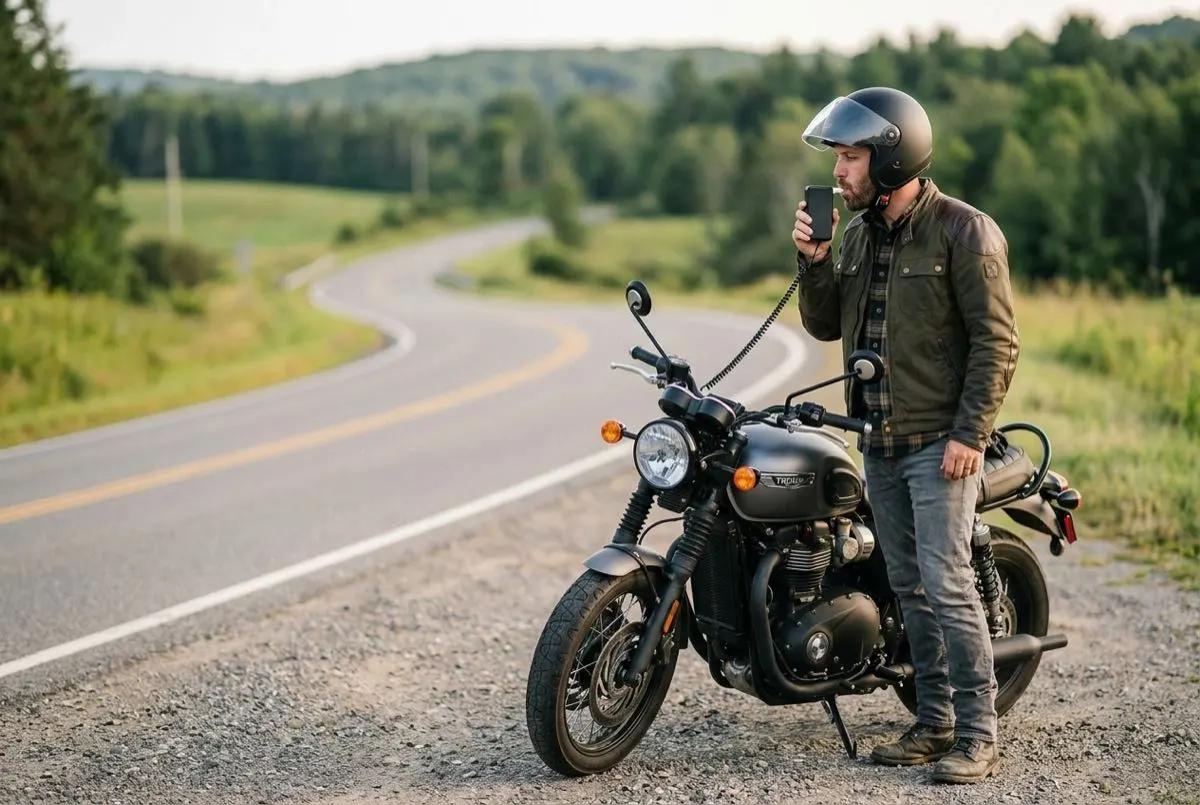
The difference shows up with rolling retests, the breath samples some states require while the engine is running. On a bike, pull over to a safe area to conduct the retest before heading back on the road. Never try to test while you’re moving. Retest timing varies by state, so be sure to follow state laws. The rolling retest guide explains how retests work and what to do when one is due.
Are Motorcycle Ignition Interlocks Obvious?
A DUI can raise questions among friends and family, and you’d rather your bike didn’t add to them. When you’re out enjoying a ride on your bike, your interlock device shouldn’t draw attention. RoadGuard’s device has a sleek, discreet design with a rear-mounted mouthpiece, and it’s compact and easily hidden, so your personal business stays personal.
Are Motorcycle Ignition Interlock Devices Reliable?
Reliability starts with how the device tests your breath. RoadGuard’s device uses a simple blow-suck breath test (no humming required), and its sensor distinguishes between breath alcohol and mouth alcohol. It’s built on proven technology based on more than 60 years’ experience in breath alcohol testing.
RoadGuard also offers help from navigating state regulations to installation and support, through an extensive service center network with qualified personnel. If something about the device seems wrong on your bike, call support at 1-833-545-0368 before you do anything else.
Common Questions About Riding With a Motorcycle Interlock
Can you ride a motorcycle with an interlock device?
Yes, if the device is installed on that motorcycle and your state accepts a motorcycle for your requirement. You’ll take a breath test before each start and pull over for any rolling retest. If your order restricts you to interlock-equipped vehicles and your bike has no device, ask your DMV or monitoring authority before you ride it.
Can you get a motorcycle license with an interlock?
It depends on your state and your order. Some states restrict you to interlock-equipped vehicles while an order is active, which can affect riding and testing for a motorcycle license or endorsement. Ask your state DMV how an interlock order affects getting or keeping a motorcycle license or endorsement. The restricted license guide covers the licensing side.
Can you ride a motorcycle if you need interlock?
Only on the terms your state sets. Where a motorcycle counts toward the requirement, you can ride a bike that has the device installed. Where it doesn’t, you’ll typically meet the requirement in another vehicle and may not be allowed to ride until the order ends. Your court, DMV or monitoring authority can confirm which applies to you.
How long can an IID detect alcohol?
An IID measures the alcohol in your breath at the moment you test, so it can register alcohol for as long as enough remains in your breath. There’s no fixed number of hours: it depends on how much you drank, over what time and your body. If you plan to ride, don’t drink first.
Schedule Your Motorcycle Interlock Installation
Once your court or DMV requires an interlock and you’ve confirmed your motorcycle can count, RoadGuard Interlock can schedule the installation. Call 1-833-545-0368 to ask whether your bike can take the device and to book the appointment, or review what an interlock costs first.
Disclaimer: This article is provided by RoadGuard Interlock for general informational purposes only and is not legal, financial, or medical advice. DUI and ignition interlock laws, penalties, fees, and program requirements differ from state to state and county to county, and they can change at any time. Any costs, timelines, or figures mentioned are general estimates rather than quotes or guarantees. Please do not rely on this article as a statement of the law where you live. Confirm current requirements with your state DMV, the court handling your case, a licensed attorney, or RoadGuard Interlock directly before making decisions. Device features, pricing, availability, same-day installation, and any promotions referenced are subject to change, vary by location, and may not be offered in every state RoadGuard Interlock serves.