
What Your Interlock Warranty Actually Covers (and Doesn’t)
Disclaimer
The information in this blog is for general informational purposes only. Information may be dated and may not reflect the most current developments. The materials contained herein are not intended to and should not be relied upon or construed as a legal opinion or legal advice or to address all circumstances that might arise. You should contact your attorney to obtain advice with respect to any particular legal matter. Only your individual attorney can provide assurances that the information contained herein – and your interpretation of it – is applicable or appropriate to your particular situation. Links to any third-party websites herein are provided for your reference and convenience only; RoadGuard Interlock does not recommend or endorse such third party sites or their accuracy or reliability. RoadGuard Interlock expressly disclaims all liability regarding all content, materials, and information, and with respect to actions taken or not taken in reliance on such. The content is provided “as is;” no representations are made that the content is error-free.
An ignition interlock warranty sounds straightforward until you actually need it. Maybe your device throws a code during a rolling retest, your battery dies in January, or a fender bender cracks the housing. Suddenly the paperwork you skimmed at installation becomes the most important document in your glove box.

The trouble is that most drivers never read the fine print, and providers don't always spell out what falls on you versus on them. Below is what standard interlock warranty coverage generally includes, what it usually doesn't, and the questions to ask before you sign. One note first: coverage terms vary by provider and state, so treat this as general guidance and read your own service agreement closely.
Does an Interlock Void Your Vehicle Warranty?
This is the most common worry before installation, and the short answer is reassuring: an ignition interlock does not automatically void your vehicle's factory warranty. Federal warranty principles generally prevent a manufacturer from denying coverage just because you added an aftermarket device.
The catch is practical. If a dealer or manufacturer can show that the interlock or its installation directly caused a specific problem, that particular repair may not be covered under the vehicle warranty. A faulty alternator unrelated to the interlock is still covered; wiring damage from a botched installation is on the installer, not the automaker.
What Federal Warranty Rules Mean for You
Under federal warranty law, a manufacturer generally can't void your warranty simply because you used an aftermarket part or an unaffiliated mechanic; they would need to show the part actually caused the problem. In plain terms, a dealership usually can't refuse to honor a powertrain warranty just because an interlock is present. Keep your installation receipt and any documentation from your provider, because if a dealer pushes back, that paper trail is your leverage.
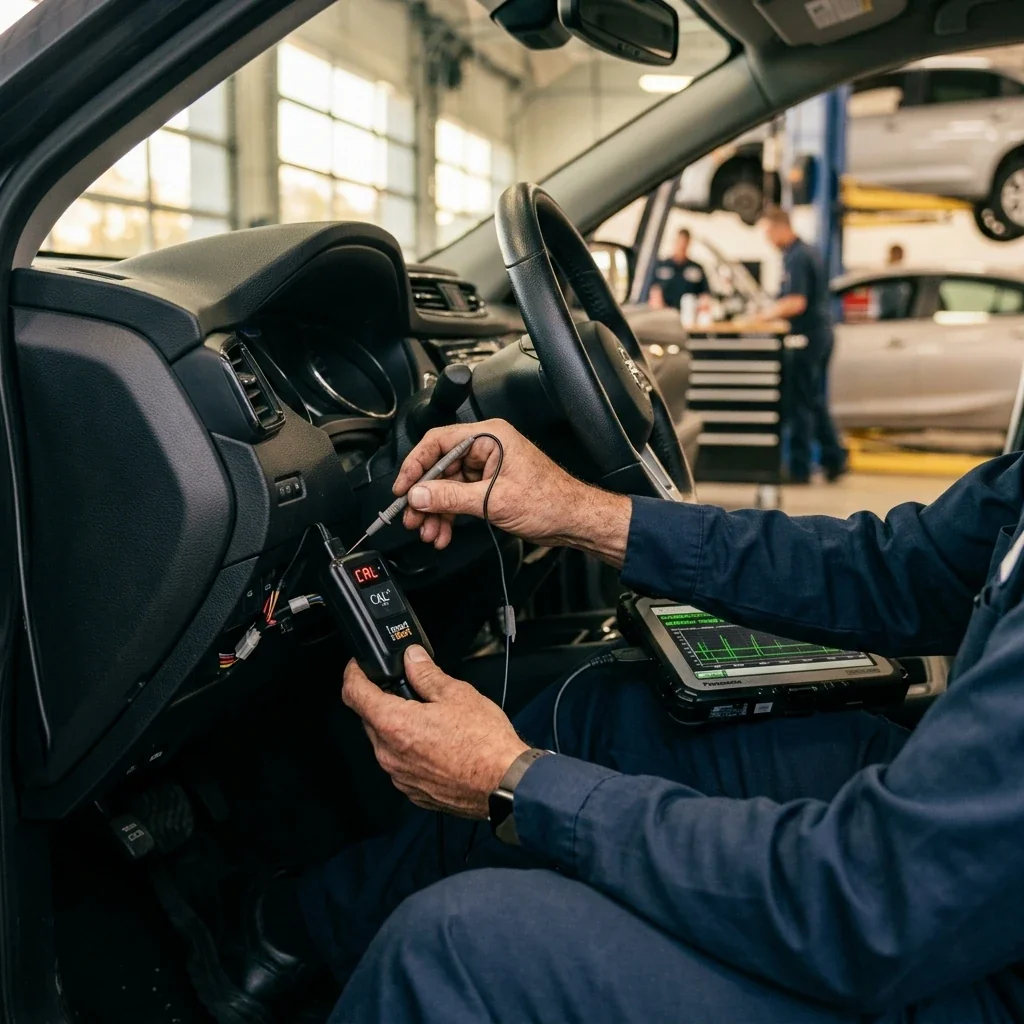
Three Coverage Buckets: Provider, Manufacturer, Insurance
One reason warranty disputes get confusing is that three separate types of coverage can overlap. Knowing which bucket your issue falls into saves hours of phone calls and finger-pointing.
- Interlock provider warranty covers defects in the device itself. If the unit malfunctions from a manufacturing flaw or the sensor drifts out of calibration between scheduled visits, your provider should repair or replace it at no charge. This is the most straightforward bucket.
- Vehicle manufacturer warranty covers everything it always did, minus damage the interlock directly caused. Your engine, transmission, and electrical systems remain protected under their original terms.
- Auto insurance handles collision and comprehensive claims regardless of the interlock. If your car is totaled or stolen, your insurance covers the vehicle, but the leased interlock device itself typically isn't covered by your auto policy. Drivers who want to understand the interaction can review how an interlock relates to insurance after a DUI.
|
Situation |
Who Typically Covers It |
|
Device malfunction or sensor defect |
Interlock provider warranty |
|
Engine issue unrelated to the device |
Vehicle manufacturer warranty |
|
Wiring damage from installation |
Interlock installer / provider |
|
Collision or theft of the vehicle |
Auto insurance |
|
Stolen or destroyed device |
Driver (in most lease agreements) |
|
Battery failure from device draw |
Varies; often the driver's responsibility |
What Interlock Service Coverage Usually Includes
Your warranty typically bundles with a broader service agreement, and it's worth understanding what that package contains before comparing providers. Most reputable companies include professional installation and removal, the calibration visits your program requires, lockout support, and compliance reporting through your monthly lease fee.
Some items vary by provider. Vehicle transfers (moving the device to another car) are sometimes included and sometimes billed separately, and roadside assistance for device-related lockouts is another area where providers diverge. RoadGuard Interlock bundles installation, calibration, compliance reporting, and support across its service network in the many states it serves, which reduces surprise bills when you're already managing the cost of a DUI program. You can dig into what each service entails on the ignition interlock FAQ page. The key takeaway: standard warranty coverage generally centers on manufacturer defects and calibration accuracy, while most other risks stay with the driver, so read your service contract with the same scrutiny you'd give a car lease.
Common Exclusions: What It Doesn't Cover
Even the best interlock warranty has clear exclusions, and they tend to follow a pattern.
- Tampering or neglect. Any attempt to bypass, disconnect, or tamper with the device generally voids coverage, and missed calibration appointments can disqualify claims because the provider can't verify the device was working within spec. If you're unsure what counts, review interlock violation penalties before assuming you're in the clear.
- Theft, accidents, and totaled vehicles. If your car is stolen or totaled, you're generally still responsible for the leased device. Your auto insurer covers the vehicle, but the unit typically falls outside that policy, so expect a replacement fee. The breakdown of interlock devices and insurance claims after an accident walks through this scenario.
- Battery drain. Interlocks draw a small amount of power even when the car is off, so if your battery dies because the vehicle sat unused, most providers consider that your responsibility. A trickle charger costs far less than an emergency service call.
Questions to Ask Before Choosing a Provider
Not all providers structure warranties the same way, and asking upfront prevents surprises months into your program:
- What specific defects does the warranty cover, and for how long? Get it in writing.
- Are calibration visits, lockout support, and compliance reports included in the monthly fee, or billed separately?
- What happens if the device malfunctions and causes a false violation? A good provider has a documented dispute process.
- Is roadside assistance included, and is there a per-incident cap?
- What do you owe if the device is lost, stolen, or damaged in an accident?
Providers with long track records tend to offer more transparent terms. RoadGuard Interlock uses a device made by Dräger, a long-established name in breath-testing technology, which tends to signal stability and accountability in how claims get handled.
Frequently Asked Questions
How can I compare providers beyond the advertised monthly price?
Ask for a full fee schedule that lists every potential add-on, including transfers, urgent service visits, replacement fees, and missed-appointment charges. Comparing the total expected cost over your program term is far more accurate than comparing base rates.
What paperwork should I keep to make a claim easier?
Keep your installation work order, lease or service agreement, calibration and service receipts, and any lockout or incident reports. Save emails or texts from the provider as a time-stamped record of instructions and approvals.
If I have a problem after hours, what should I confirm about support?
Verify whether support is genuinely available after hours, what qualifies as an emergency, and whether after-hours help triggers extra fees. Also confirm typical response time and whether assistance is phone-only or includes dispatch to a service location.
Can I switch providers mid-program, and what should I check first?
Switching is often possible but can require court or DMV approval and paperwork from both providers. Before changing, confirm termination fees, transfer logistics, and whether any reported data must be sent to avoid a compliance gap.
What should I do if I believe the device recorded a false event?
Document the date, time, and circumstances immediately, then request a written review from your provider. Ask what evidence they accept, how long the review takes, and whether you need to notify your supervising authority while the dispute is pending.
How do I avoid extra charges when my car needs repairs or a new battery?
Before the vehicle goes into a shop, confirm the provider's procedure for service mode, power loss, or temporary disconnection, and coordinate timing so the device stays compliant. That prevents unnecessary lockouts or rework fees.
If I travel or move, how do I stay serviced and compliant?
Confirm whether your provider has service locations where you're going and how appointments are scheduled there. Ask what happens if you can't get a calibration slot in time and what documentation prevents a noncompliance report.
Protect Yourself Before You Install
Your interlock warranty is only as useful as your understanding of it. Read the service agreement cover to cover, ask the questions above, and keep every receipt and confirmation email. Knowing which coverage bucket handles each scenario means you're never scrambling after a dead battery or a fender bender.
If you want a provider that bundles service coverage, RoadGuard Interlock makes the process straightforward in the many states it serves. Schedule your installation and start your program with clarity on what's covered, what's not, and who to call when something goes wrong.
Disclaimer: This article is provided by RoadGuard Interlock for general informational purposes only and is not legal, financial, or medical advice. DUI and ignition interlock laws, penalties, fees, and program requirements differ from state to state and county to county, and they can change at any time. Any costs, timelines, or figures mentioned are general estimates rather than quotes or guarantees. Please do not rely on this article as a statement of the law where you live. Confirm current requirements with your state DMV, the court handling your case, a licensed attorney, or RoadGuard Interlock directly before making decisions. Device features, pricing, availability, same-day installation, and any promotions referenced are subject to change, vary by location, and may not be offered in every state RoadGuard Interlock serves.