
Ignition Interlock for Leased Vehicles: What to Know Before Signing
Disclaimer
The information in this blog is for general informational purposes only. Information may be dated and may not reflect the most current developments. The materials contained herein are not intended to and should not be relied upon or construed as a legal opinion or legal advice or to address all circumstances that might arise. You should contact your attorney to obtain advice with respect to any particular legal matter. Only your individual attorney can provide assurances that the information contained herein – and your interpretation of it – is applicable or appropriate to your particular situation. Links to any third-party websites herein are provided for your reference and convenience only; RoadGuard Interlock does not recommend or endorse such third party sites or their accuracy or reliability. RoadGuard Interlock expressly disclaims all liability regarding all content, materials, and information, and with respect to actions taken or not taken in reliance on such. The content is provided “as is;” no representations are made that the content is error-free.
An ignition interlock requirement doesn't pause just because you don't own the car you drive. If you're leasing a vehicle and a court or DMV orders you to install an interlock, the process gets more complicated than it would for a car with your name on the title. Lease agreements contain layers of restriction around vehicle modifications, and an interlock install qualifies as exactly that.

Here's what to sort out before you sign a lease, or before you schedule an install on a car you're already leasing: which lease clauses to watch for, how to get approval from your leasing company, what happens if they say no, and how your state's rules shape the process. One note first: the specifics vary by state and by lease, so treat this as general guidance and confirm the details with your leasing company, your provider, and your DMV or court.
Can You Install an Interlock on a Leased Car?
The short answer is yes, but generally only with the leasing company's written permission. Since the leasing company legally owns the vehicle, you usually can't authorize modifications on your own, and an interlock connects to the vehicle's electrical system and starter circuit, which counts as a modification under virtually every standard lease.
Most providers won't proceed with installation unless you present a letter of authorization from the lessor, and courts and DMVs typically don't grant exceptions just because a car is leased. Some states explicitly include leased vehicles in their interlock requirements, so the obligation usually applies whether you own or lease. The burden falls on you to bridge the gap between your legal obligation and your leasing company's policies, so don't assume a dealer or finance company will automatically agree.
Lease Clauses That Affect Installation
Before contacting your leasing company, pull out your agreement and review it carefully. A few standard clauses directly affect whether you can install a device and what financial exposure you face at lease-end.
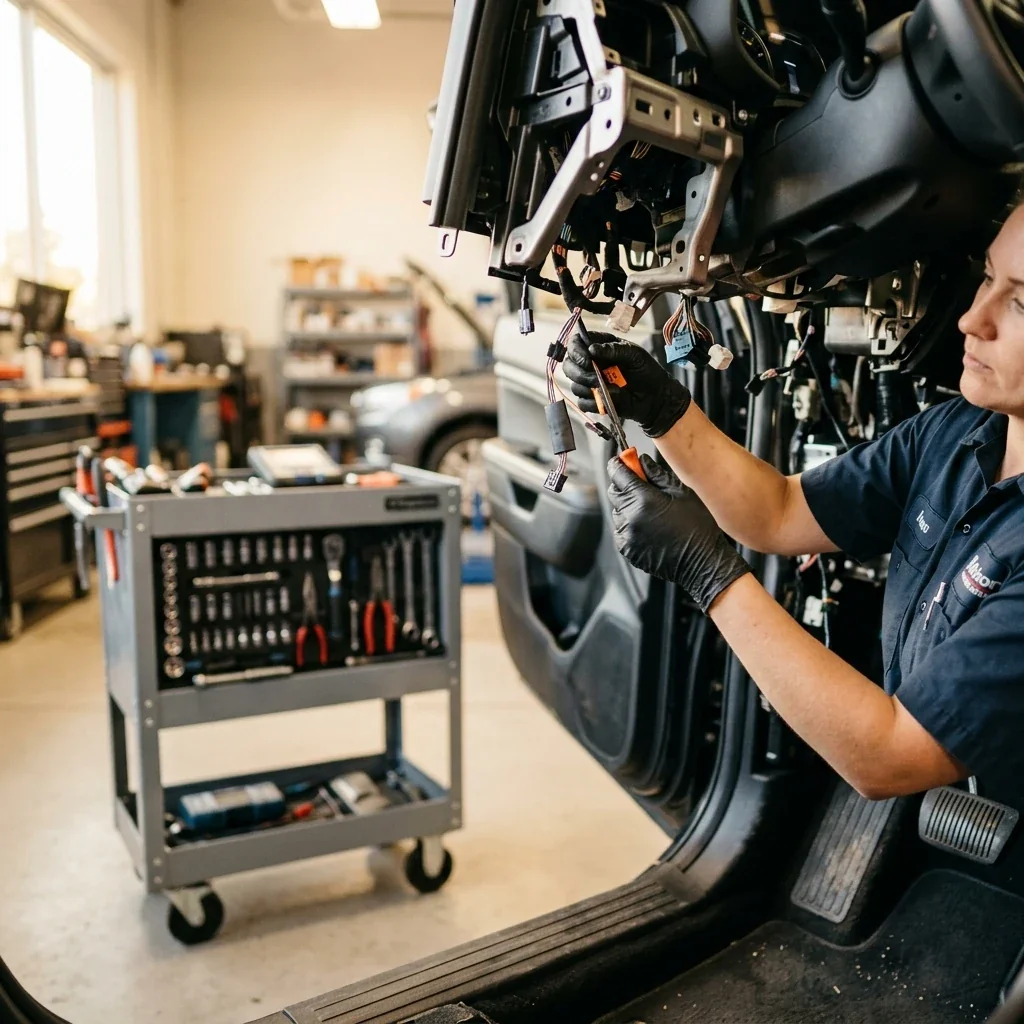
Vehicle modification restrictions. Nearly all leases prohibit unauthorized alterations to the vehicle's mechanical or electrical systems. Interlocks require wiring into the starter and mounting a handset near the dashboard, and even though professional installation minimizes disruption, the lessor's legal team may view it as a violation without explicit written consent beforehand.
Return-condition standards. Lease-end inspections are notoriously strict. If the device leaves visible marks, drill holes, or wiring remnants after removal, the leasing company can charge you for "excess wear." Clean removal matters as much as clean installation, so ask your provider whether they guarantee trace-free removal and whether they'll document the vehicle's condition before and after.
Warranty clauses. Check whether your lease ties warranty voiding to unauthorized modifications. A properly installed and removed interlock shouldn't affect the warranty, but an installation done without the lessor's consent could give them grounds to dispute a claim.
How to Get Approval
Getting permission isn't complicated, but it requires proactive communication. A practical workflow:
- Review your lease for modification, return-condition, and warranty clauses.
- Contact the leasing company's compliance or customer-service department and explain your court-ordered requirement.
- Request a written letter of authorization that explicitly permits interlock installation and removal.
- Confirm what documentation the lessor needs with your interlock provider.
- Schedule installation with a certified provider and keep all paperwork.
- Document the vehicle's condition before installation with dated photos.
Many leasing companies have handled this before and already have a standard authorization process, so a calm, straightforward request often gets approved faster than you'd expect. Interlock program requirements have become widely standardized across the industry, which means leasing companies are increasingly familiar with these requests.
What Happens if the Leasing Company Says No
It happens. If the lessor refuses, your interlock obligation doesn't go away, because a court order still stands. Your most straightforward alternative is to install the device on a different vehicle you own or have authorized access to. Some states also allow installation on a vehicle owned by a family member or employer, provided the owner consents, so understanding the full range of interlock vehicle requirements helps you identify which alternatives your state permits.
In some cases, drivers negotiate an early lease termination, though that usually involves penalties. Weigh those costs against the consequences of non-compliance, which can include license suspension, an extended program, or additional penalties. If you're stuck, consult your attorney, who may be able to petition the court for a modified compliance plan.
Costs to Budget For
The cost structure for a leased car mirrors an owned vehicle, with a few lease-specific considerations on top:
- Lease-end repair charges if removal leaves any trace of the installation
- Early-termination penalties if you exit the lease rather than install
- Any documentation fees the leasing company charges for processing authorization
Exact device costs vary by state and provider, so get current, itemized pricing rather than relying on a number you saw online. In select states, RoadGuard Interlock offers a free-installation promotion for new customers, along with a price-match guarantee; because these promotions vary by location, check the current offer for your area. For a driver already juggling lease payments alongside compliance costs, any upfront savings help, and a provider that handles compliance reporting reliably reduces the risk of missed deadlines that could extend your program.
State Rules That Change the Equation
State-by-state variation is one of the biggest sources of confusion for drivers with leased vehicles. Many states now enforce all-offender interlock laws, but the specific documentation and authorization requirements differ substantially. Some states explicitly include leased vehicles in their statutes, leaving no ambiguity, while others are less clear, which means your DMV or probation officer may need to confirm what's required. Rather than assume, check the interlock laws that apply to you and confirm locally.
Whatever your state, arrive at your appointment with these essentials: your lease agreement, the written authorization letter from the leasing company, current vehicle registration, your court order or DMV compliance letter, and a valid ID. Missing even one document can delay installation, and delays can jeopardize your compliance timeline. A provider with a broad service network, like RoadGuard Interlock in the many states it serves, can help you sort out the specific documentation your state requires; its ignition interlock FAQs address many common questions.
Frequently Asked Questions
Should I disclose an interlock requirement before signing a new lease?
Yes, it's usually better to address it up front, since the lessor may require pre-approval for any wiring-related modification. Early disclosure also gives you time to choose a vehicle and lease structure more likely to be approved without delays.
Who at the leasing company should I contact to speed up approval?
Ask for the department that handles lease modifications, compliance, or risk management, not just the dealership sales desk. If you only have a general customer-service line, request escalation to a supervisor who can issue written authorization.
Can installing an interlock affect my lease insurance requirements?
It can indirectly, since some insurers ask about DUI-related restrictions or require updated driver information. Confirm your policy stays active, meets the lease's minimum coverage, and that any premium change doesn't put you in breach of the lease.
What if I'm leasing through a company fleet or employer program?
You may need approval from both the fleet manager and the titled owner or leasing entity, since fleet policies often add restrictions. Get written permission from the party with legal authority over vehicle modifications, then coordinate scheduling with your employer to avoid operational conflicts.
How do I handle a vehicle swap, total loss, or early replacement during my interlock period?
Plan for a re-install on the replacement vehicle, since most programs require you to stay continuously compliant even if the car changes. Notify your supervising authority and provider immediately so reporting doesn't show an unexplained gap.
Are there privacy concerns with interlock data on a leased vehicle?
Interlock data typically relates to the driver's compliance and is shared with supervising agencies, not with the leasing company by default. If you're concerned, ask the provider who receives reports, what's stored, and how long records are kept.
How can I reduce the chance of lease-end disputes about the device?
Schedule removal well before your turn-in date and request a detailed service receipt showing removal steps and condition notes. Doing a pre-return inspection with the lessor also helps, so any concerns are documented while you still have time to address them.
Take the Right Steps Before You Sign
Driving a leased vehicle with an interlock requirement is manageable, but only if you handle the lease-specific hurdles before they become problems. Review your lease clauses, get written authorization, document everything, and choose a certified provider experienced with leased-vehicle installations.
RoadGuard Interlock has years of experience helping drivers through exactly these situations. Built around the Dräger Interlock 7000 and backed by a service network in the many states it serves, the process stays about as straightforward as it can be. Schedule your install and take the first step toward getting back on the road with confidence.
Disclaimer: This article is provided by RoadGuard Interlock for general informational purposes only and is not legal, financial, or medical advice. DUI and ignition interlock laws, penalties, fees, and program requirements differ from state to state and county to county, and they can change at any time. Any costs, timelines, or figures mentioned are general estimates rather than quotes or guarantees. Please do not rely on this article as a statement of the law where you live. Confirm current requirements with your state DMV, the court handling your case, a licensed attorney, or RoadGuard Interlock directly before making decisions. Device features, pricing, availability, same-day installation, and any promotions referenced are subject to change, vary by location, and may not be offered in every state RoadGuard Interlock serves.