
DUI on Federal Property or Military Base: How Federal Jurisdiction Changes the Process
Disclaimer
The information in this blog is for general informational purposes only. Information may be dated and may not reflect the most current developments. The materials contained herein are not intended to and should not be relied upon or construed as a legal opinion or legal advice or to address all circumstances that might arise. You should contact your attorney to obtain advice with respect to any particular legal matter. Only your individual attorney can provide assurances that the information contained herein – and your interpretation of it – is applicable or appropriate to your particular situation. Links to any third-party websites herein are provided for your reference and convenience only; RoadGuard Interlock does not recommend or endorse such third party sites or their accuracy or reliability. RoadGuard Interlock expressly disclaims all liability regarding all content, materials, and information, and with respect to actions taken or not taken in reliance on such. The content is provided “as is;” no representations are made that the content is error-free.
A DUI on federal property follows a different playbook than most drivers expect. The court is different, the prosecutor is different, and the laws that apply can shift depending on exactly where you were stopped. Many people don't realize that a national park campground, a VA hospital parking lot, or a road running through a military base can pull a case out of state court and into the federal system.
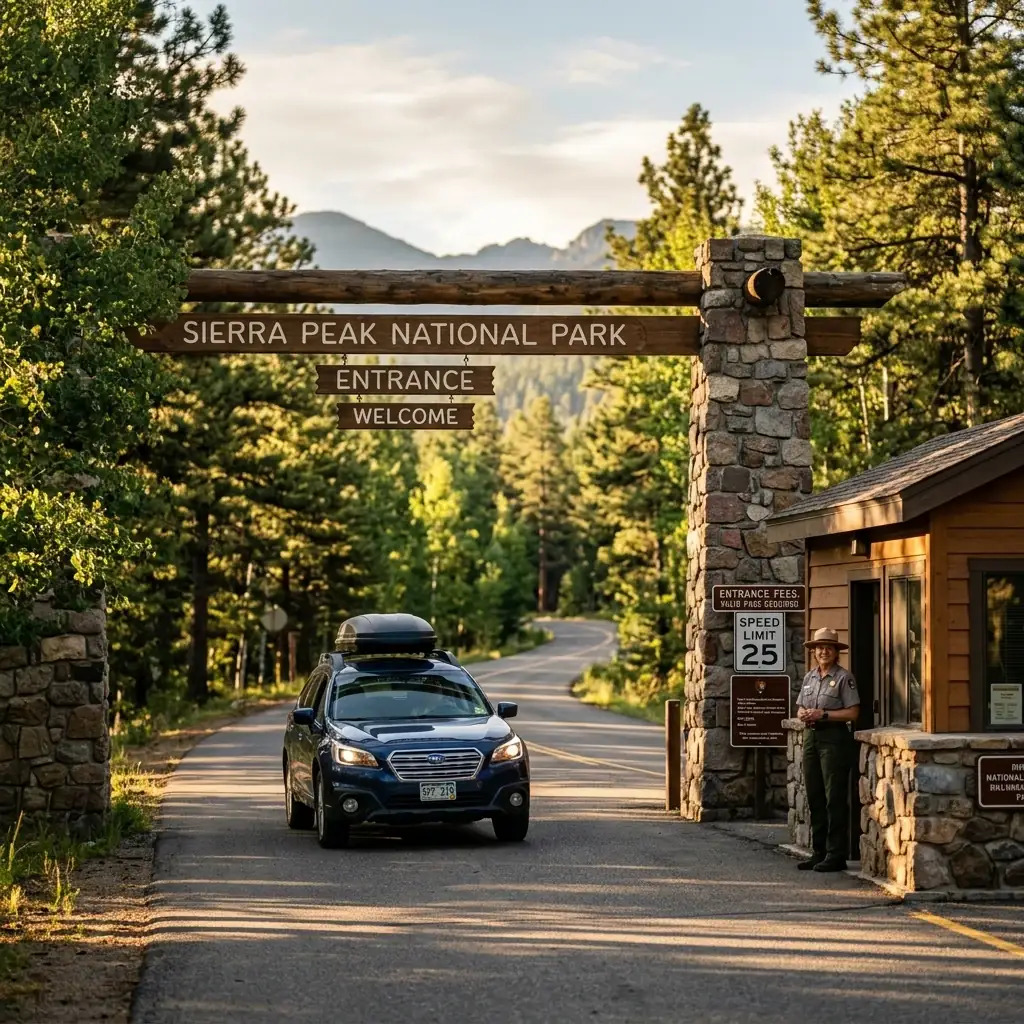
The consequences reach beyond the federal courtroom. Your state driver's license, your criminal record, and even your ignition interlock requirement can hinge on how the two systems talk to each other. Below, we walk through where federal jurisdiction begins, which laws apply, and how the process differs for civilians and service members. One note first: this is general information, not legal advice, and the details vary by location and case, so confirm your specifics with a qualified attorney.
When Does a DUI Become a Federal Offense?
The single biggest factor is location. If you're driving impaired on land owned or controlled by the federal government, your case can be prosecuted in federal court rather than state court, regardless of your alcohol level or whether you're a civilian, federal employee, or service member.
Federal jurisdiction generally falls into two categories. Under exclusive jurisdiction, the federal government has sole authority over crimes committed on that property. Under concurrent jurisdiction, both federal and state authorities can bring charges, and which system handles the case often depends on agency agreements and local practice. That distinction isn't academic: it decides which court hears your case, which prosecutor files charges, and which penalties apply. Notably, a federal conviction is typically reported back to your home state, which can then impose its own license and interlock penalties, so the federal case rarely stays purely federal.

Where Federal Jurisdiction Applies
Most people associate federal DUI charges with military bases, but the list of qualifying locations is much longer. Any land the federal government owns, leases, or controls can fall under federal jurisdiction, including:
- National parks and forests (including campground roads and scenic drives)
- Military installations
- VA hospitals and medical centers, including parking structures
- Federal courthouses and government buildings
- Bureau of Land Management land
- Post offices and federal parking facilities
Many drivers get caught off guard because they don't realize the road they're on runs through federal land. A highway cutting through a national forest or a street next to a federal complex can be enough. Understanding the types of DUI charges you might face starts with knowing whose land you were on when the stop happened.
Which Laws Apply: Federal Regulation vs. Borrowed State Law
Federal DUI charges generally arise under one of two frameworks, and the distinction matters for your defense.
A specific federal regulation. On National Park Service land, for example, federal regulation directly prohibits impaired driving. It's charged as a federal misdemeanor and can carry jail time, a fine, and probation. The exact exposure depends on the circumstances, so an attorney can explain what applies to your case.
Borrowed state law. When no specific federal regulation covers the conduct, the Assimilative Crimes Act (ACA) "borrows" the DUI law of the state where the federal property sits and applies it in federal court. So a stop on a federal property might be prosecuted by a federal attorney in a federal courtroom, but with penalties mirroring the DUI law of the state where the property sits. The result is a hybrid: federal forum, state-style penalties. The ACA applies only when the federal government has jurisdiction and no federal statute already covers the offense.
|
Factor |
Federal DUI |
State DUI |
|
Court |
U.S. Magistrate Court |
State or municipal court |
|
Prosecutor |
Assistant U.S. Attorney |
District attorney or city prosecutor |
|
Law applied |
Federal regulation or state law via the ACA |
State DUI statute |
|
Criminal record |
Federal record |
State record |
|
License and interlock |
Handled by your home state, prompted by the federal conviction |
Handled by the state DMV |
One detail trips people up: federal courts don't directly control your driver's license. That authority belongs to your home state's DMV, which imposes its own administrative penalties after a federal conviction is reported. The gap between the two is where confusion and compliance problems arise, so reviewing your home state's requirements through a state-by-state DUI laws guide helps you know what to expect on the licensing side.
Military Base DUIs: Civilians vs. Service Members
Military base DUIs add a layer of complexity, and the consequences depend heavily on whether the driver is a civilian or active-duty.
Civilians on installations generally face prosecution in federal court, typically before a U.S. Magistrate Judge, following the same general path as other federal-property cases. Beyond the criminal case, the base commander can revoke installation driving privileges or bar you from the base entirely, which alone can upend daily life for a contractor or dependent.
Active-duty service members face a uniquely difficult situation. On top of potential federal prosecution, they can face action under the Uniform Code of Military Justice, including command-level administrative consequences like loss of rank, forfeiture of pay, mandatory treatment, or career-ending discharge. Depending on the circumstances, that can range from non-judicial punishment (an Article 15) to a court-martial in serious cases. These military consequences stack on top of whatever the federal court imposes, and the contrast between a first incident and repeat DUI offenders is especially stark in the military context.
What Happens After an Arrest on Federal Land
Even people familiar with state courts find the federal process unfamiliar. After the stop and arrest, a federal officer (a park ranger, military police, or Federal Protective Service officer) processes you and files a violation notice with a date to appear before a U.S. Magistrate Judge. There's typically no local bail bondsman; pretrial release conditions are set by the magistrate and can include alcohol testing and travel restrictions.
At the initial appearance, the magistrate explains the charges and your rights. Many federal DUI cases are petty offenses or Class B misdemeanors, which can mean no right to a jury trial, and the case usually proceeds toward a plea agreement or a bench trial before the magistrate. Sentencing can include probation, fines, community service, mandatory alcohol treatment, and an interlock requirement. Where an interlock is ordered through federal probation, your state DMV may also impose its own requirement, so it's worth confirming both.
Chemical Testing and Refusal on Federal Property
Federal implied-consent rules generally require drivers on federal land to submit to breath, blood, or urine testing when an officer has reasonable grounds to suspect impairment, and refusing can carry its own penalties. A refusal may be used as evidence in federal court and can trigger enhanced consequences, and your home state's DMV will likely impose an administrative suspension for the refusal independent of the federal case. This overlap between systems is where compounding consequences catch people off guard.
How a Federal DUI Charge Can Be Challenged
Federal DUI charges are defensible, though the strategies differ from state court. An experienced federal defense attorney may challenge the legality of the stop, contest jurisdiction when the boundaries of federal property are unclear, or scrutinize chemical-testing procedures, since federal officers must follow specific protocols. The question of "actual physical control" also comes up: if you were parked and asleep on federal land, whether you were truly operating the vehicle can be contested. Understanding the distinction between OWI and DUI terminology can also clarify how different jurisdictions define impaired driving.
Frequently Asked Questions
How can I confirm whether the road where I was stopped is actually federal property?
Ask your attorney to check property and jurisdiction records, such as federal enclave maps, land-ownership databases, and the charging documents that list the managing agency. In some areas jurisdiction changes block by block, so verifying the exact stop location can be a meaningful early step.
Do I need a lawyer specifically admitted to practice in federal court?
Generally yes. Your attorney usually must be admitted to the federal district court where your case is filed and familiar with local magistrate-court procedures. If you have a trusted state DUI lawyer, ask whether they can appear federally or partner with qualified federal counsel.
What should I bring to my first appearance in U.S. Magistrate Court?
Bring government-issued ID, your violation notice or citation paperwork, and any bond or release documents. A written list of medications and recent medical issues also helps, since release conditions sometimes address alcohol use and health needs.
Can I travel out of state while a federal DUI case is pending?
Possibly, but it depends on your pretrial release conditions, which can limit travel or require advance permission. If you have work or family travel coming up, raise it early with your lawyer so they can request a modification before you violate an order.
Will a federal DUI show up on background checks?
Many background checks look at federal case records, and some employers and licensing boards treat any alcohol-related driving offense as reportable. If you're applying for a clearance, credential, or regulated role, ask a lawyer about disclosure obligations and any available record-management options.
What happens if I miss a federal court date?
Missing court can lead to a bench warrant and additional charges or stricter release terms, even if the underlying DUI is minor. If an emergency prevents you from appearing, contact your attorney immediately so they can notify the court and try to resolve it quickly.
If I don't live in the state where the DUI occurred, can I avoid multiple trips back?
Sometimes, depending on the court, the charge level, and whether the judge allows certain appearances to be waived or handled remotely. Your attorney can request accommodations, but plan for at least one in-person appearance until the court confirms otherwise.
Protect Your Record and Your License After a Federal DUI
A DUI on federal property pulls together federal criminal consequences and state administrative actions, and the two don't sort themselves out on their own. The federal court handles the criminal case, while your home state still controls your license, your interlock requirement, and much of your path back to normal driving. Coordination between the systems rarely happens automatically, so staying proactive is what keeps you from falling through the gaps.
If your case results in an interlock requirement, through federal probation or your state's DMV, RoadGuard Interlock provides installation and monitoring in the many states it serves. Built around the Dräger Interlock 7000, one of the faster devices to warm up, meeting your compliance obligations can be straightforward rather than stressful. Schedule your install and take the first step toward getting back on the road with confidence.
Disclaimer: This article is provided by RoadGuard Interlock for general informational purposes only and is not legal, financial, or medical advice. DUI and ignition interlock laws, penalties, fees, and program requirements differ from state to state and county to county, and they can change at any time. Any costs, timelines, or figures mentioned are general estimates rather than quotes or guarantees. Please do not rely on this article as a statement of the law where you live. Confirm current requirements with your state DMV, the court handling your case, a licensed attorney, or RoadGuard Interlock directly before making decisions. Device features, pricing, availability, same-day installation, and any promotions referenced are subject to change, vary by location, and may not be offered in every state RoadGuard Interlock serves.