
Emergency Situations with Your Ignition Interlock: What to Do When Things Go Wrong
Disclaimer
The information in this blog is for general informational purposes only. Information may be dated and may not reflect the most current developments. The materials contained herein are not intended to and should not be relied upon or construed as a legal opinion or legal advice or to address all circumstances that might arise. You should contact your attorney to obtain advice with respect to any particular legal matter. Only your individual attorney can provide assurances that the information contained herein – and your interpretation of it – is applicable or appropriate to your particular situation. Links to any third-party websites herein are provided for your reference and convenience only; RoadGuard Interlock does not recommend or endorse such third party sites or their accuracy or reliability. RoadGuard Interlock expressly disclaims all liability regarding all content, materials, and information, and with respect to actions taken or not taken in reliance on such. The content is provided “as is;” no representations are made that the content is error-free.
Emergency Situations with Your Ignition Interlock: What to Do When Things Go Wrong
Ignition interlock emergency procedures are probably the last thing on your mind during a normal commute—until your vehicle suddenly will not start, your device begins beeping for a rolling retest at the worst possible moment, or you see a “lockout” message far from home. In those situations, every minute matters for your safety, your passengers, and your legal compliance.
Knowing ahead of time exactly how to respond in different ignition interlock emergency situations can keep you calm, protect your license, and help you avoid preventable violations. This guide walks through real-world scenarios, what your device is “trying to tell you,” and clear steps to take when things go wrong, so you are never guessing on the side of the road.
Ignition interlock emergency procedures when seconds count
Ignition interlock devices are designed to keep impaired drivers off the road, but when something goes wrong, the same protections can leave you feeling stranded or panicked. Emergencies range from a simple start-up failure in your driveway to a full lockout in extreme weather with children in the back seat.
Because these devices are so effective at preventing drunk driving—an analysis in a Responsibility.org policy brief on ignition interlock devices found that they reduce repeat DWI offenses by about 70 percent while installed—most states strictly enforce program rules. That makes it especially important to know how to respond when you believe the problem is a malfunction, not alcohol use.
Regulators also recognize that equipment can fail. The AAMVA Ignition Interlock Program Best Practices Guide, Edition 3 gives states detailed models for handling lockouts, power failures, and other exceptions so compliant drivers are not punished for genuine device faults. Your job as a driver is to act safely, follow instructions on the handset, and document what happened.
If you are still getting used to using your device day to day, walking through a detailed guide on how to use an ignition interlock device can reduce surprises later. Once you understand typical messages and prompts, it becomes easier to recognize when something truly unusual—or urgent—is happening.
Common ignition interlock emergencies you might face
While no two incidents feel exactly the same, most ignition interlock emergencies fall into a few categories. Knowing which one you are facing helps you choose the right response.
- Your vehicle will not start even though you are sober and following the breath instructions.
- You pass the initial test, start driving, and then miss or fail a rolling retest request.
- The device suddenly shows a “lockout,” “service required,” or countdown timer while you are away from home.
- You see “power loss” or your battery dies, and you are not sure if jump-starting will cause a violation.
- Extreme heat, cold, illness, or breathing issues make it hard to provide a sample within the time limit.
- You are transporting children, older adults, or pets when an unexpected prompt or lockout occurs.
Each situation calls for a slightly different approach, but the core priorities are the same: protect everyone’s safety first, preserve your compliance as best you can, and communicate clearly with support and monitoring authorities after the fact.
Emergency quick reference for ignition interlock users
When something goes wrong with your device, you rarely have time to read a long manual. This section gives you skimmable, scenario-based checklists you can mentally rehearse now and fall back on later. Think of it as the glovebox version of ignition interlock emergency procedures.
Before relying on any checklist, remember that your specific handset messages and state rules may differ, so always follow the exact instructions on your screen and any training materials you received at installation.
Step-by-step ignition interlock emergency procedures for start-up failures
A start-up failure is stressful, but if you are in a safe place—like your driveway or a parking lot—you usually have a few minutes to troubleshoot calmly. The key is to avoid repeated rushed attempts that might be misread as tampering or non-cooperation.
- Read the exact message on the handset and note the time. “Test failed,” “invalid sample,” and “lockout” each mean different things.
- Think about recent alcohol or mouth products. If you used mouthwash, breath spray, or alcohol-based medicine within the last 15 minutes, wait at least that long and rinse thoroughly with water.
- Follow the proper breath pattern recommended for your device, including any “blow-suck-blow” or steady exhale instructions, so you do not trigger “invalid sample” errors.
- Check visible connections if it seems like a power issue—ensure cables to the handset and any adapter are fully seated and the device is actually on.
- Attempt one careful retest only when you are confident there is no alcohol in your system and you can follow the instructions exactly.
- If the device still refuses to start the car or shows a countdown to lockout, stop trying, arrange alternate transportation, and call your provider’s support line as soon as you can safely do so.
For more detailed explanations of error messages, many drivers find it helpful to review in-depth ignition interlock troubleshooting advice ahead of time so they recognize patterns when an emergency happens.
Quick actions if you are locked out away from home
A lockout in a parking lot, at work, or in a remote area can feel like a true ignition interlock lockout emergency, especially in bad weather. Your decisions in the first few minutes can dramatically affect both safety and stress levels.
- Move to a safe location if you are still driving when any lockout-related timer begins; pull into a lot or wide shoulder before you focus on the device.
- Note the countdown or message such as “X minutes until lockout” or “service lockout,” since this affects whether another start attempt is even possible.
- Check whether a retest is allowed. Some devices permit a limited number of attempts before a full lockout; others require service immediately.
- Call your ignition interlock provider’s support line as soon as you are parked and safe, and follow their instructions about retesting, towing, or scheduling service.
- Arrange a ride if you cannot legally or safely drive the vehicle, especially if you have vulnerable passengers or extreme weather concerns.
- Keep notes or photos of the screen messages and your surroundings to help explain the situation later to monitoring authorities if needed.
If you are far from home, your provider may guide you through temporary steps to restore operation or advise you to tow the vehicle to a service center. Either way, prioritizing safety and clear communication is more important than getting to your destination on time.
If you fail a rolling retest but have not been drinking
Failing or missing a rolling retest is especially stressful because you are already in motion when the device starts beeping. The worst thing you can do is panic and try to provide a sample while your attention is divided between traffic and the handset.
- Stay focused on driving and do not fumble with the handset while actively steering or braking.
- Signal and pull over safely at the earliest safe opportunity, even if that means missing the initial time window for the test.
- Once stopped, read the message to see whether you can provide a late test, must wait out a short lockout, or need service.
- Consider possible non-alcohol factors like recent vaping, eating, or mouthwash that might have contaminated your breath sample.
- Follow any instructions from the handset and then contact your provider once you are fully parked and calm, especially if you know you were sober.
Your device will log the missed or failed retest either way, but documenting why you could not safely comply in the exact moment can be important later. A quick review of ignition interlock device frequently asked questions can also clarify how your specific program treats late or missed rolling tests.

Responding to failures, lockouts, and unsafe test requests
Once you have handled the immediate crisis—getting to safety, checking messages, arranging a ride—the next step is understanding what kind of event occurred and how it affects your program. In this section, we connect specific symptoms with likely causes and appropriate responses, including when towing or formal documentation is necessary.
Start-up failures vs. rolling retest issues
A failed start-up test recorded in your driveway is not the same as missing a rolling retest on the highway. States and monitoring authorities often weigh these events differently, especially if a pattern develops over time.
In general, start-up failures give you more flexibility: you can wait, rinse your mouth, or call for help before deciding whether to try again. Rolling retests, by contrast, are designed to ensure you remain alcohol-free while driving, so missed or failed tests may be treated more seriously, even if you had a safety reason for delaying your breath sample.
To avoid confusion, mentally classify each incident as “pre-trip” or “on-the-road” and explain it that way to your provider and supervising agency. That clarity shows you understand the system and are engaging with it in good faith.
Ignition interlock lockout emergencies and when to tow
Not all lockouts are true emergencies. Some are temporary, lasting only a few minutes, while others are “service lockouts” that will not clear until a technician inspects or re-calibrates the device. Understanding the difference keeps you from wasting time on repeated, futile start attempts.
| What you see | Typical meaning | Immediate action |
| “Wait X minutes” or countdown timer | Timed lockout after failed or missed test | Do not attempt to start; wait out timer in a safe place, then follow on-screen directions |
| “Service required” or “service lockout” | Device needs calibration or maintenance; further driving may be blocked | Call provider; arrange prompt service or towing to an approved center |
| “Power loss detected” or similar | Vehicle battery or wiring issue affecting device power | Park safely; consult provider before jump-starting or disconnecting the battery |
| No display, device completely dead | Severe power problem or internal fault | Do not attempt DIY repairs; call provider and consider towing |
If a service lockout occurs in a remote or unsafe location, towing is often the safest and most compliant option, even though it is inconvenient. Trying to “work around” the lockout by disconnecting the device, jump-starting without guidance, or repeatedly cycling the ignition can worsen the situation or create data that looks like tampering.
Non-alcohol causes of failed tests in emergencies
It is frustrating to see a fail message when you know you have not been drinking, especially during an emergency. Many such incidents stem from “mouth alcohol” or environmental conditions rather than actual breath alcohol concentration deep in the lungs.
Common non-alcohol factors include:
- Mouthwash, breath spray, or recent dental work that leaves alcohol residues in the mouth for several minutes.
- Eating or drinking right before a test, particularly sugary or fermented foods that can momentarily affect readings.
- Vaping or smoking just before a sample, which can interfere with sensors or airflow.
- Extreme temperatures (very hot or cold cabins) that push the device outside its optimal operating range until it warms or cools.
- Calibration or sensor issues that only a technician can diagnose and correct.
In an emergency, you may not be able to wait comfortably for ideal conditions, but you can still reduce risk by rinsing your mouth well with water, waiting a few minutes when possible, and avoiding food, drink, or vaping right before an anticipated test. If you believe a failure clearly resulted from one of these factors, describe it precisely to your provider and, if appropriate, to your monitoring authority.
Documenting emergencies to protect your driving record
Device logs tell only part of the story. They record timestamps, pass/fail results, power cycles, and lockouts, but they do not capture road conditions, medical issues, or weather emergencies. That is why your own documentation can be so valuable if questions arise later.
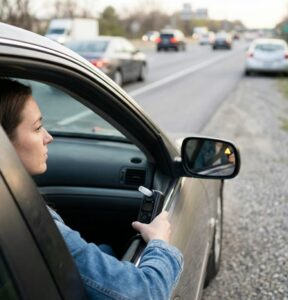
After any significant ignition interlock emergency, write down the date, time, location, device messages, and what you did in response. Photos of the handset screen, weather conditions, or dashboard alerts can also help establish context. A Washington State Joint Legislative Audit and Review Committee report on ignition interlock compliance highlights how some jurisdictions pause program clocks during verified device outages, but typically that leniency depends on clear, timely evidence from the driver.
Share your notes with your provider and, when necessary, with your supervising agency or attorney so they can advocate for you if an equipment-related issue is misinterpreted as non-compliance.
Staying out of emergency mode: prevention and support
The best way to handle ignition interlock emergencies is to experience fewer of them. While some problems are unavoidable, many lockouts and scary moments happen because of rushed routines, neglected maintenance, or unclear expectations about who to call and when.
By building a few preventive habits and keeping reliable support options at your fingertips, you can turn a stressful requirement into a manageable part of daily driving.
Pre-trip habits that prevent ignition interlock emergencies
Small steps before you start the engine can dramatically reduce the odds of being stranded later. These habits are especially important on days when you are transporting children, driving in extreme weather, or heading somewhere you absolutely cannot be late.
- Leave extra time in your schedule for warm-up and potential retests so you are not tempted to rush breathing instructions.
- Avoid alcohol-based products near drive time, including mouthwash and cough syrups; use non-alcohol alternatives whenever possible.
- Check your handset for warning messages about upcoming service or recent power issues before you shift into gear.
- Keep your battery healthy by addressing slow cranks, dim lights, or known electrical problems promptly.
- Store important numbers—provider support, towing service, and supervising authority—in your phone and on a card in the glovebox.
- Review program rules periodically so you know how missed tests, lockouts, or service delays are treated in your state.
For more long-term strategies, drivers often appreciate learning six practical ways to avoid an ignition interlock malfunction, since many “emergencies” start as minor issues that could have been prevented with early attention.
Power and battery problems: what to do before you jump-start
Battery issues are a frequent source of ignition interlock emergencies. A weak or dead battery can cause the device to lose power, log a “power loss” event, or simply fail to turn on—leaving you unsure whether it is safe to jump-start the vehicle.
Before connecting jumper cables or a portable booster, take these steps:
- Confirm the device display is truly off or showing a power-related message, rather than a lockout or service alert.
- Contact your provider’s support line if possible and ask whether your specific unit has any special instructions after a power loss.
- Avoid disconnecting the device yourself, moving wires, or bypassing fuses, as these actions may appear as tampering in the logs.
- After a jump-start, follow any instructions about immediate testing or scheduling service to verify that your data remains accurate.
Regulators know that devices must meet minimum reliability standards. The California DMV Breath Alcohol Ignition Interlock Device Manufacturer Program requires manufacturers to supply standardized documentation on environmental tolerances, tamper detection, and fault resolution so installers and drivers understand how to respond when power-related problems occur.
Planning for special situations: medical conditions, kids, and extreme weather
Some drivers face extra challenges when providing breath samples, such as asthma, COPD, or other respiratory conditions. Others regularly travel with young children or pets, which makes any lockout in hot or cold weather especially urgent.
To reduce risks in these situations:
- Discuss medical limitations with your provider and supervising authority early, so they can document them and suggest device settings or accommodations where allowed.
- Practice the breath pattern at calm times so you know how much effort is needed and how long you can comfortably exhale.
- Plan extra time and backup transportation for trips with children or pets, since you should never leave them in a locked, non-running vehicle during a lockout.
- In extreme temperatures, start the vehicle early when permitted, allowing both the cabin and device to reach a stable temperature before long drives.
Understanding the day-to-day realities of life with an ignition interlock device makes it easier to build realistic routines that account for your health, family responsibilities, and climate.
Who to call during an ignition interlock emergency
In the middle of a crisis, it is easy to freeze because you are not sure whether to call 911, your provider, a tow truck, or your probation officer first. Having a simple mental checklist helps you act quickly and appropriately.
- Call 911 if anyone’s immediate safety is at risk—such as being stranded in a dangerous area, stuck in live traffic, or trapped in extreme heat or cold.
- Call a tow service when the vehicle or device clearly cannot be operated safely, and you have no legal way to move it to a safe location.
- Call your ignition interlock provider’s support line from a safe place for help interpreting messages, clearing minor issues, or scheduling urgent service.
- Notify your monitoring authority or attorney after the fact if a significant lockout, power failure, or failed test occurred, especially if it may appear in reports.
As a nationwide ignition interlock provider committed to keeping compliant drivers on the road, RoadGuard Interlock offers 24/7 support to help customers interpret device messages, handle lockouts, and schedule emergency service when necessary. If you are experiencing ongoing issues or feel unprepared for potential emergencies, you can always Contact Us to review your situation and get guidance tailored to your program.
For broader context on how devices work and what to expect across your entire program, many drivers also benefit from reading a comprehensive overview such as everything you need to know about ignition interlock devices, alongside the troubleshooting and prevention resources already mentioned.
Be prepared for ignition interlock emergency procedures
Ignition interlock emergency procedures are not just about avoiding violations; they are about keeping you and everyone around you safe when technology, weather, or unexpected life events intervene. By learning how to interpret device messages, differentiating between start-up issues, rolling retest problems, and true lockouts, and documenting what happens, you give yourself the best chance of staying compliant even under pressure.
Just as important, thoughtful prevention—strong pre-trip habits, attention to power and battery health, and realistic planning for medical conditions or family needs—will significantly cut down on the number of crises you face. When emergencies do occur, knowing who to call and what to say turns a chaotic moment into a manageable situation.
If you are required to use an ignition interlock device and want clear, supportive guidance for every stage of the process—from installation and daily use to emergency troubleshooting—RoadGuard Interlock is here to help you get back on the road safely and legally. Explore the driver resources on our site, or Contact Us to speak with a knowledgeable team member about your specific ignition interlock questions and concerns.
Frequently Asked Questions
Will an ignition interlock emergency or lockout affect my auto insurance rates?
Insurers typically react to the underlying DUI or DWI, not individual interlock incidents, but repeated violations or reports of non-compliance can signal higher risk. If your program supervisor views an event as a serious violation, it may eventually influence how your record looks to insurers when policies renew.
What should I keep in my vehicle to be better prepared for ignition interlock emergencies?
Keep a small kit with a written list of key phone numbers, a portable phone charger, a notepad and pen for documenting events, and basic weather-appropriate supplies like a blanket or water. Having this ready means you can focus on safety and clear communication rather than scrambling for tools or contact details.
How do ignition interlock emergencies work if I need to drive a work or company vehicle?
In many jurisdictions, any vehicle you operate regularly must be equipped with an interlock, including employer-owned vehicles, unless you have a specific work exemption. If your job requires driving, discuss your interlock requirement with your employer and supervising authority early so you can arrange compliant access to a properly equipped vehicle.
What happens if I experience repeated device emergencies that I believe are due to faulty equipment?
If you see a pattern of unexplained lockouts or failures, document each incident, request a full inspection or replacement from your provider, and inform your supervising authority in writing. Persistent issues with a single unit can sometimes be resolved by recalibration, wiring checks, or switching to a different handset model approved in your state.
Are there privacy concerns with the data recorded during an ignition interlock emergency?
Interlock devices log test results, timestamps, and certain device events, and that information is typically shared with monitoring agencies, not the general public. If you are worried about how your data is used, ask your provider and supervising authority for their data retention timelines, who can access reports, and how disputes about recorded events are handled.
How should I handle an ignition interlock emergency if I am stopped by law enforcement?
Stay calm, explain that you are having a device issue, and follow the officer’s instructions while avoiding any actions that could be seen as tampering. If safe, show the officer the current device message and let them know you are in contact—or will be contacting—your provider and supervising authority to address the problem.
What additional steps should I take if an ignition interlock emergency happens while I am traveling out of state?
Before traveling, confirm with your provider that your device and service network are supported where you are going. During an out-of-state emergency, document the situation carefully, contact your provider immediately, and then notify your home-state supervising authority so they understand why an event occurred outside their jurisdiction.